


Orchid Bee (Imperial Orchid Bee)

Euglossa imperialis Cockerell, 1922

Also known / common namesAbeja de Orquideas

Orchid Bee (Imperial Orchid Bee)(s) General Description

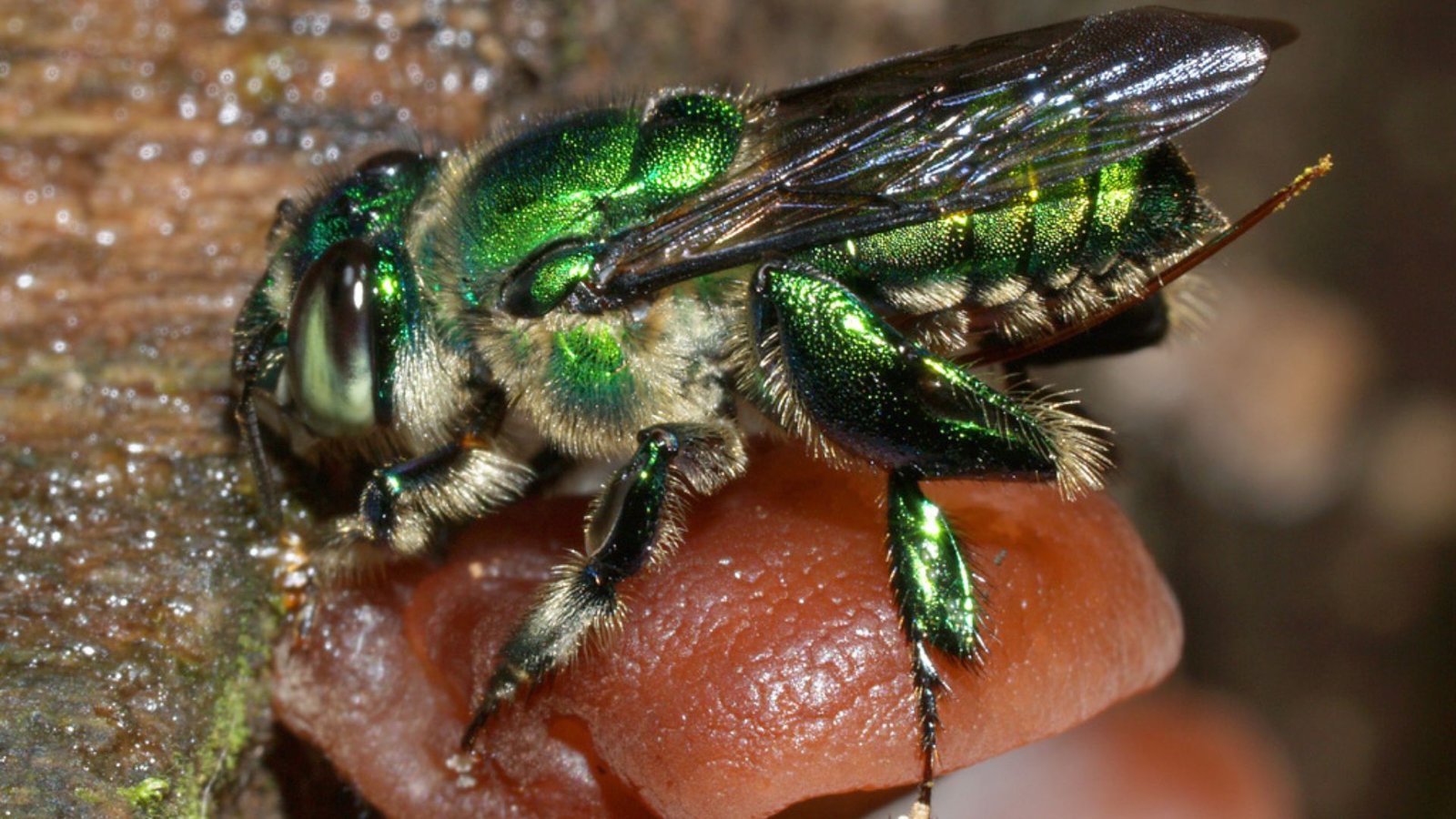
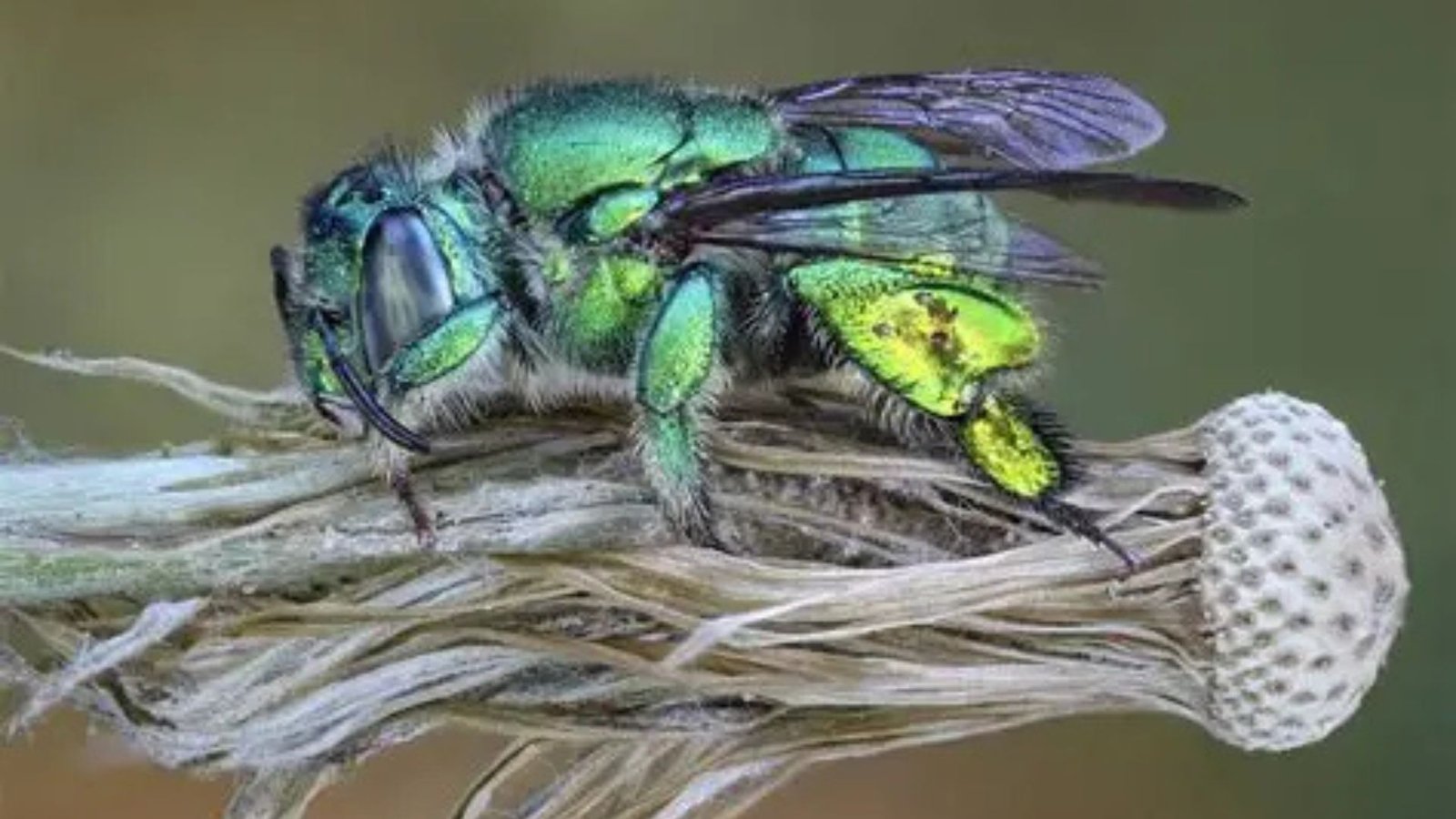
Medium-large metallic green euglossine bee; males bright emerald to bronze with expanded rhomboid hind tibiae that store perfumes, and brush-like fore-tarsal setae used to mop aromatic oils. Females duller, with denser pilosity and pollen-carrying scopae. Body length typically 13–18 mm; individuals around ~15 mm are common in Mesoamerica. Proboscis long for suction feeding; wings clear, rapid hovering flight. Males often perch and display near scented resources; both sexes visit deep-tubed flowers. Distinctive white labial marks in males; no worker caste (non-eusocial).

Has Sexual Diamorphism?

Yes. Males have enlarged perfume-storage tibiae and engage in display/territorial behavior; females lack perfume organs and provision nests.

LIFE‑HISTORY & VITAL STATISTICS OF THE Orchid Bee (Imperial Orchid Bee)(S)

Average Height / Length / Diameter

~15 mm (range ≈ 13–18 mm)

Average Adult Weight / Mass

Data deficient (Euglossa spp. span ~29–302 mg; species-specific means not published)

Typical Lifespan / Longevity

Adults commonly weeks to ~1–2 months (mark–recapture recoveries up to 6–8 weeks)

Typical Lifespan / Longevity for males

Not enough data

Typical Lifespan / Longevity for Females

Not enough data

Age at Sexual Maturity

At eclosion (adult stage)

Breading Season

Year-round in humid lowlands; activity peaks in wet season (bait studies in Costa Rica show seasonal variation)

Gestation

Reproductive Outcome

Solitary/communal nests; clutch size per cell data deficient for this species

Ecology and Behaviour for Orchid Bee (Imperial Orchid Bee)(s)

Medium-large metallic green euglossine bee; males bright emerald to bronze with expanded rhomboid hind tibiae that store perfumes, and brush-like fore-tarsal setae used to mop aromatic oils. Females duller, with denser pilosity and pollen-carrying scopae. Body length typically 13–18 mm; individuals around ~15 mm are common in Mesoamerica. Proboscis long for suction feeding; wings clear, rapid hovering flight. Males often perch and display near scented resources; both sexes visit deep-tubed flowers. Distinctive white labial marks in males; no worker caste (non-eusocial).

Habitat

Humid lowland to premontane forests (often along rivers, second-growth, plantations with floral resources); recorded widely across Costa Rica. Males readily sample at baits (cineole, eugenol, methyl salicylate).

Trophic Chain

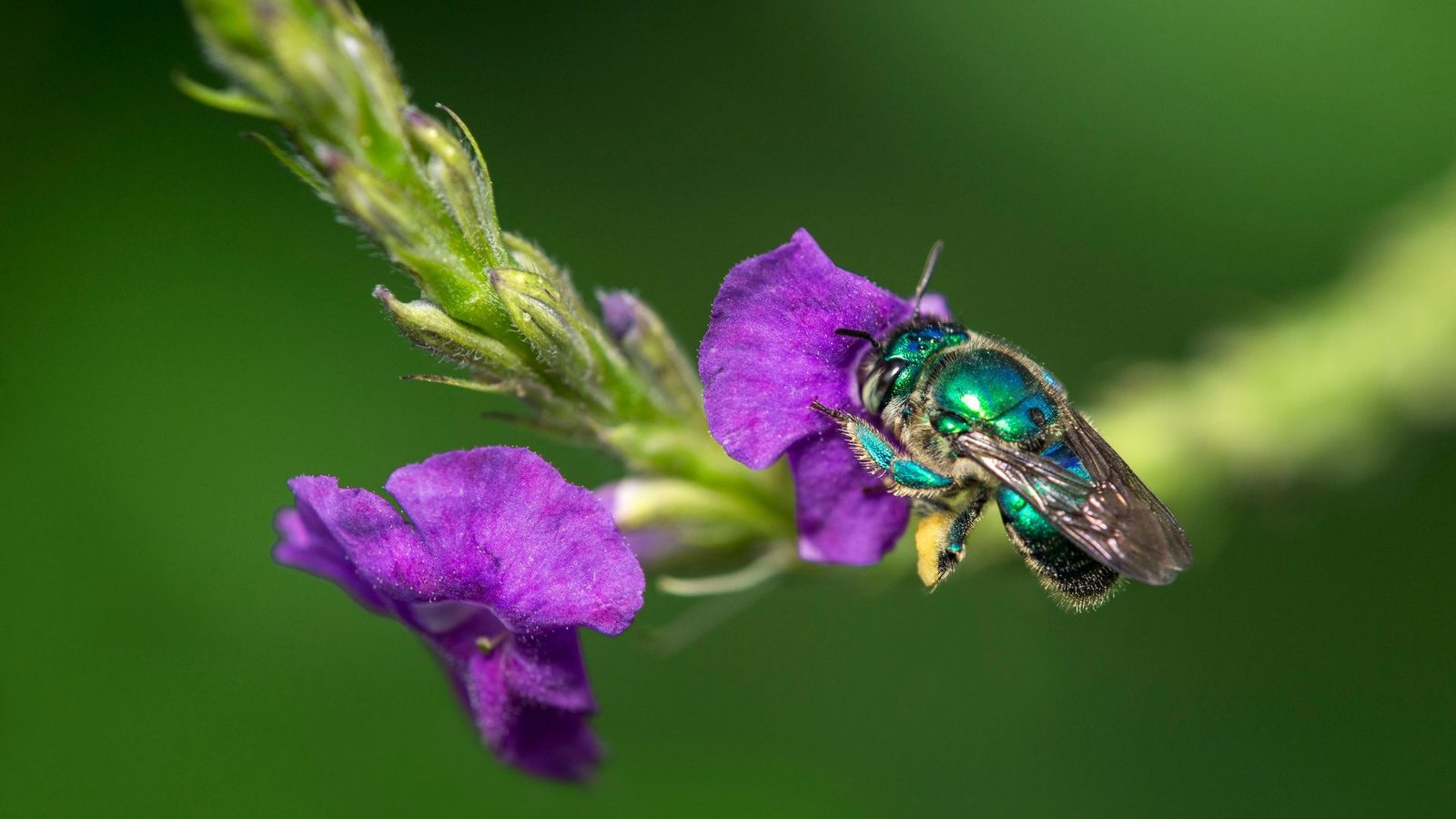
Pollinator & nectar feeder. Males gather volatile perfumes; both sexes take nectar; females collect pollen. This bee pollinates many orchids (esp. Stanhopeinae such as Coryanthes/Stanhopea/Gongora).

Interespecies relationships noted for Orchid Bee (Imperial Orchid Bee)

Mutualism +/+

Pollination of Stanhopeinae orchids (Coryanthes, Stanhopea, Gongora); bee gains perfumes/nectar.

Symbiosis + / +

Gut microbes likely aid sugar/volatile processing (inferred for nectar-feeding bees); microbes gain habitat. (Generalized; species-specific data scarce.)

Commensalism + / 0

Exploits non-floral scents (rotting wood, fungi, sap) without directly benefiting the source organism.

Inquilinism +/0

Occasional communal nesting in cavities/structures; host substrate unaffected. (Genus-level reports.)

Phoresy +/0

Mites may hitchhike on bees to disperse (reported broadly for bees; species-specific data limited).

Tanatocresis +/0

Spent pupal cases and dead bees enrich nest refuse used by detritivores; no further bee benefit. (General detrital pathway.)

Parasitism -/0

Cleptoparasitic bees/flies attack euglossine nests in the region (records for congeners: Coelioxys, Melaloncha). Specific parasites for E. imperialis are data deficient.

Predation -/0

Taken by insectivorous birds and spiders; crypsis/rapid flight reduce risk. (Generalization from euglossine natural history.)

Amensalism 0 / –

Strong male presence at a floral resource can deter other insects via scent marking, reducing their use without extra gain beyond mating signals. (Inferred from perfume ecology.)

Competition -/-

Competes with other euglossines (e.g., E. flammea, E. mixta) for perfumes/nectar at peak bloom.

Social behaviour of Orchid Bee (Imperial Orchid Bee)

  • Sociality: Solitary to communal nesting documented within the genus; E. imperialis lacks a worker caste (species-specific nesting data scarce).

  • Activity: Diurnal; males perch/defend display sites and patrol around perfume sources; both sexes hover-feed at deep flowers.

  • Communication: Males compile and release perfume blends during displays; blends are partly learned and species-typical.

Distribution and Sighthings ofOrchid Bee (Imperial Orchid Bee)(s) in Costa Rica

General Regions of Costa Rica where to find Orchid Bee (Imperial Orchid Bee)s

Tropical
Tropical Rain Forest

National Parks and Reserves of Costa Rica where to find Orchid Bee (Imperial Orchid Bee)s

Parque Nacional Volcán Arenal
Parque Nacional Carara
Parque Nacional Corcovado
Parque Nacional Manuel Antonio
Parque Nacional Piedras Blancas
Parque Nacional Rincón de la Vieja
Parque Nacional Tapantí – Macizo Cerro de la Muerte
Parque Nacional Tenorio
Parque Nacional Tortuguero
Refugio Nacional de Vida Silvestre Gandoca-Manzanillo

Best Time to seeOrchid Bee (Imperial Orchid Bee)(s) in Costa Rica

Dry Season
January
February
March
April
June
July
August
September
October
November
December

Media

Videos

Sounds and calls

Taxonomy

Conservation Status

Status IUCN

Threats

⚠️Lowland forest loss/fragmentation reduces floral hosts, nesting sites, and perfume sources.
⚠️Agrochemical exposure affecting nectar/pollen quality and orchid communities.
⚠️Resource disruption (decline of perfume-bearing orchids & non-floral scent sources) under land-use change.
⚠️Climate shifts altering phenology and perfume composition/availability (inferred from scent-learning and seasonal studies).

Fun Facts

  • Males build personal perfume blends and can learn/remember specific scents they’ve collected.

  • Some perfumes come from non-floral sources (rotting wood, fungi, sap, fruit); not just orchids.

  • Exhibits long-distance movements and genetic connectivity across human-modified landscapes in Costa Rica.

  • Uses suction feeding rather than lapping—an adaptation to deep flowers; hovering physiology is well studied.

Origins & Record

Origin Status

Native

Population trend

Stable

Added by

Reviewed by

More Species