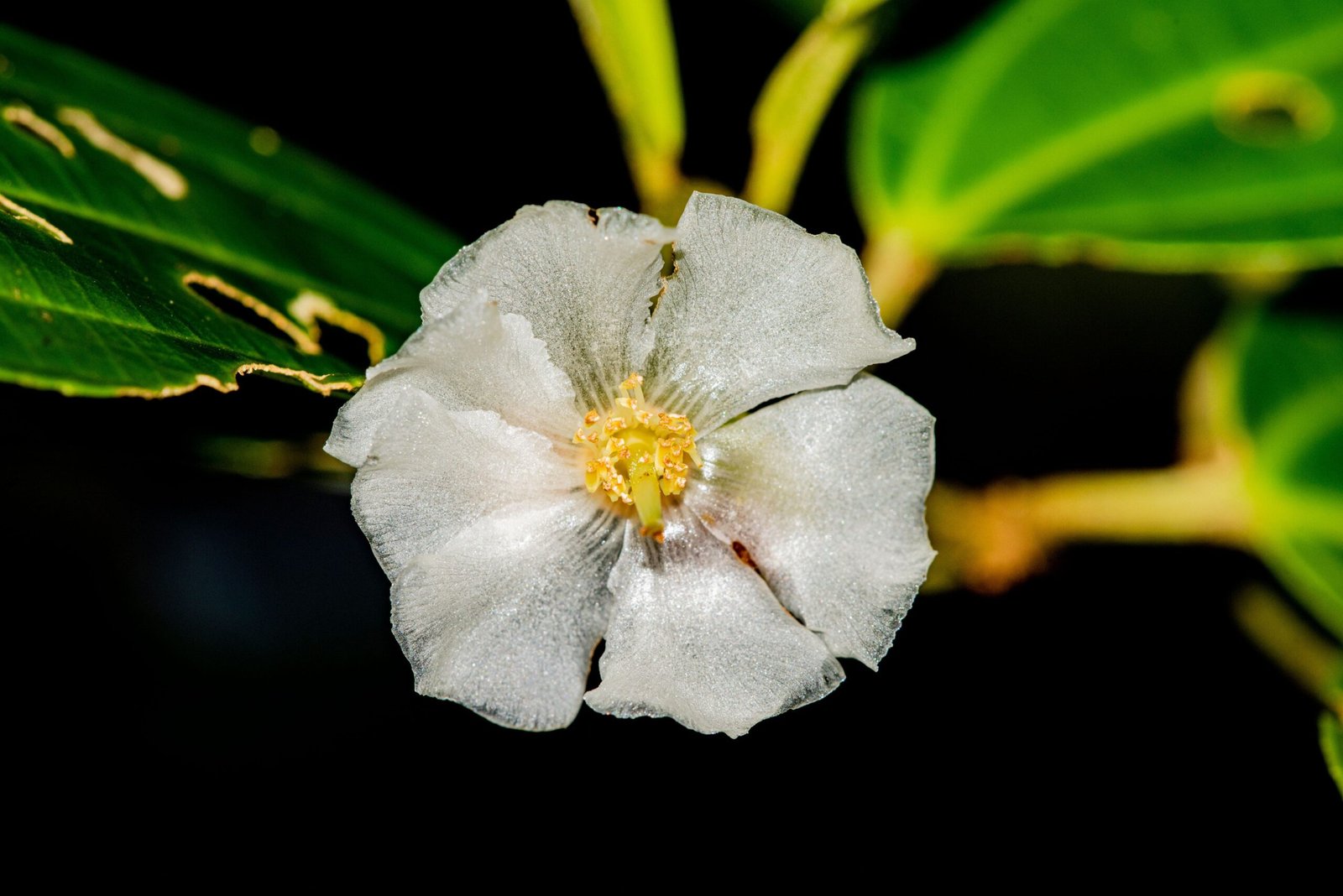
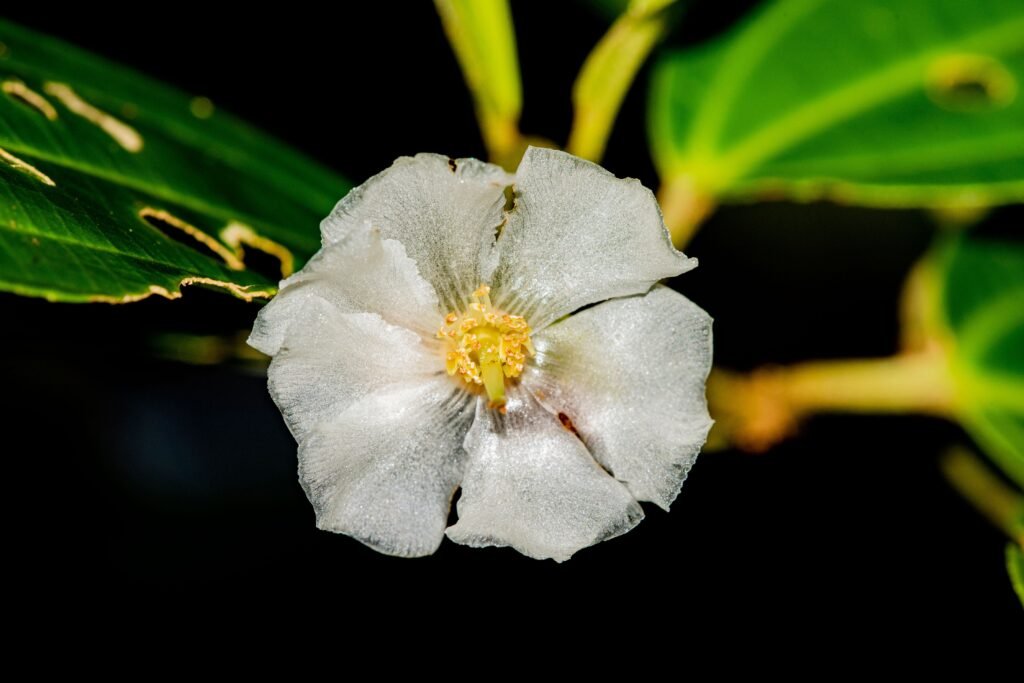



Miconia rupicola Gleason

Miconia rupicola Gleason, 1925 (≡ Conostegia polyandra Benth., 1844)

Also known / common namesDeficient Data

Miconia rupicola Gleason(s) General Description

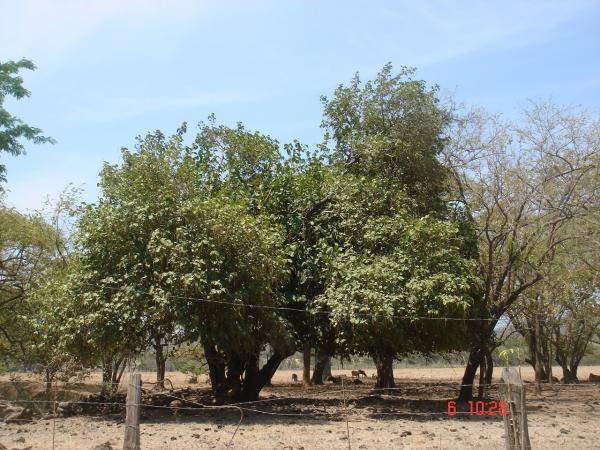
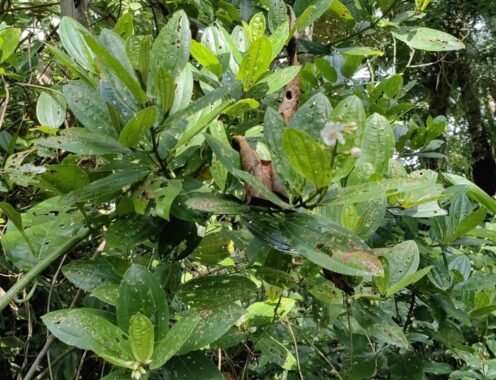
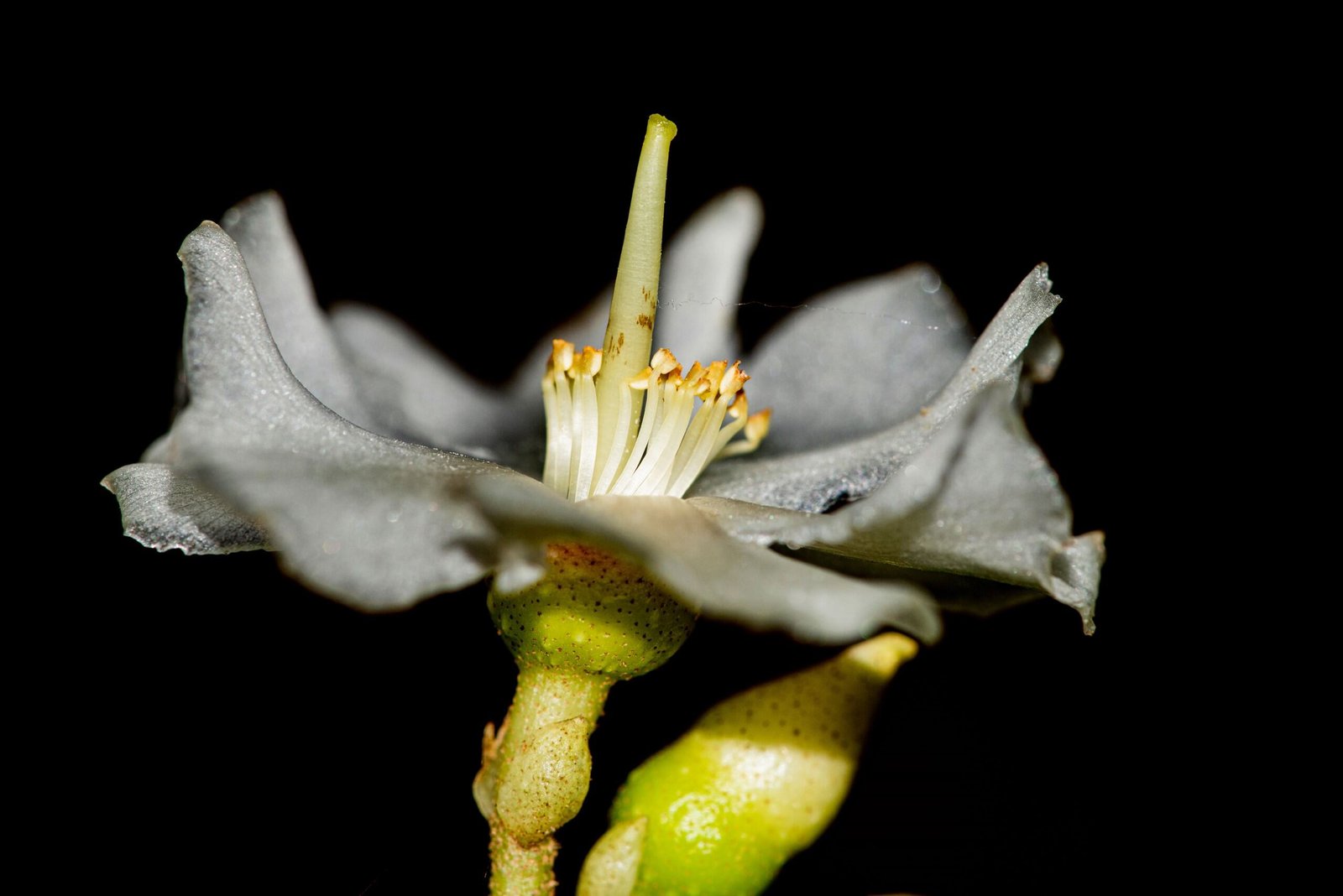
Low shrub to small tree, typically 1–4 m in Costa Rica (up to ~13.6 m elsewhere), with initially flattened twigs becoming terete and sparsely to densely stellate-puberulent. Leaves opposite, 3–5-nerved, elliptic to elliptic-ovate (4–14 × 2–7.3 cm), margins serrulate and ciliate; adaxial surface glabrous, abaxial surface with stellate hairs and distinctive minute white granular secretions. Inflorescences terminal panicles 3–15 cm; buds calyptrate; flowers 5–8-merous, petals 7–9.5 × 5.25–9 mm, white to pinkish; 26–36 stamens; style 8–10 mm. Fruit a dark-purple berry, 6–8 mm in diameter, with numerous small pyramidal seeds.

Has Sexual Diamorphism?

LIFE‑HISTORY & VITAL STATISTICS OF THE Miconia rupicola Gleason(S)

Average Height / Length / Diameter

Height 1–4 m in CR (to ~13.6 m across range); DBH data deficient.

Average Adult Weight / Mass

Height 1–4 m in CR (to ~13.6 m across range); DBH data deficient.

Typical Lifespan / Longevity

Perennial woody plant; data deficient (likely decades).

Typical Lifespan / Longevity for males

Not applicable (plant)

Typical Lifespan / Longevity for Females

Not applicable (plant)

Age at Sexual Maturity

Data deficient

Breading Season

Year-round flowering and fruiting reported in CR.

Gestation

Fruit maturation weeks–few months (genus-typical); species-specific data deficient

Reproductive Outcome

Ecology and Behaviour for Miconia rupicola Gleason(s)

Low shrub to small tree, typically 1–4 m in Costa Rica (up to ~13.6 m elsewhere), with initially flattened twigs becoming terete and sparsely to densely stellate-puberulent. Leaves opposite, 3–5-nerved, elliptic to elliptic-ovate (4–14 × 2–7.3 cm), margins serrulate and ciliate; adaxial surface glabrous, abaxial surface with stellate hairs and distinctive minute white granular secretions. Inflorescences terminal panicles 3–15 cm; buds calyptrate; flowers 5–8-merous, petals 7–9.5 × 5.25–9 mm, white to pinkish; 26–36 stamens; style 8–10 mm. Fruit a dark-purple berry, 6–8 mm in diameter, with numerous small pyramidal seeds.

Habitat

Coastal lowlands at sea level to ~200(–600) m; mangrove margins, river mouths, swampy back-mangrove and coastal forest. In Costa Rica it is currently confirmed only from Gandoca–Manzanillo WR on the Caribbean coast.

Trophic Chain

Primary producer; melittophilous flowers attract generalist bees; dark-purple berries are consumed by frugivorous birds and other vertebrates, aiding seed dispersal along coasts and waterways. (Pollinator/disperser guilds generalized for Melastomataceae.)

Interespecies relationships noted for Miconia rupicola Gleason

Mutualism +/+

Pollinating bees gain nectar/pollen; plant gains cross-pollination in coastal thickets. (General for Melastomataceae).

Symbiosis +/+

Mycorrhizal fungi enhance nutrient uptake in water-logged, saline-affected soils; fungi gain carbon. (Inferred for woody coastal plants.)

Commensalism +/0

Epiphylls and epiphytes occur on older stems; plant largely unaffected under low loads.

Inquilinism +/0

Birds nest/perch in shrubs within mangrove edges; tree provides structure/shade.

Phoresy +/0

Seeds transported incidentally in mud on animal hooves or boots along coastal trails.

Tanatocresis +/0

Dead wood offers substrate for detritivores; plant already dead.

Parasitism -/+

Leaf-sucking hemipterans and fungal pathogens may reduce vigor in humid coasts (species-specific data lacking).

Predation (Herbivory) + / – (dispersers + / plant –)

Frugivorous birds/mammals eat berries and disperse seeds along shorelines.

Amensalism 0/-

Dense shade under stands can suppress other seedlings in narrow coastal bands.

Competition -/-

Competes with mangrove-edge shrubs and invasive grasses for light/space in disturbed fringes.

Social behaviour of Miconia rupicola Gleason

Not applicable (plant). Perennial coastal shrub/tree of back-mangrove ecotones; tolerates saline influence (leaf salt secretions).

Distribution and Sighthings ofMiconia rupicola Gleason(s) in Costa Rica

General Regions of Costa Rica where to find Miconia rupicola Gleasons

Tropical
Caribbean Sea

National Parks and Reserves of Costa Rica where to find Miconia rupicola Gleasons

Parque Nacional Cahuita
Refugio Nacional de Vida Silvestre Curú
Refugio Nacional de Vida Silvestre Gandoca-Manzanillo

Best Time to seeMiconia rupicola Gleason(s) in Costa Rica

Dry Season
January
February
March
April
June
July
August
September
October
November
December

Media

Videos

Sounds and calls

Taxonomy

Conservation Status

Status IUCN

Threats

⚠️Coastal development & tourism pressure in Caribbean lowlands (including within/around Gandoca–Manzanillo wetlands).
⚠️Mangrove alteration (hydrologic changes, pollution) reducing suitable back-mangrove habitat.
⚠️Very narrow known CR distribution (single protected area record) raises vulnerability to local disturbance.

Fun Facts

  • In the Neotropics’ Melastomataceae, this is the only species recorded naturally in mangroves.

  • Leaves bear white granular secretions—likely salt exudates linked to coastal tolerance.

  • The species was long treated as Conostegia polyandra; taxonomic work confirms synonymy with M. rupicola.

  • First recorded in Costa Rica in 2024, at Gandoca–Manzanillo WR.

Origins & Record

Origin Status

Native

Population trend

Added by

Reviewed by

More Species