



Green-and-black Poison-dart Frog

Green-and-black Poison-dart Frog

Also known / common namesSpanish – Rana venenosa verde y negra; “Green Poison Frog”

Green-and-black Poison-dart Frog(s) General Description

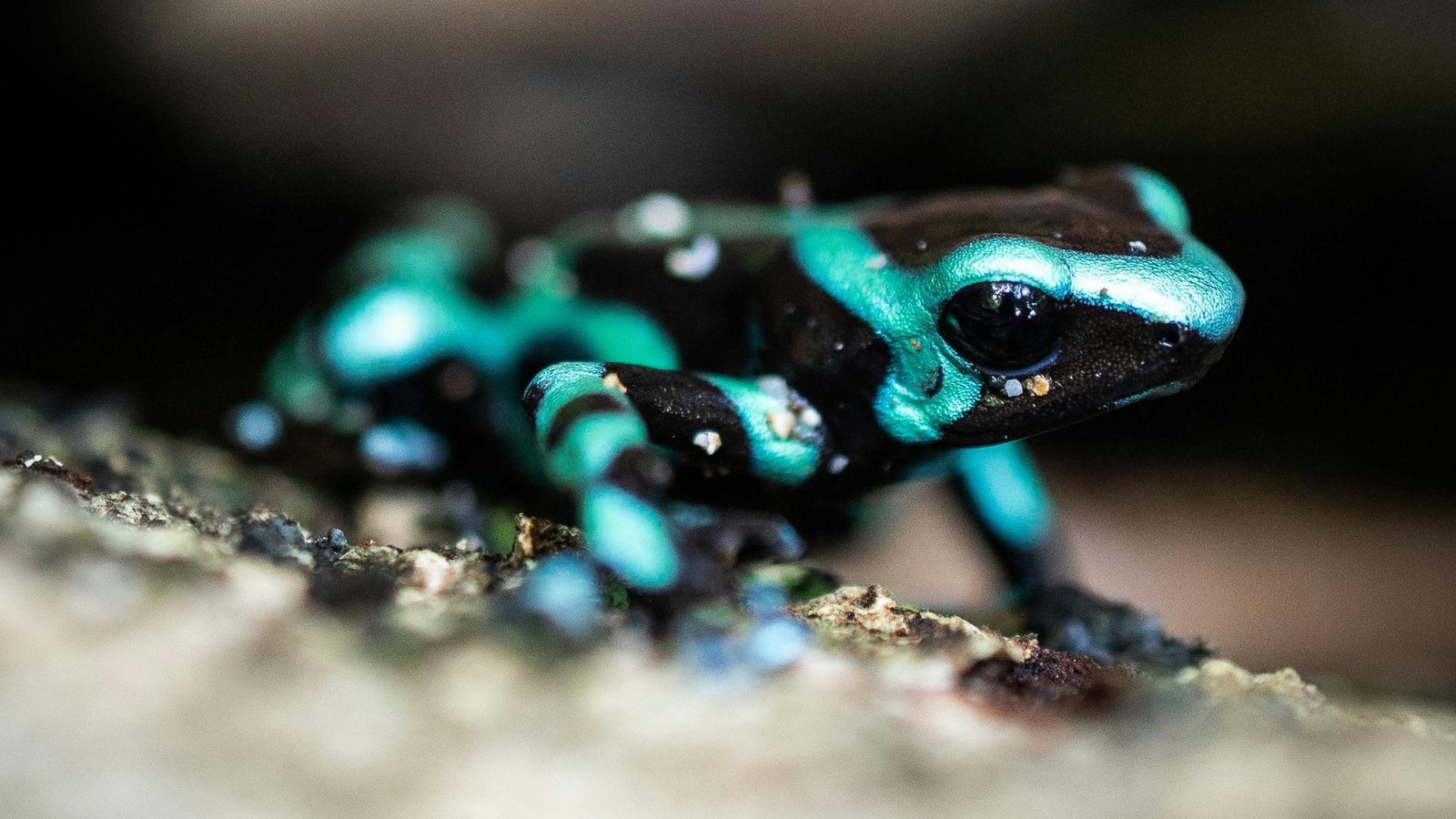
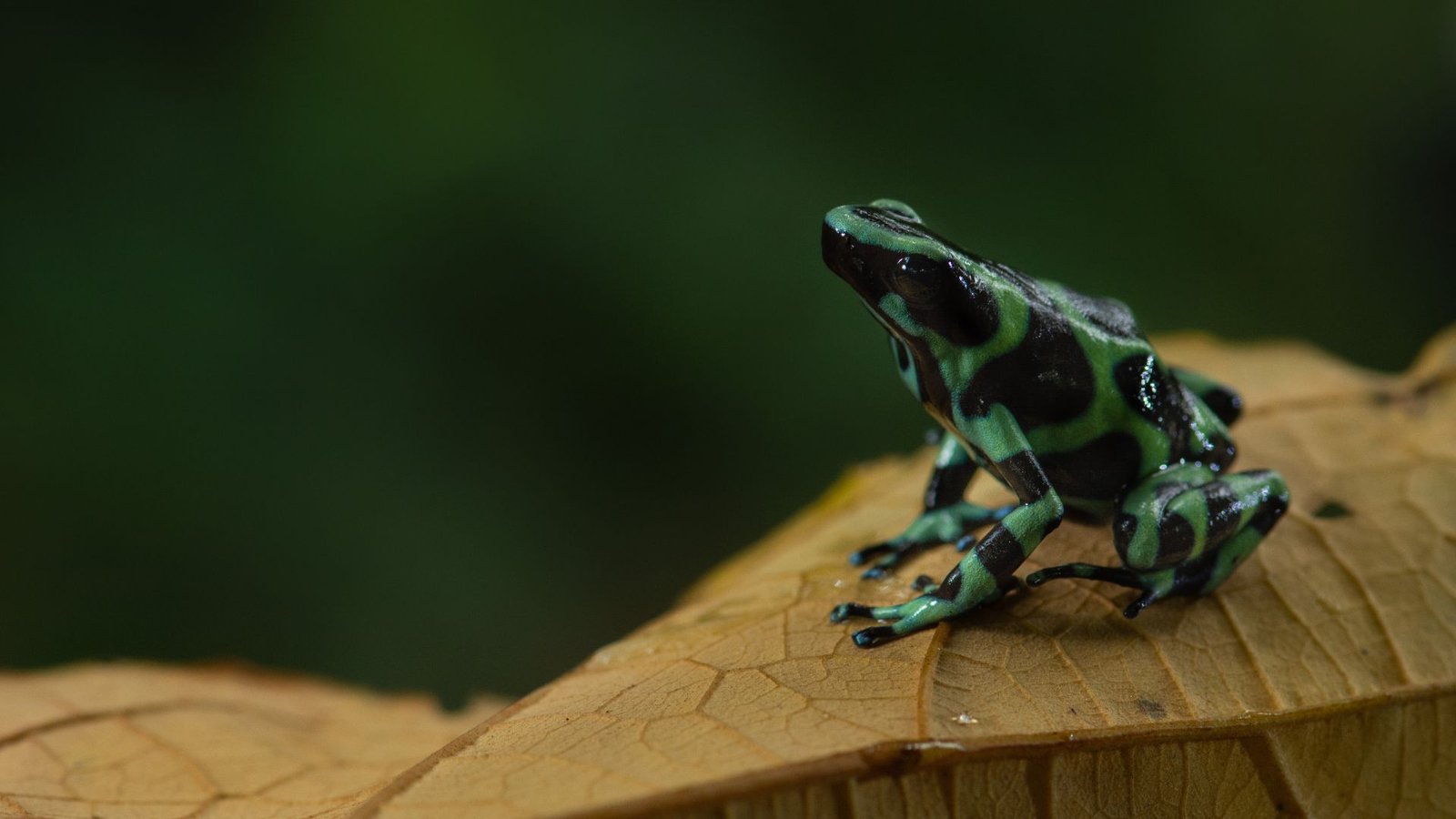
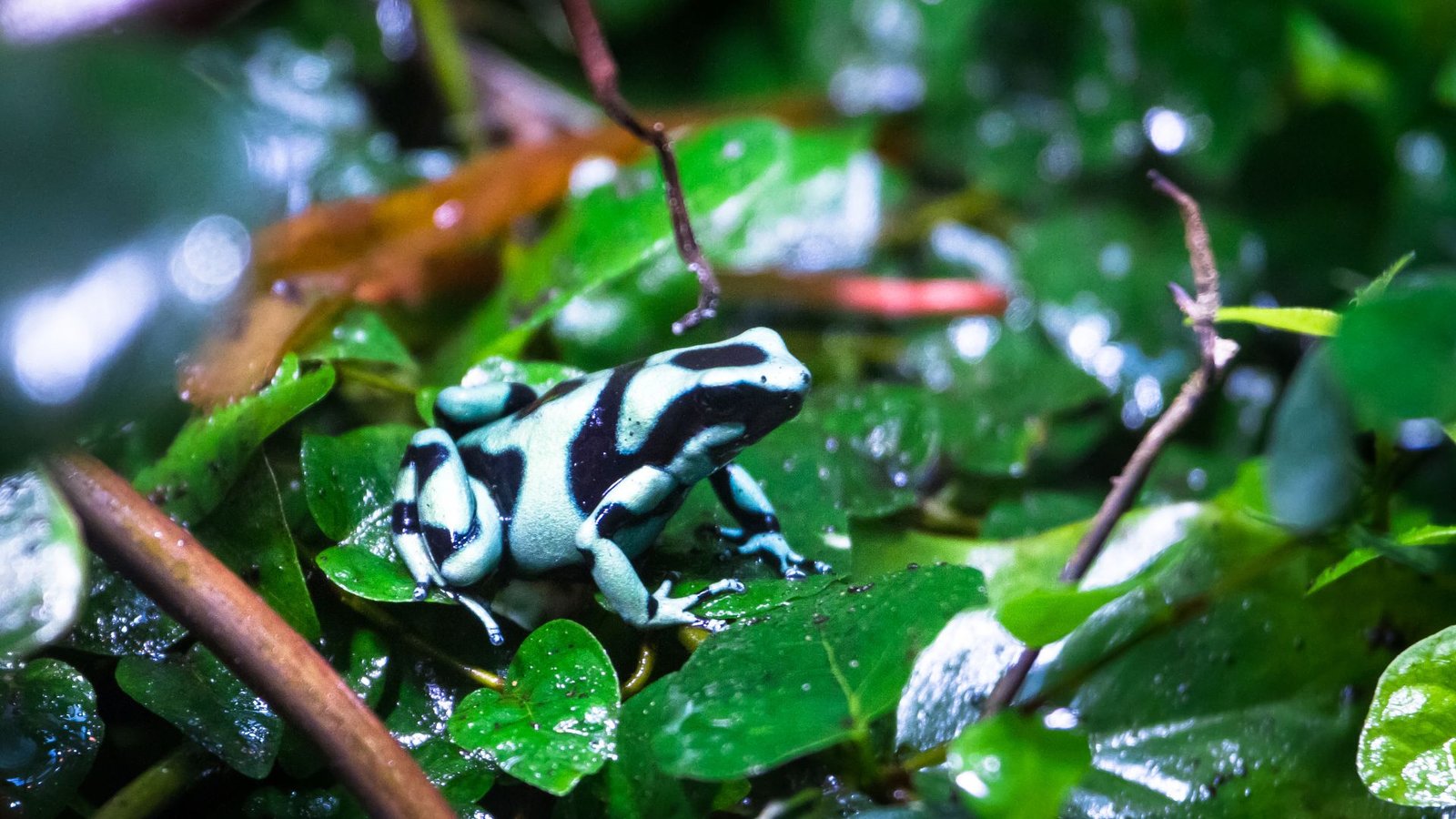
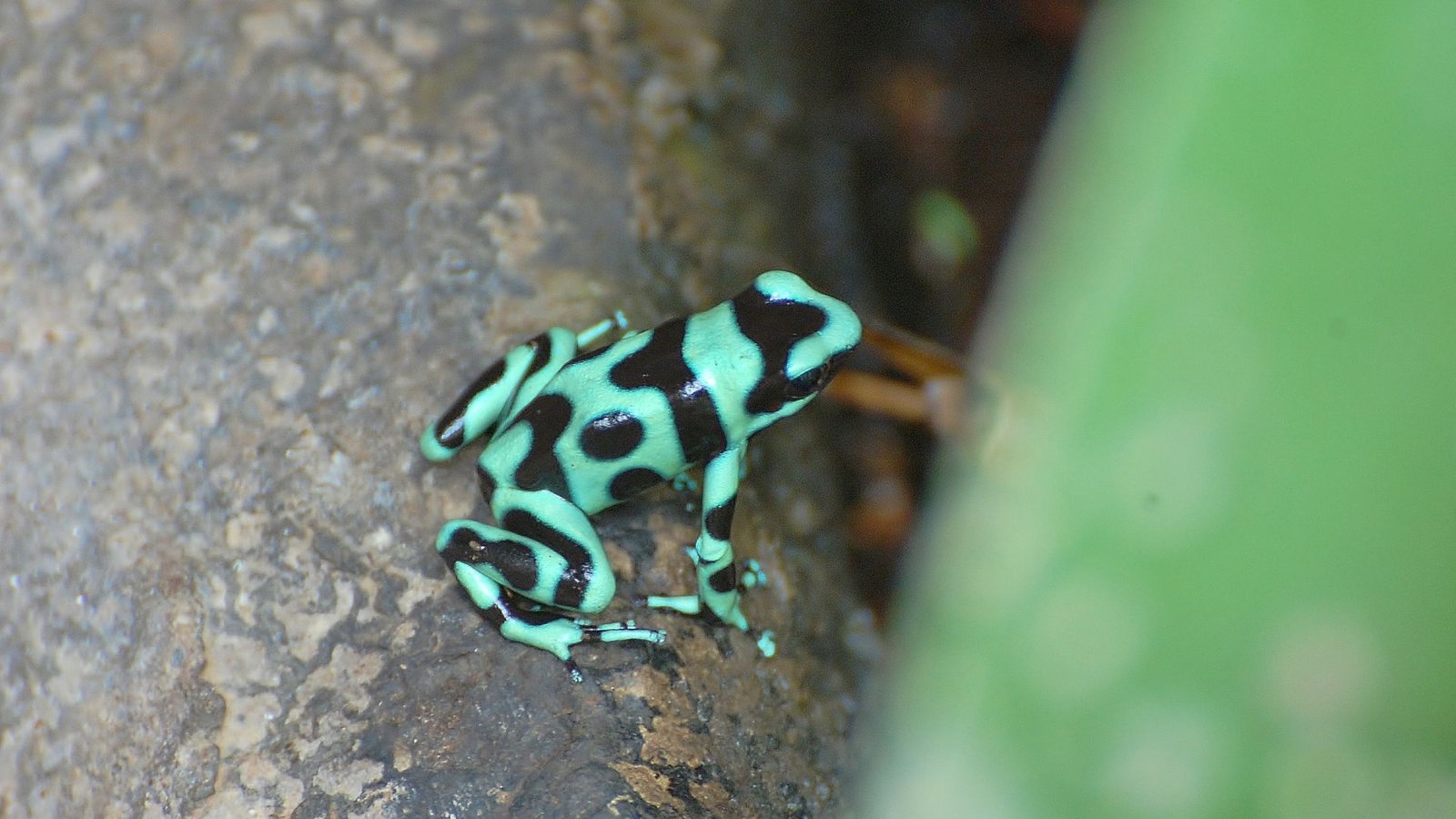
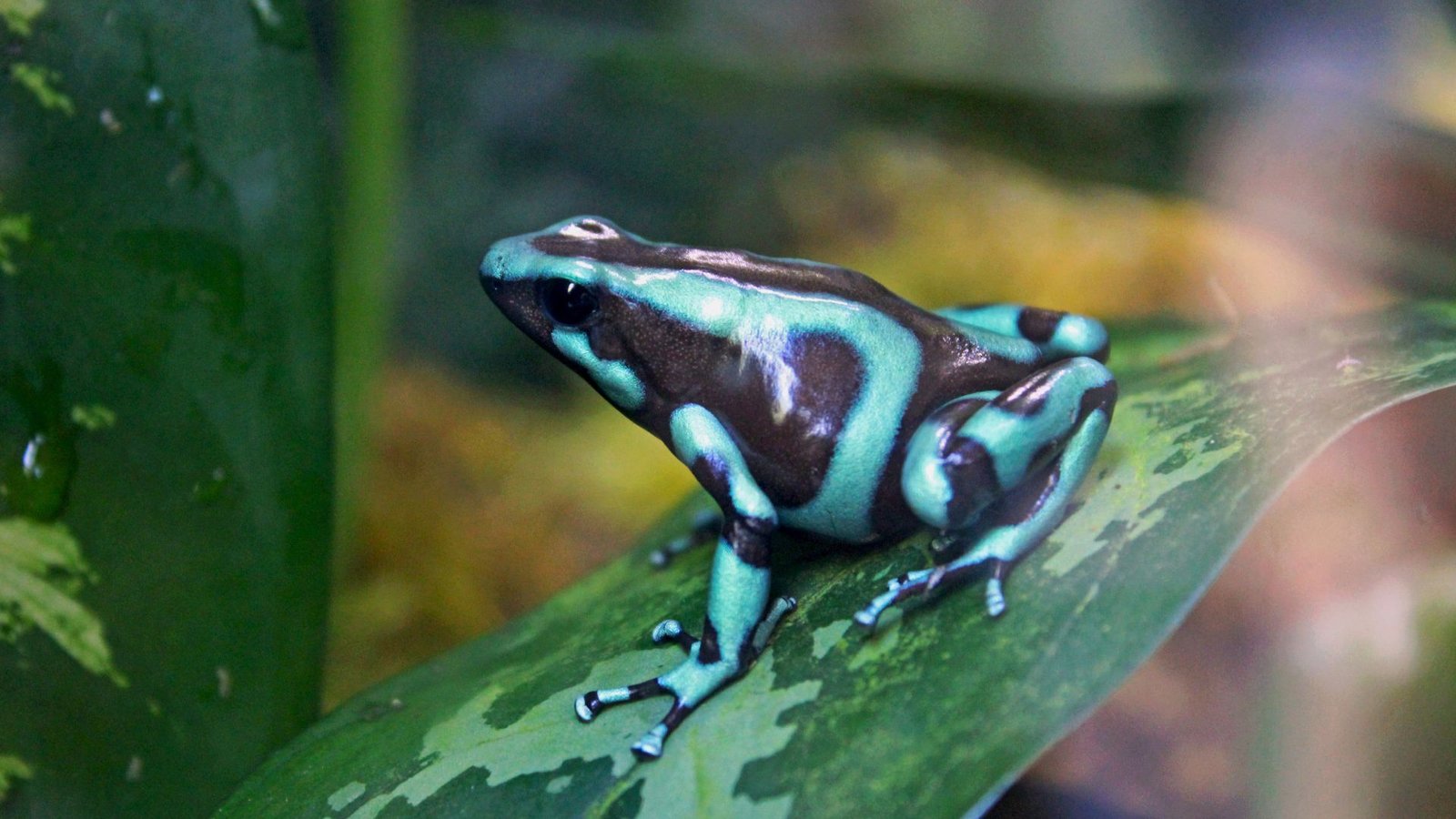
Small diurnal dendrobatid (SVL 18–40 mm, mass ≈ 1–3 g) with smooth, glandular skin containing alkaloid toxins. Ground colour black or dark chocolate overlain by bright green, turquoise or mint-blue irregular blotches; Pacific morphs often bronze-black with lime spots. Digits bear expanded adhesive discs; toes basally webbed. Iris dark; tympanum distinct. Females generally 10 % larger. Tadpoles grey-brown with high fins and conspicuous eyes. Colour changes little after metamorphosis.

Has Sexual Diamorphism?

Females larger; males have swollen third-finger pads and produce 3-kHz trilling calls.

LIFE‑HISTORY & VITAL STATISTICS OF THE Green-and-black Poison-dart Frog(S)

Average Height / Length / Diameter

Males 2.2 cm; females 2.5 cm SVL

Average Adult Weight / Mass

≈ 2 g

Typical Lifespan / Longevity

4–8 yr wild; up to 12 yr captivity

Typical Lifespan / Longevity for males

No data

Typical Lifespan / Longevity for Females

No data

Age at Sexual Maturity

≈ 9–12 mo

Breading Season

Extended rainy season (May – Nov)

Gestation

Reproductive Outcome

Eggs hatch 7–12 d; tadpoles metamorphose 6–8 wk

Ecology and Behaviour for Green-and-black Poison-dart Frog(s)

Small diurnal dendrobatid (SVL 18–40 mm, mass ≈ 1–3 g) with smooth, glandular skin containing alkaloid toxins. Ground colour black or dark chocolate overlain by bright green, turquoise or mint-blue irregular blotches; Pacific morphs often bronze-black with lime spots. Digits bear expanded adhesive discs; toes basally webbed. Iris dark; tympanum distinct. Females generally 10 % larger. Tadpoles grey-brown with high fins and conspicuous eyes. Colour changes little after metamorphosis.

Habitat

Humid lowland & premontane rain forest (0–800 m) on both coasts; abundant in shaded cacao/banana plantations and secondary forest near permanent water.

Trophic Chain

Diurnal leaf-litter insectivore specialising on formicine ants & mites—the alkaloid source.

Interespecies relationships noted for Green-and-black Poison-dart Frog

Mutualism +/+

Bromeliads & Heliconia leaf-axils: tadpoles excrete nitrogenous waste that fertilises the plant’s tiny water reservoirs; frog gains predator-free nurseries.

Symbiosis +/+

Skin microbiome dominated by Janthinobacterium spp. produces violacein, inhibiting chytrid fungus; bacteria receive habitat and nutrients in skin mucus.

Commensalism +/0

Tiny phorid flies oviposit on abandoned egg capsules; larvae feed on residual jelly without harming frog offspring.

Inquilinism + / 0

Mite (Parasitellus) deutonymphs attach to frog’s skin folds during dispersal, gaining moist transport; frog experiences negligible cost.

Phoresy + / 0

Occasionally, fungal spores of Beauveria hitchhike on sticky skin but do not germinate until frog contacts leaf litter, gaining dispersal mileage.

Tanatocresis + / 0

Decomposed egg masses enrich micro-patches, promoting colonisation by saprotrophic fungi (Trichoderma) that later support detritivorous springtails; frog already metamorphosed.

Parasitism + / –

Lung nematode Rhabdias breviensis reduces male call rate and clutch size.

Predation +/-

Cat-eyed snake (Leptodeira septentrionalis) tolerates alkaloids and preys on both adults and egg clutches.

Amensalism 0 / –

Alkaloid-rich mucus sloughed onto leaves suppresses nearby saprotrophic fungi, gaining no further benefit to frog.

Competition -/-

Shares bromeliad nursery pools with Blue-black grassquit tadpoles (Oophaga pumilio in overlap zones), leading to food limitation and cannibalism.

Social behaviour of Green-and-black Poison-dart Frog

  • Males defend 1–2 m² leaf-litter territories; aggressive wrestling common.

  • Courtship involves tactile nudging to suitable oviposition site (leaf axil).

  • Male guards eggs, hydrates clutch; carries tadpoles to tree-holes/bromeliads

Distribution and Sighthings ofGreen-and-black Poison-dart Frog(s) in Costa Rica

General Regions of Costa Rica where to find Green-and-black Poison-dart Frogs

Tropical
Tropical rainforest (Caribbean and North Pacific slopes)

National Parks and Reserves of Costa Rica where to find Green-and-black Poison-dart Frogs

Parque Nacional Braulio Carrillo
Parque Nacional Cahuita
Parque Nacional Tortuguero
Reserva Biológica Hitoy-Cerere
Refugio Nacional de Vida Silvestre Gandoca-Manzanillo

Best Time to seeGreen-and-black Poison-dart Frog(s) in Costa Rica

Dry Season
January
February
March
April
June
July
August
September
October
November
December

Media

Videos

Sounds and calls

Taxonomy

Conservation Status

Status IUCN

Threats

⚠️Forest conversion to pineapple & oil-palm diminishes leaf-litter humidity.
⚠️Illegal pet trade (bright morphs).
⚠️Agricultural pesticides lowering alkaloid-bearing prey abundance.
⚠️Climate-driven desiccation of phytotelmata nursery sites.

Fun Facts

  • Introduced to O‘ahu, Hawai‘i, in 1932 to control mosquitoes; now naturalised.
  • Exhibits Müllerian mimicry with Oophaga pumilio where ranges overlap.

  • Tadpoles are omnivorous cannibals if multiple share a pool.

  • Male territorial call rate increases after rain-onset acoustic cues.

Origins & Record

Origin Status

Native

Population trend

Decreasing

Added by

Reviewed by

More Species

Nurse Shark

Shallow coral and rocky reefs, sand flats, seagrass beds and mangrove channels from intertidal pools to ≈ 70 m; in Costa Rica abundant around Isla del Caño, Golfo Dulce, Bahía Culebra, and Caribbean patch reefs of Cahuita.

Read More »