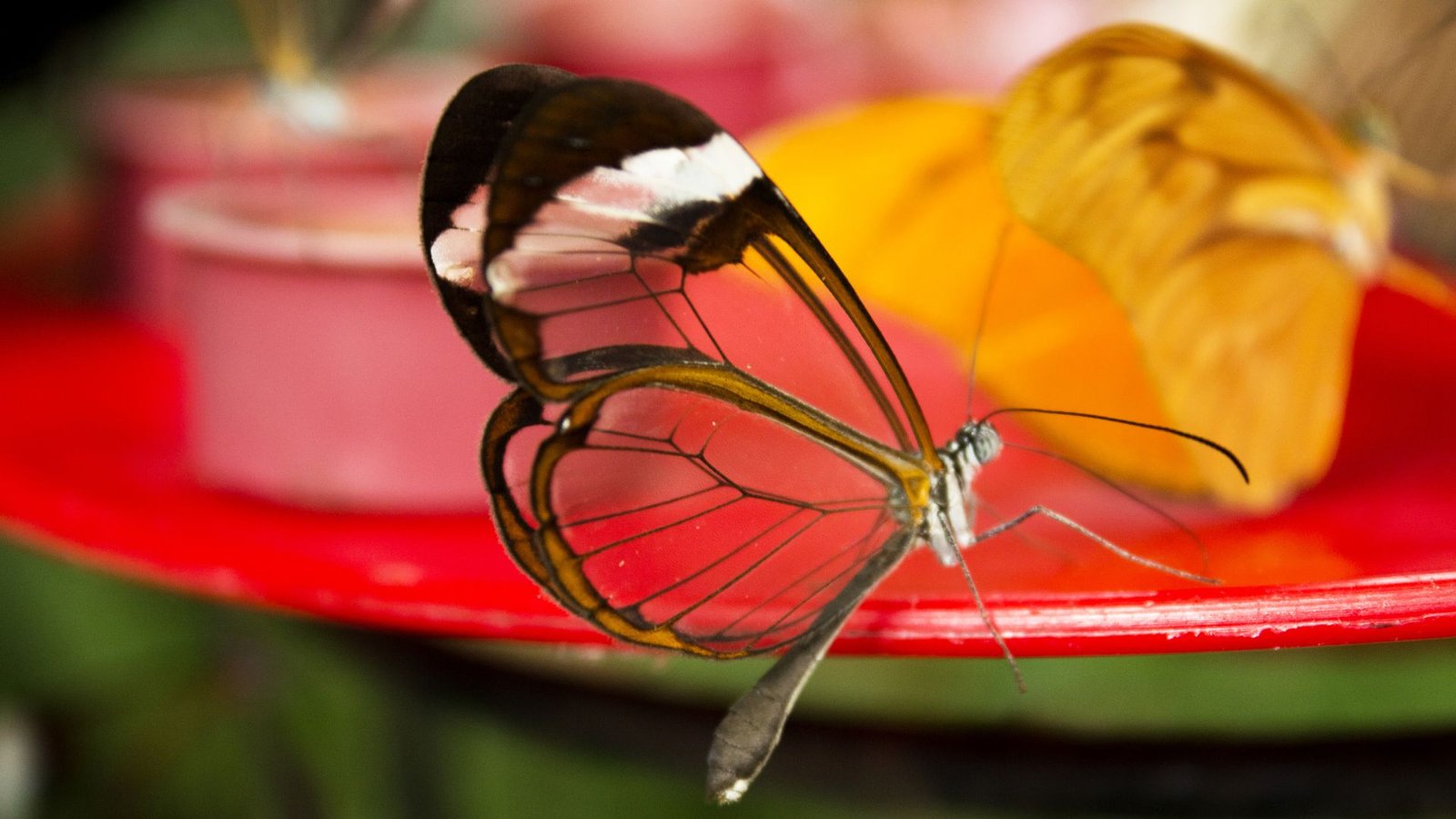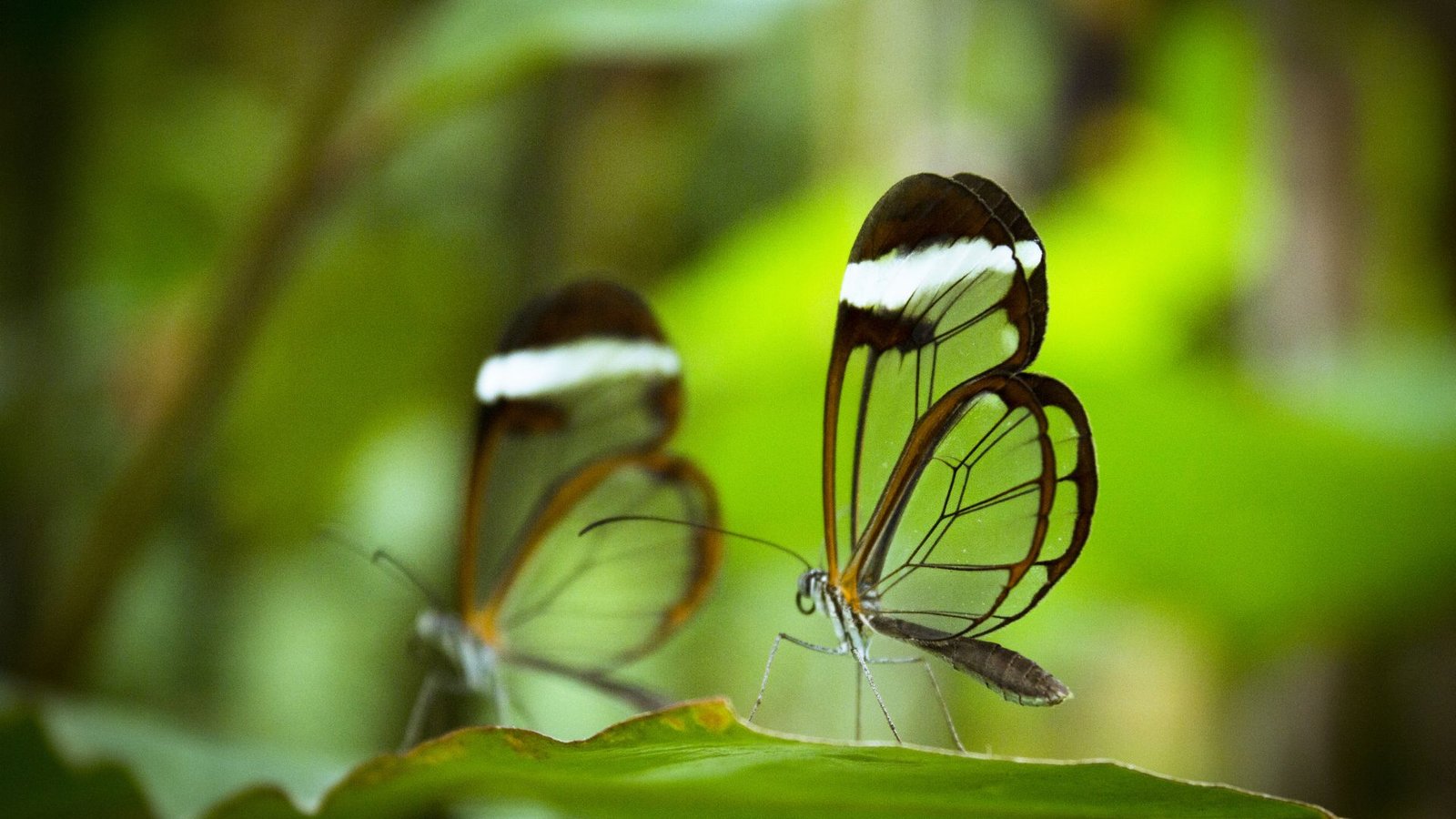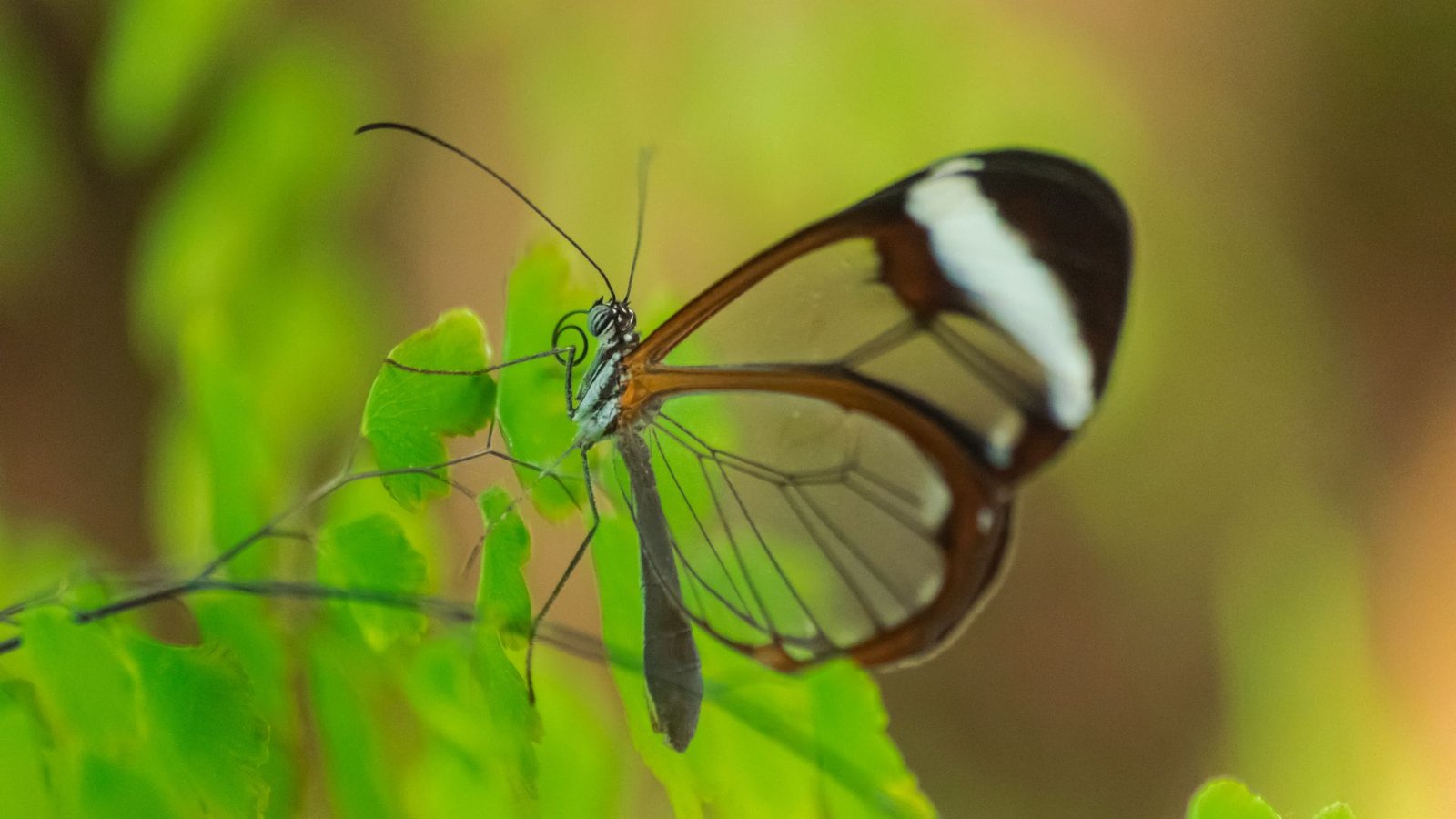



Medium-small Neotropical nymphalid (Ithomiini) with remarkable transparent wings. Dorsal and ventral wing panels are clear, bordered by dark brown rims with a narrow white or orange-tinted band; transparency results from reduced, bristle-like scales and anti-reflective nanopillars on the wing membrane that minimize scattering and reflection. Wingspan 5.6–6.1 cm; body length ~2.8–3.0 cm. Antennae clubbed; thorax and abdomen brown. Pupae are metallic silver-gold, hanging from leaf undersides; larvae are green to whitish with yellow striping and smooth dorsal protuberances. Sexes are similar, females slightly larger with fuller abdomen. Adults fly with slow, hovering passes along shaded forest edges and streams.
Sexual dimorphism refers to the physical differences between males and females of the same species that go beyond reproductive organs. For example, size, colour or form.
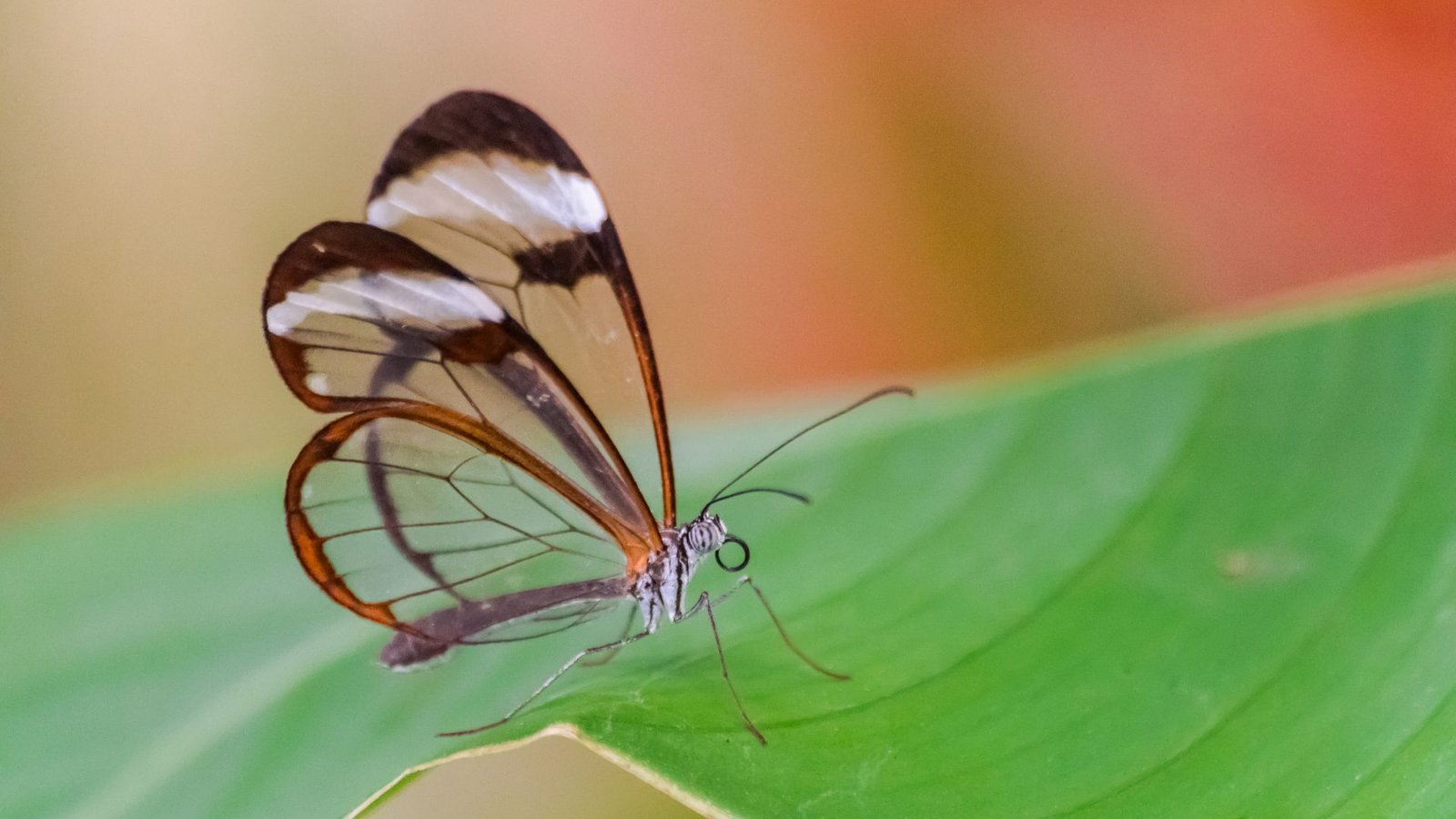
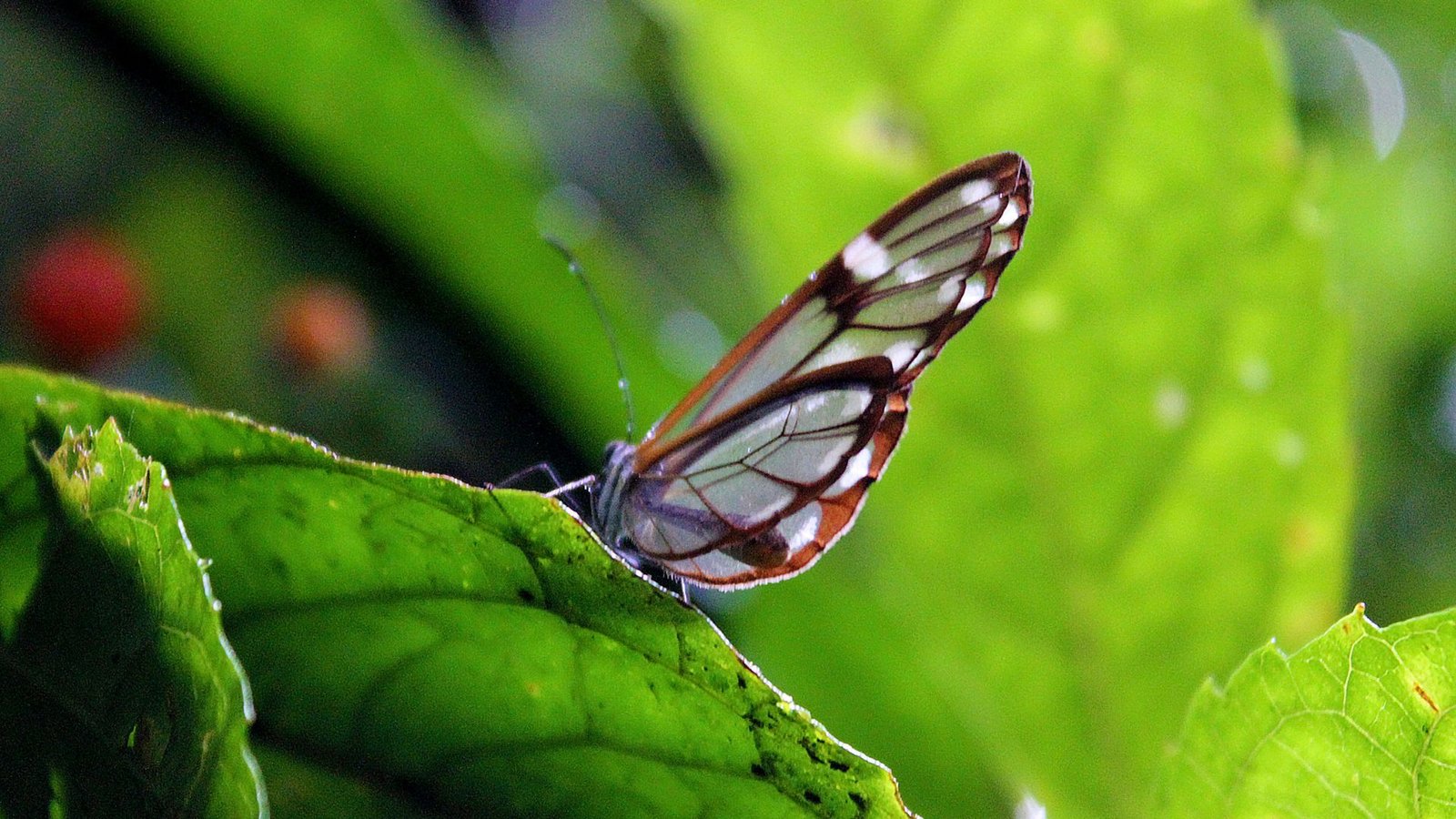
Medium-small Neotropical nymphalid (Ithomiini) with remarkable transparent wings. Dorsal and ventral wing panels are clear, bordered by dark brown rims with a narrow white or orange-tinted band; transparency results from reduced, bristle-like scales and anti-reflective nanopillars on the wing membrane that minimize scattering and reflection. Wingspan 5.6–6.1 cm; body length ~2.8–3.0 cm. Antennae clubbed; thorax and abdomen brown. Pupae are metallic silver-gold, hanging from leaf undersides; larvae are green to whitish with yellow striping and smooth dorsal protuberances. Sexes are similar, females slightly larger with fuller abdomen. Adults fly with slow, hovering passes along shaded forest edges and streams.
Humid lowland to premontane forest (0–1 200+ m), especially shaded edges, streams and second-growth; also occurs in lower montane zones and along riparian corridors.
Adults are nectar feeders at flowers (e.g., Lantana, Asteraceae, Boraginaceae) and sometimes bird droppings for amino acids; larvae feed on Solanaceae—notably Cestrum spp. (e.g., C. racemosum).
Taxonomic classification is a hierarchical system used in biology to organize and name living organisms. It arranges species into nested groups based on shared characteristics and evolutionary relationships.
🌍 The IUCN status refers to the conservation category assigned to a species by the International Union for Conservation of Nature, based on its risk of extinction
Pupae are mirror-like silver and highly reflective—classic “jewel chrysalides” that deter predators.
Transparency arises from reduced scales plus wax-based nanopillars that create a refractive-index gradient across the wing surface.
Males form leks and convert plant-derived PAs into pheromones used in courtship and as chemical defense.
Caterpillars feeding on Cestrum can be unpalatable to bullet ants (Paraponera clavata).


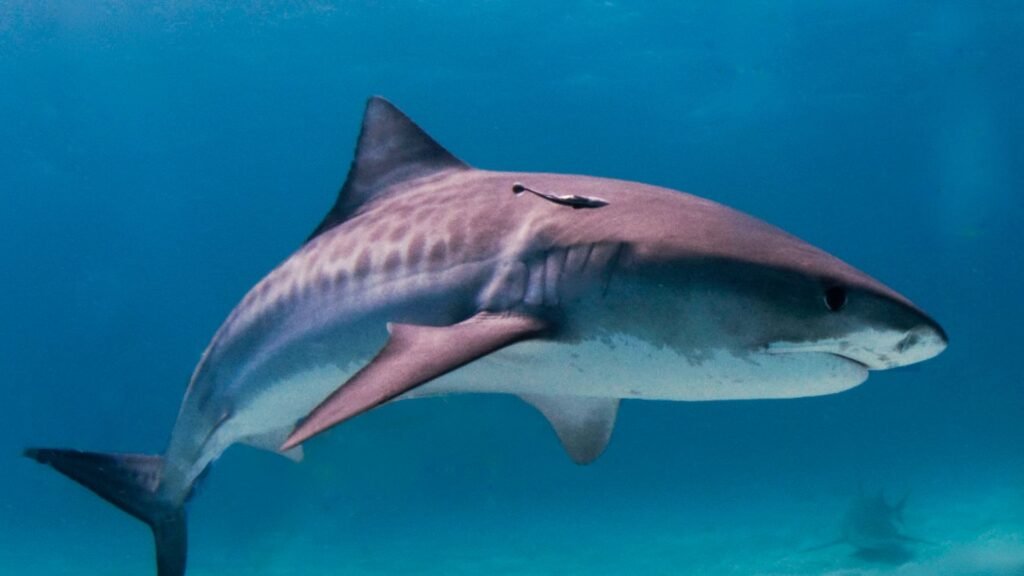
Powerful, blunt‑snouted requiem shark easily recognised by dark vertical bars and blotches on a bluish‑grey to olive dorsum (most vivid in juveniles, fading in large adults). Body robust with pronounced keel on caudal peduncle and a low interdorsal ridge absent. First dorsal fin large, apex rounded; second dorsal and anal relatively small.