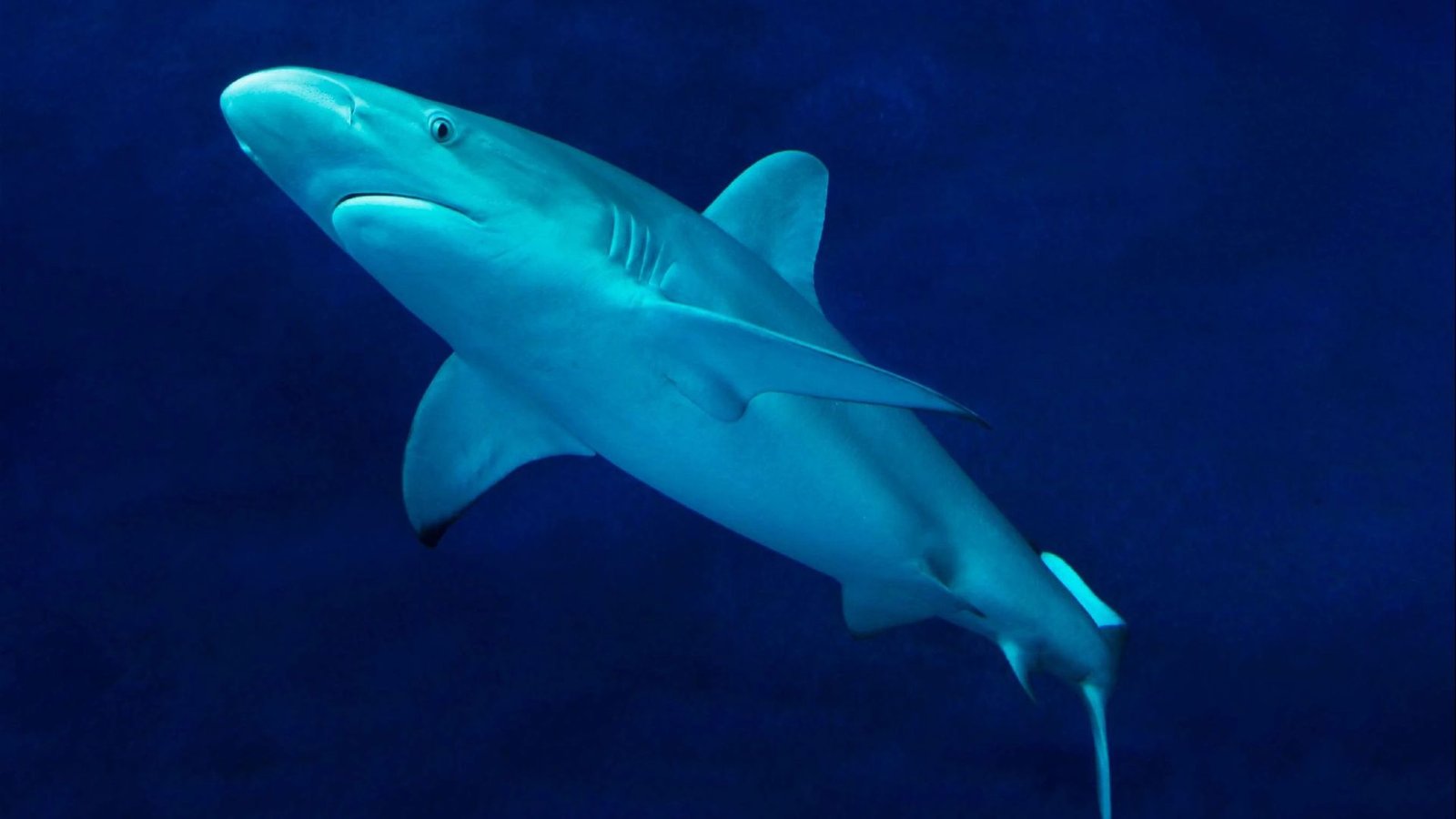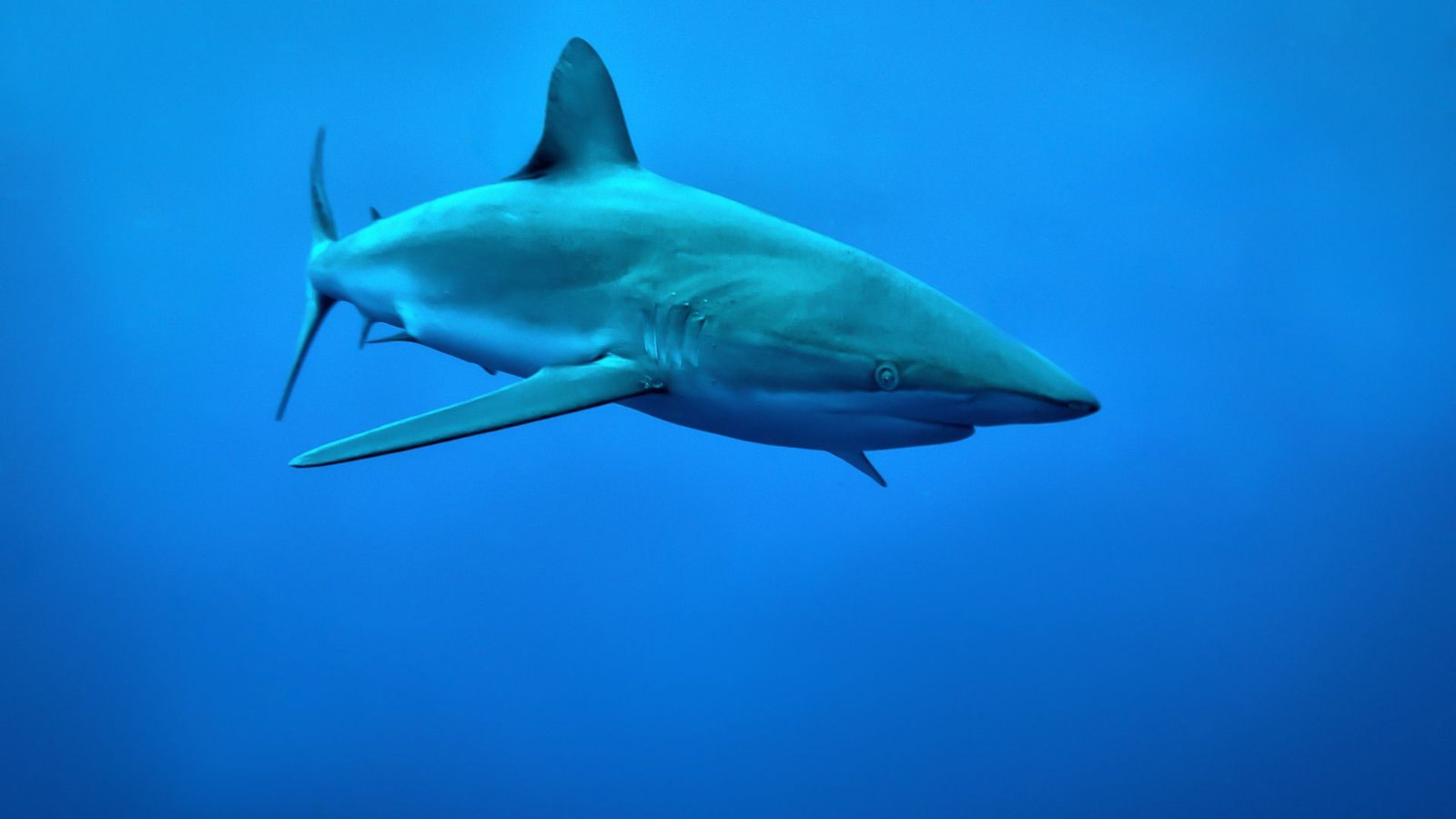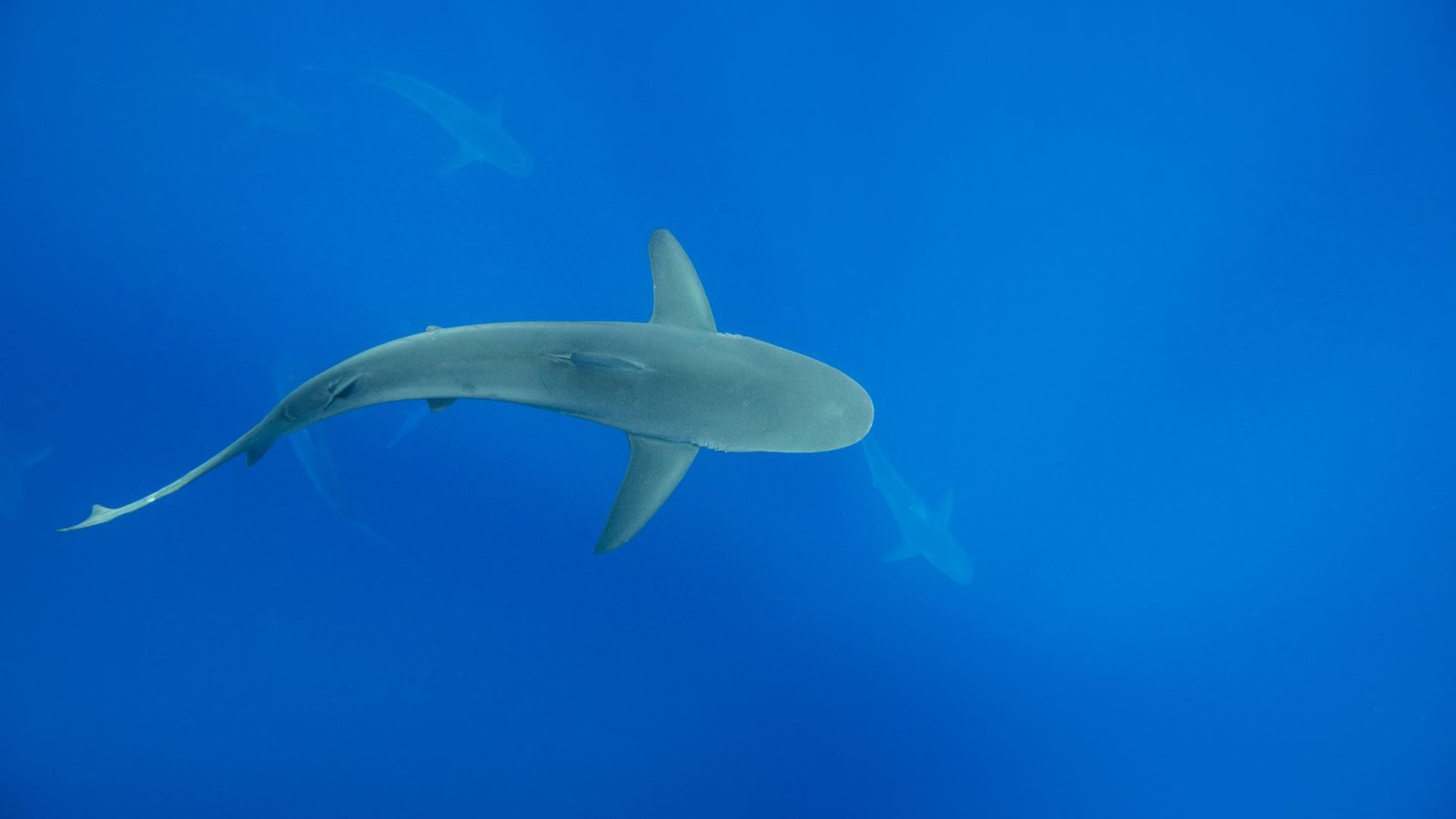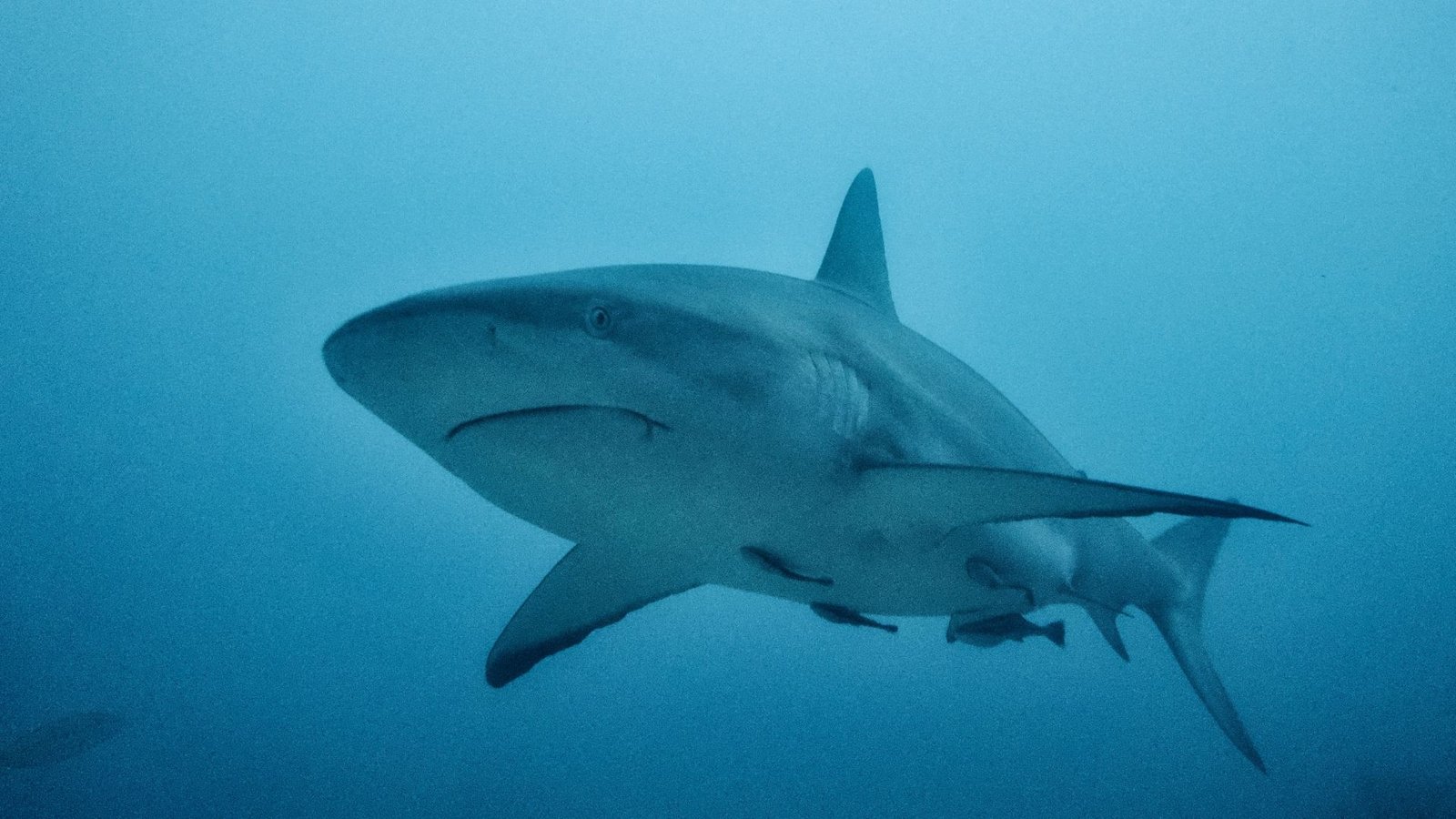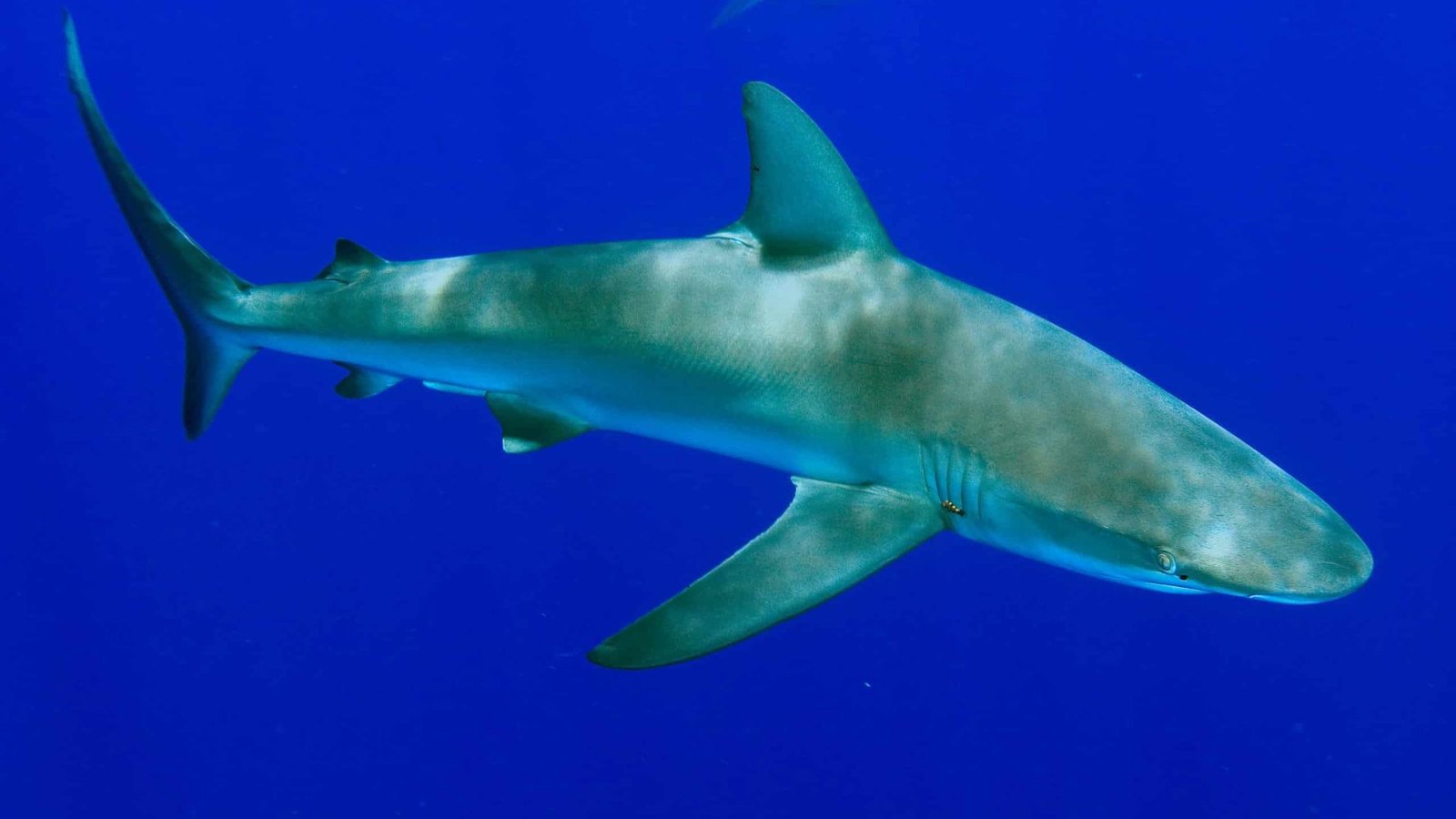



Robust requiem shark with fusiform body and high, slightly rounded first dorsal fin whose origin lies over (or just anterior to) the free rear tip of the pectorals. Snout long, broad and rounded; eyes circular with nictitating membrane. Dorsum uniform grey‑brown, ventrum white; no prominent flank markings. Pectorals long and falcate; second dorsal and anal fins similar in size with conspicuous pre‑anal ridge. Adults commonly 2.5–3.0 m TL; maximum verified 3.7 m and 190 kg. Dentition: upper teeth serrated, narrow‑triangular; lower teeth with weaker serrations. Juveniles < 80 cm show slender tails and darker fin tips. Sexes similar; adult males have elongated claspers.
Sexual dimorphism refers to the physical differences between males and females of the same species that go beyond reproductive organs. For example, size, colour or form.
Males 2.4 m; females 2.7 m (max 3.7 m)
90–150 kg
≈ 24–30 yr (vertebral ageing)
Not enough data
Not enough data
Males ≈ 6–7 yr / 215 cm TL; females ≈ 8–9 yr / 225 cm TL
Biennial or triennial; mating late dry season offshore, parturition wet‑season in shallow bays
4 – 16 pups (mean ≈ 8)
Robust requiem shark with fusiform body and high, slightly rounded first dorsal fin whose origin lies over (or just anterior to) the free rear tip of the pectorals. Snout long, broad and rounded; eyes circular with nictitating membrane. Dorsum uniform grey‑brown, ventrum white; no prominent flank markings. Pectorals long and falcate; second dorsal and anal fins similar in size with conspicuous pre‑anal ridge. Adults commonly 2.5–3.0 m TL; maximum verified 3.7 m and 190 kg. Dentition: upper teeth serrated, narrow‑triangular; lower teeth with weaker serrations. Juveniles < 80 cm show slender tails and darker fin tips. Sexes similar; adult males have elongated claspers.
Outer‑reef slopes, rocky pinnacles and seamount shoulders 3 – 180 m; strongly associated with oceanic islands (Cocos, Murciélago, Caño) and high‑current channels. Juveniles use protected sandy bays and lagoons < 25 m.
Upper‑mesopredator preying on jacks, snappers, surgeonfish, cephalopods and young sharks; scavenges whale and dolphin carcasses
Social Structure & Behaviour
Activity pattern: crepuscular/nocturnal foraging; daytime cruising above reef walls 10–40 m.
Group size: solitary to small groups (3–10); larger mixed‑species schools with silky and hammerhead sharks near baitfish balls.
Mating system: polygynandrous; courtship bites on female pectorals observed Galápagos Ridge May–July.
Territoriality: non‑territorial but high site fidelity to specific seamounts.
Communication: body arching and exaggerated pectoral dips signal dominance near bait sources.
Special behaviours: utilise cleaning stations staffed by barberfish (Johnrandallia nigrirostris); rest in up‑current “yo‑yo” zones conserving energy.
Taxonomic classification is a hierarchical system used in biology to organize and name living organisms. It arranges species into nested groups based on shared characteristics and evolutionary relationships.
🌍 The IUCN status refers to the conservation category assigned to a species by the International Union for Conservation of Nature, based on its risk of extinction
Exhibits “curious circling” of divers, often making close passes but rarely aggressive.
Tagging shows round‑trip migrations Cocos ↔ Galápagos ↔ Malpelo ~2 500 km in < 100 days.
Juvenile pigmentation (darker fin edges) fades as shark matures.
Forms loose aggregations of 10–30 above seamount plateaus during midday slack current, dispersing to forage at night.
Native
Decreasing


Erect, phalloid basidiome 15 – 25 cm tall arising from an ovate “egg.” Stipe white, spongy, honey‑combed (2–3 cm Ø) supporting an olive‑brown, slimy gleba on a conical cap (4–5 cm Ø) with reticulate pits. A delicate white lace‑like indusium (8–20 cm long) hangs from beneath the cap, forming a cylindrical skirt that may reach the substrate. Volva thick, white; base rooting. Gleba emits strong carrion‑like odour to attract dipteran vectors. Spores hyaline, elliptical, 3.5 × 2.0 µm. Basidiome matures rapidly (≈ 10 h) and collapses within 1–2 days.