Also known / common namesSpanish – Escarabajo elefante, Escarabajo rinoceronte;
Elephant Beetle(s) General Description
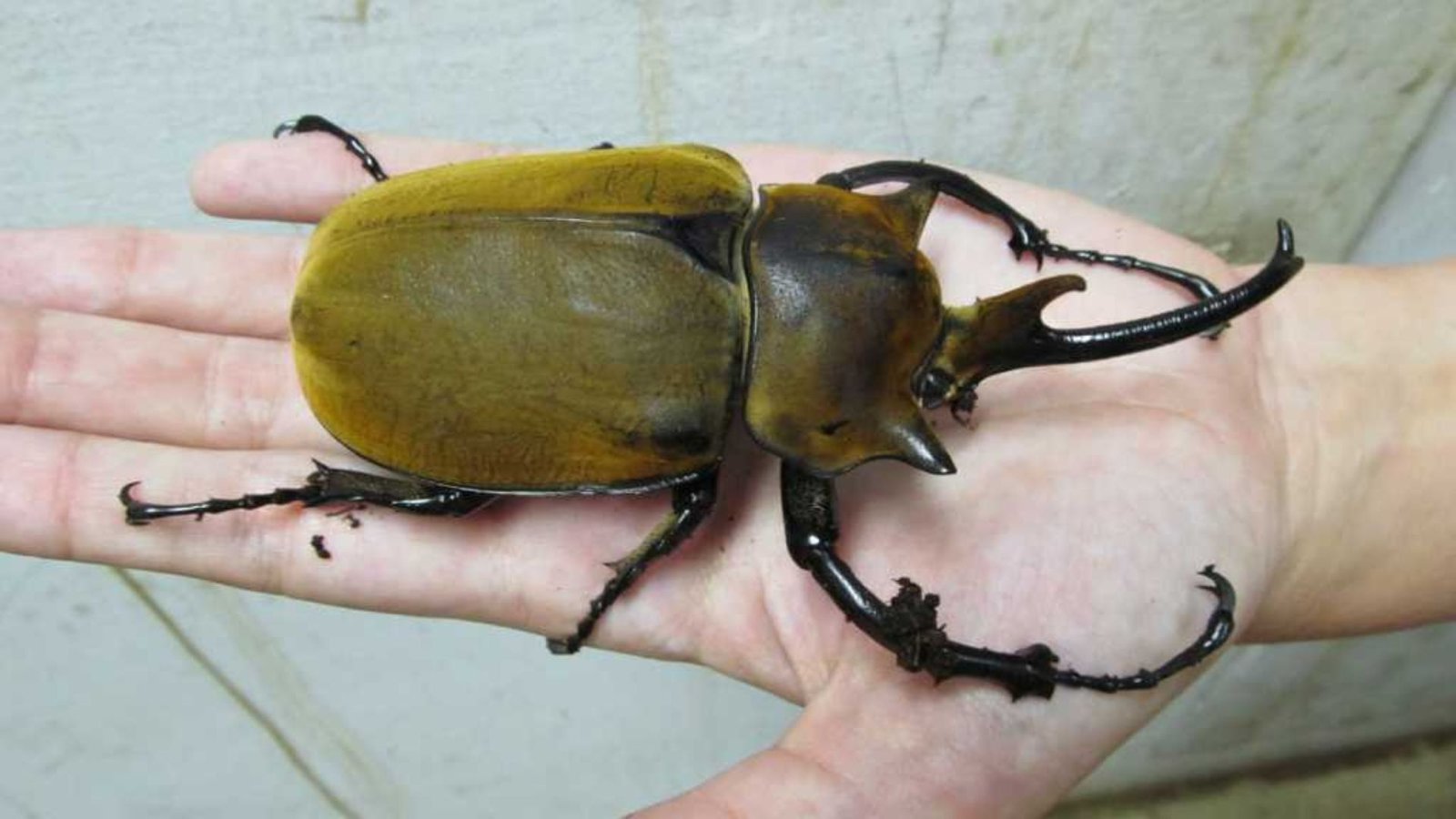
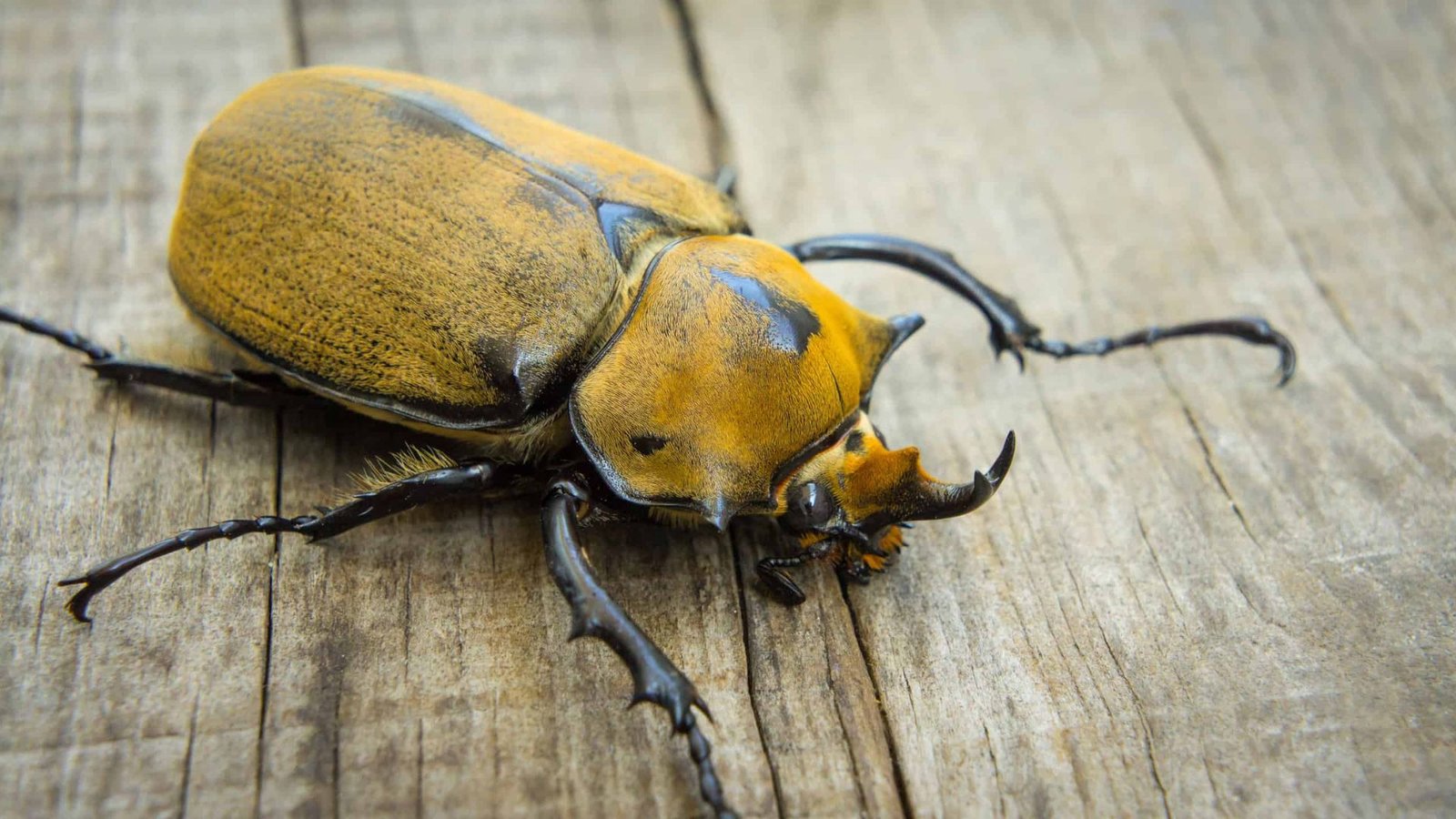
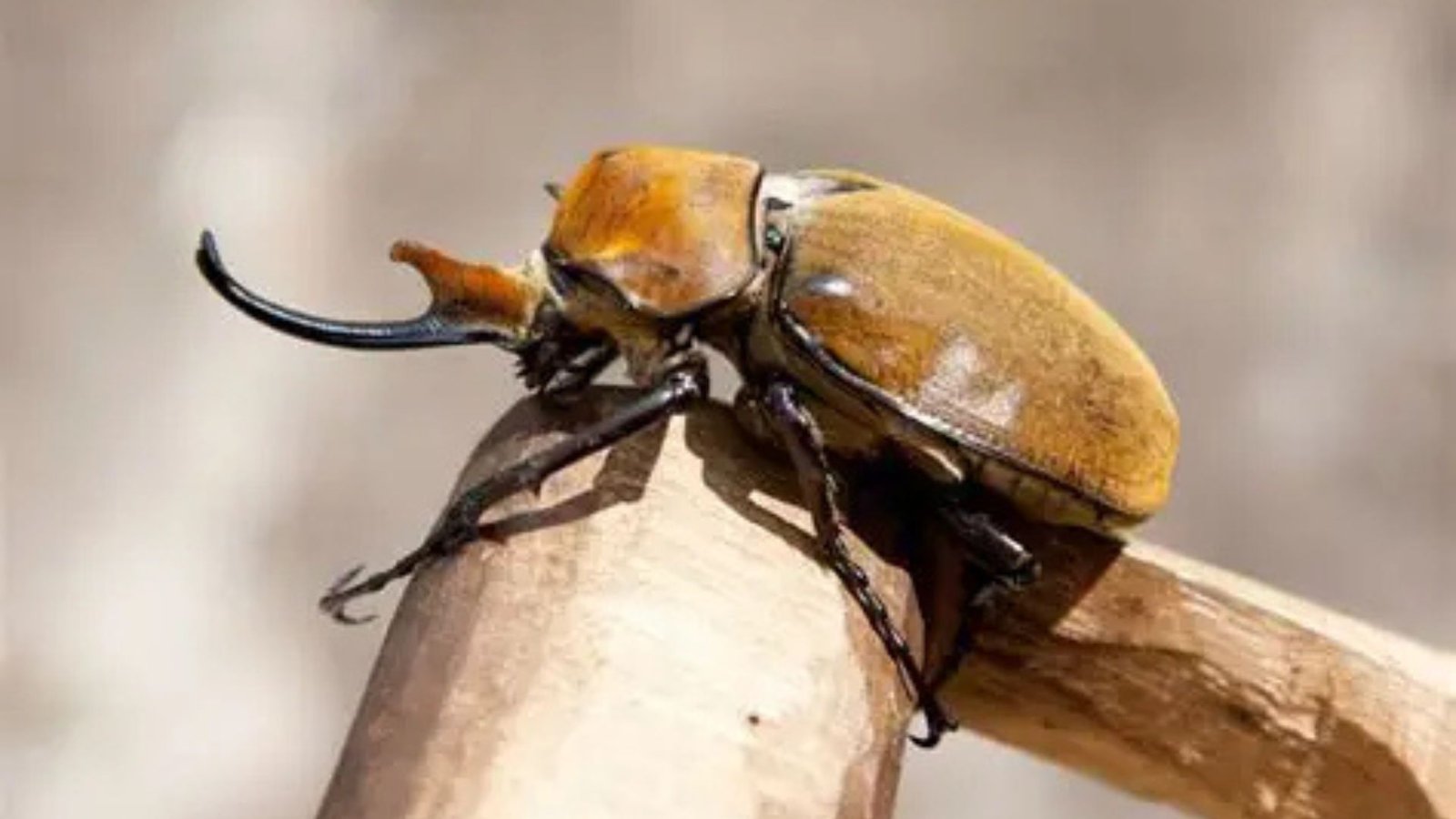
Massive Neotropical rhinoceros beetle (Scarabaeidae: Dynastinae) with robust, convex body and dense, velvety setae giving a matte appearance. Adult length typically 55–125 mm; males larger and armed with a long, curved cephalic horn and paired thoracic horns used in male–male combat; females lack large horns (only small tubercles). Color dark brown to black; elytra often dusty with fine pubescence. Antennae lamellate (clubbed). Adults fly strongly at night and are frequently attracted to lights. Larvae are large C-shaped white grubs with brown head capsule that develop inside decaying hardwood logs.
Has Sexual Diamorphism?
Sexual dimorphism refers to the physical differences between males and females of the same species that go beyond reproductive organs. For example, size, colour or form.
LIFE‑HISTORY & VITAL STATISTICS OF THE Elephant Beetle(S)
At or shortly after adult eclosion (sclerotization complete) — Data deficient for exact timing
Breading Season
Not enough data
Gestation
Reproductive Outcome
Data deficient (egg number per female not published for species)
Ecology and Behaviour for Elephant Beetle(s)
Massive Neotropical rhinoceros beetle (Scarabaeidae: Dynastinae) with robust, convex body and dense, velvety setae giving a matte appearance. Adult length typically 55–125 mm; males larger and armed with a long, curved cephalic horn and paired thoracic horns used in male–male combat; females lack large horns (only small tubercles). Color dark brown to black; elytra often dusty with fine pubescence. Antennae lamellate (clubbed). Adults fly strongly at night and are frequently attracted to lights. Larvae are large C-shaped white grubs with brown head capsule that develop inside decaying hardwood logs.
Habitat
Tropical evergreen & deciduous forests from 0–1 000 m; adults forage in canopy and along sap flows; larvae develop in large decaying logs on the forest floor. Occurs in primary and mature secondary forest mosaics.
Trophic Chain
Adult: sap feeder and consumer of ripe/fermenting fruit; Larva: detritivore in decomposing wood—thus contributing to nutrient cycling and wood decay.
Interespecies relationships noted for Elephant Beetle
Mutualism +/+
Yeasts on fermenting fruit/sap aid adult feeding; yeasts gain dispersal on beetle mouthparts. (Inferred from sap/fruit feeding across Dynastinae.)
Commensalism +/0
Adults exploit sap leaks on Fabaceae trees (e.g., Lonchocarpus castilloi “machiche”); host tree minimally affected.
Inquilinism +/0
Other detritivores inhabit larval galleries in logs, using loosened wood; beetles unaffected after emergence. (General wood-decay community dynamic.)
Parasitism -/0
Phorid flies/parasitoids may attack scarab adults or larvae (group-level); species-specific data for M. elephas are scarce. Data deficient.
Predation -/0
Nocturnal mammals/birds and large spiders prey on adults; larvae vulnerable to anteaters/armadillos when logs are disturbed. (Generalized for large Dynastinae.)
Competition -/-
Competes at sap flows with other sap feeders (e.g., Dynastes, moths) and with ants; contests mediated by horn fights and displacement.
Social behaviour of Elephant Beetle
Activity: Predominantly nocturnal; adults visit sap flows and ripe fruit; readily attracted to lights.
Mating:Male–male combat using horns; winners secure access to sap sites and receptive females.
Life history: Larvae develop in large rotting logs (white-rot wood), excavating galleries that aerate and fragment wood
Distribution and Sighthings ofElephant Beetle(s) in Costa Rica
General Regions of Costa Rica where to find Elephant Beetles
Tropical
Tropical Rain Forest
National Parks and Reserves of Costa Rica where to find Elephant Beetles
Parque Nacional Barbilla
Parque Nacional Braulio Carrillo
Parque Nacional Cahuita
Parque Nacional Corcovado
Parque Nacional Piedras Blancas
Parque Nacional Tapantí – Macizo Cerro de la Muerte
Parque Nacional Tortuguero
Reserva Forestal Golfo Dulce
Reserva Biológica Hitoy-Cerere
Refugio Nacional de Vida Silvestre Barra del Colorado
Refugio Nacional de Fauna Silvestre Caño Negro
Best Time to seeElephant Beetle(s) in Costa Rica
Dry Season
January
February
March
April
June
July
August
September
October
November
December
Media
Videos
Sounds and calls
log in to help us with this an other posts.
This sheet is marked as: Revision required
Taxonomy
Taxonomic classification is a hierarchical system used in biology to organize and name living organisms. It arranges species into nested groups based on shared characteristics and evolutionary relationships.
Kingdom Animalia
Phylum Arthropoda
Class Insecta
Order Coleoptera
Genus Megasoma
Conservation Status
Status IUCN
🌍 The IUCN status refers to the conservation category assigned to a species by the International Union for Conservation of Nature, based on its risk of extinction
Not Evaluated (NE)
Threats
⚠️Competes at sap flows with other sap feeders (e.g., Dynastes, moths) and with ants; contests mediated by horn fights and displacement.
⚠️Collection/curio trade (specimens offered commercially) may pressure local populations near access points.
⚠️Light pollution disrupts nocturnal behavior and increases mortality near lights (shown broadly for scarab assemblages).
⚠️Agrochemical drift around forest edges may affect adult sap/fruit resources and larval microfauna (inference from sap-feeding ecology).
Fun Facts
Among the heaviest beetles; large males can approach ~50 g and ~10 cm.
Adults cut twigs at night with crossed fore-tibiae to induce sap flow—then feed. Strongly nocturnal and light-attracted; often seen at research stations’ lights (e.g., La Selva).
Larvae grow in huge rotting logs for well over a year, helping decompose hardwoods.