Also known / common namesSpanish – Tiburón martillo coronado, Cornuda coronada; local fishers often dicen “martillito”
Crowned (or Scalloped) Bonnethead(s) General Description
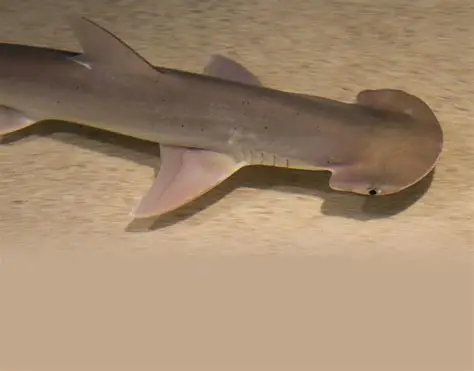
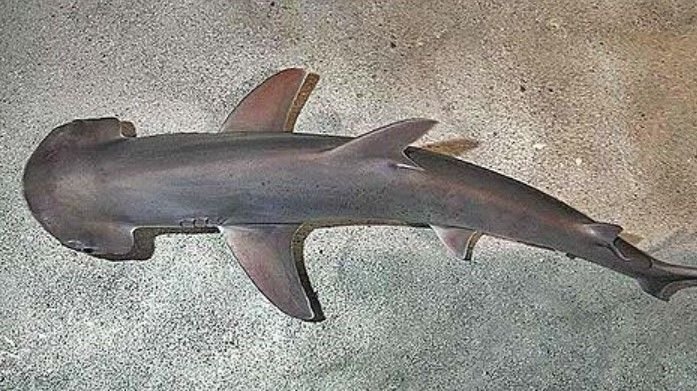
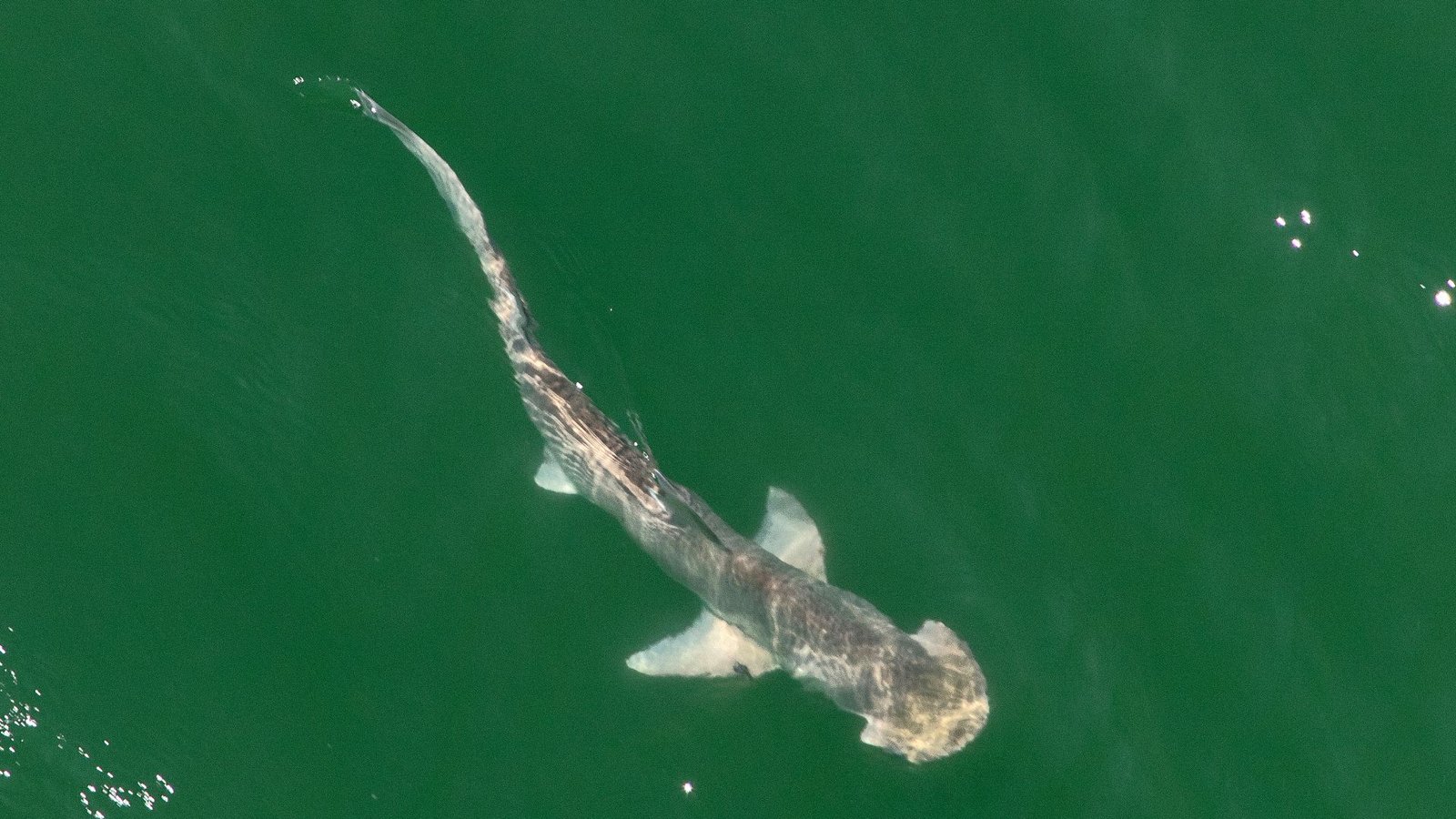
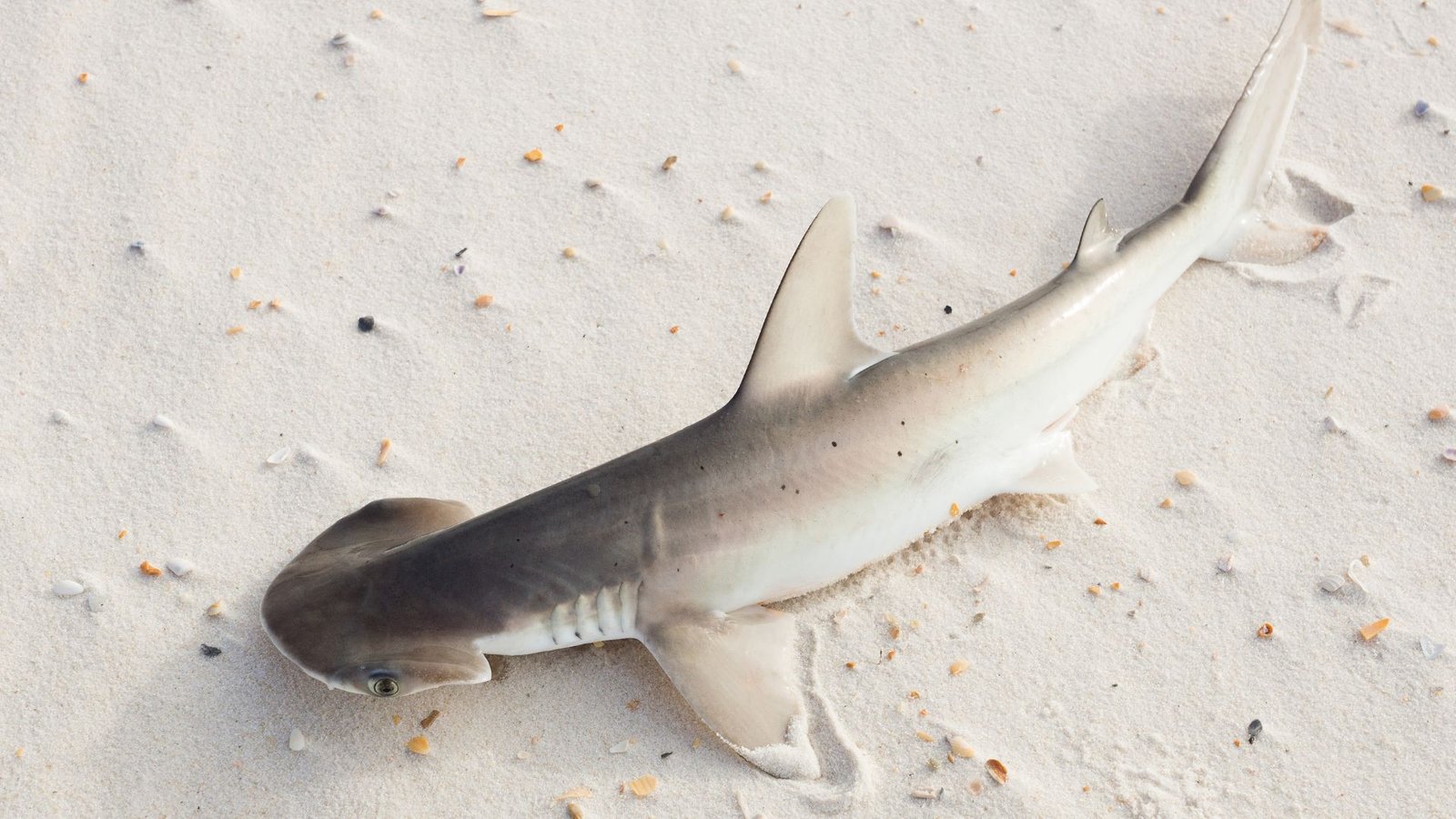
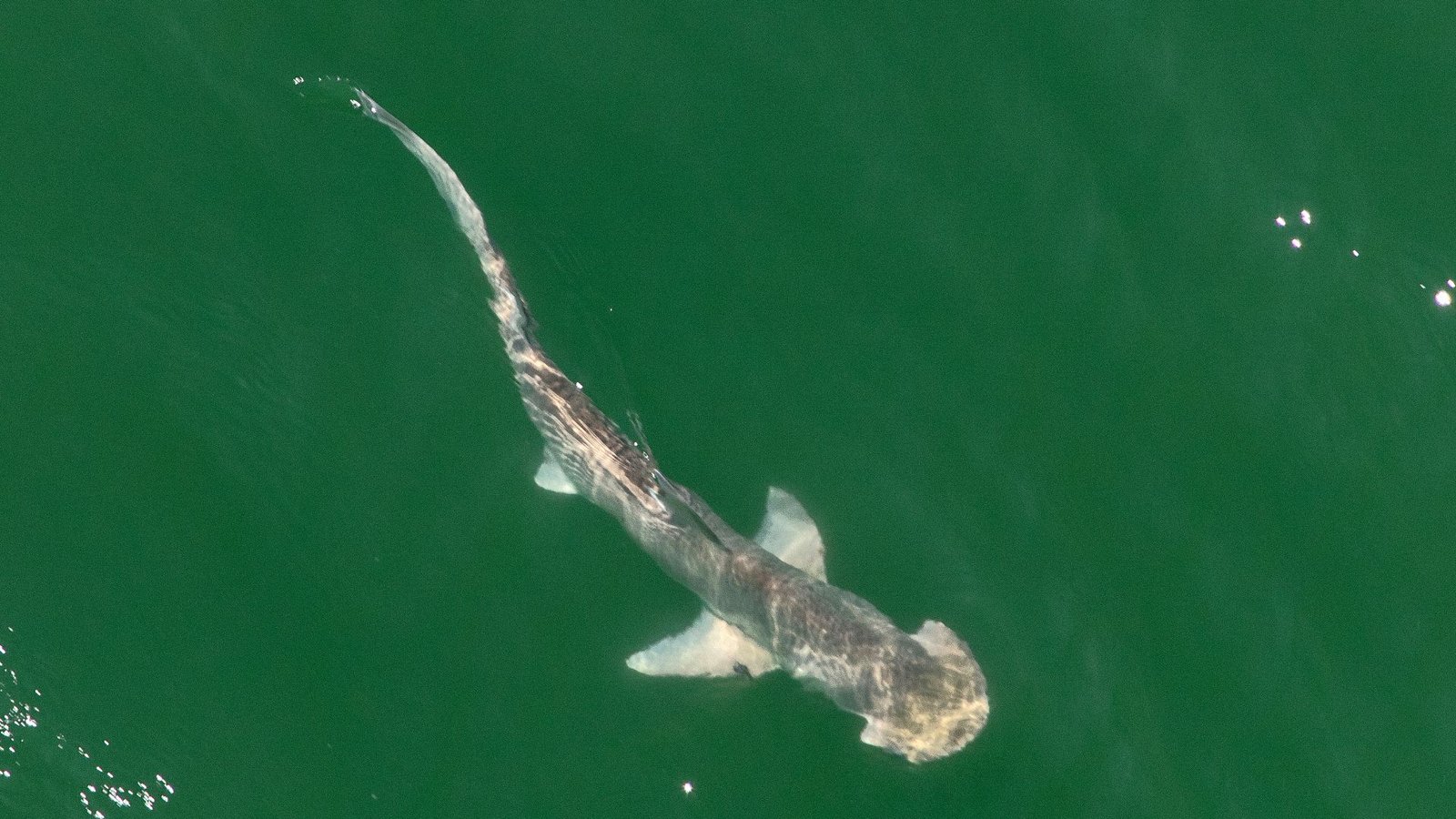
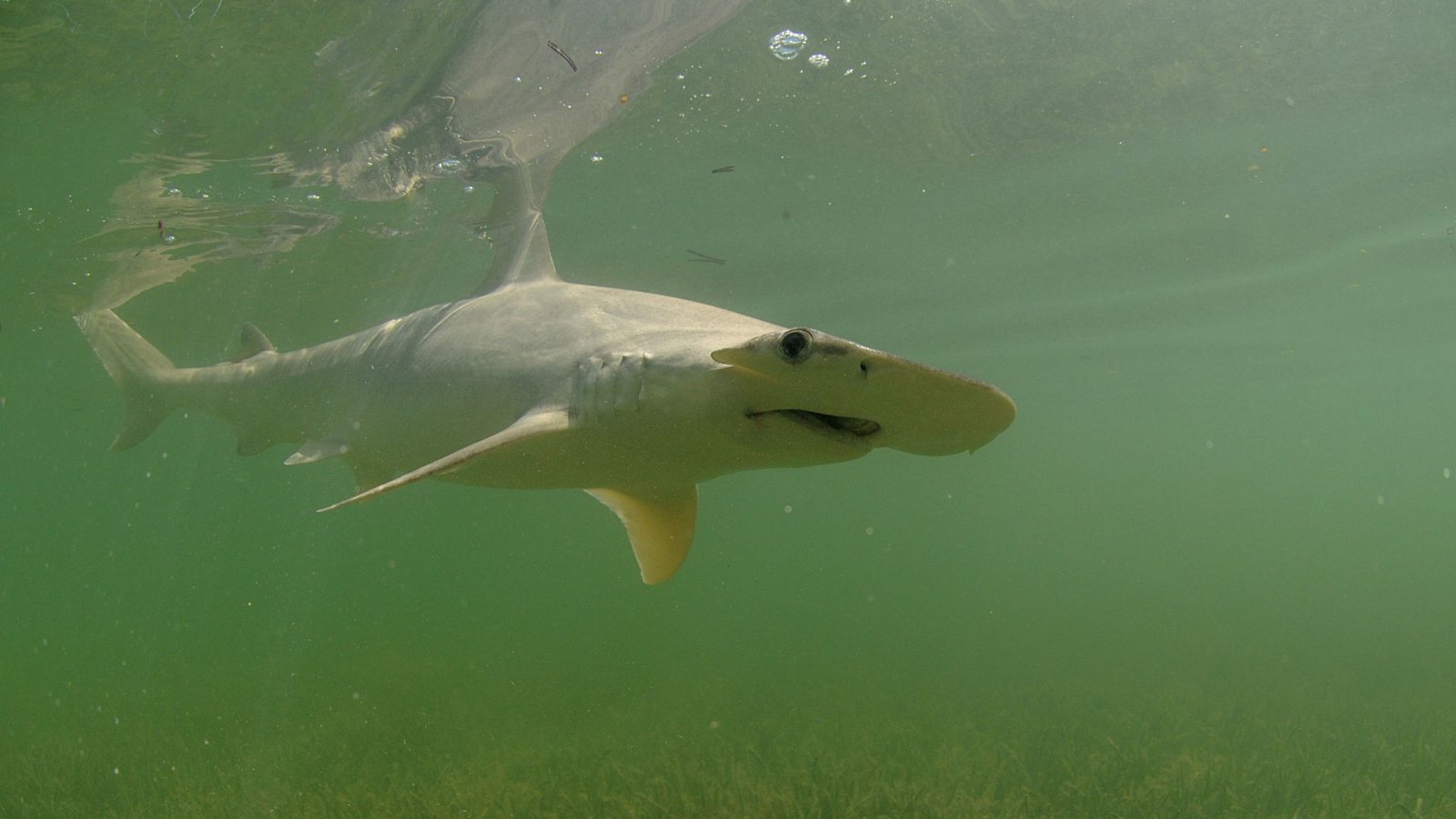
The smallest hammerhead in Pacific Central America, rarely exceeding 120 cm total length. Cephalofoil narrow and rounded, its anterior margin with a shallow median indentation that gives a “crown‑like” outline; nostrils positioned near the tips. Body slender, dorsum grey‑brown sometimes mottled, ventrum whitish. Two high, falcate dorsal fins—the first originates over pectoral trailing edge; the second nearly as tall as anal fin. Pectorals short and straight. Eyes large; dermal denticles finely serrated. Sexual dimorphism minimal: adult females slightly larger, males with elongated claspers. Newborns 28–32 cm and lack the pronounced “crown” scalloping.
Has Sexual Diamorphism?
Yes
Sexual dimorphism refers to the physical differences between males and females of the same species that go beyond reproductive organs. For example, size, colour or form.
LIFE‑HISTORY & VITAL STATISTICS OF THE Crowned (or Scalloped) Bonnethead(S)
Average Height / Length / Diameter
90–110 cm TL (max ≈ 124 cm)
Average Adult Weight / Mass
4–6 kg (est.)
Typical Lifespan / Longevity
≤ 15 yr (data limited)
Typical Lifespan / Longevity for males
not enough data
Typical Lifespan / Longevity for Females
not enough data
Age at Sexual Maturity
Males ≈ 2 yr / 70 cm; females ≈ 3 yr / 80 cm
Breading Season
Viviparous with yolk‑sac placenta
Gestation
Reproductive Outcome
2 – 6 pups (avg 4) every 1–2 yr
Ecology and Behaviour for Crowned (or Scalloped) Bonnethead(s)
The smallest hammerhead in Pacific Central America, rarely exceeding 120 cm total length. Cephalofoil narrow and rounded, its anterior margin with a shallow median indentation that gives a “crown‑like” outline; nostrils positioned near the tips. Body slender, dorsum grey‑brown sometimes mottled, ventrum whitish. Two high, falcate dorsal fins—the first originates over pectoral trailing edge; the second nearly as tall as anal fin. Pectorals short and straight. Eyes large; dermal denticles finely serrated. Sexual dimorphism minimal: adult females slightly larger, males with elongated claspers. Newborns 28–32 cm and lack the pronounced “crown” scalloping.
Habitat
Shallow coastal waters (0 – 40 m), muddy bays, mangrove creeks and estuary mouths on the Pacific slope; rarely recorded around offshore islands. Juveniles concentrate over soft bottoms within 2 km of river mouths.
Trophic Chain
Mesopredator feeding on benthic crustaceans (prawns, swimming crabs), small demersal fishes and cephalopods; prey detected via electrosensory pores on cephalofoil
Interespecies relationships noted for Crowned (or Scalloped) Bonnethead
Mutualism + / +
Juvenile jacks consume parasites off shark skin while gaining protection.
Symbiosis + / +
Gut microbiota help digest crustacean chitin; bacteria receive nutrients & habitat.
Commensalism + / 0
Remoras rarely attach due to small size; when present they gain transport without effect.
Inquilinism + / 0
Snapping shrimp use shark‑excavated pits as burrow entrances.
Phoresy + / 0
Copepod larvae hitchhike on fins to colonise new estuaries.
Tanatocresis + / 0
Dead sharks become feeding platforms for juvenile croakers; shark unaffected post‑mortem.
Feeds on swimming crabs (Callinectes), mantis shrimp, anchovies; preyed upon by tiger sharks and large snook in turbid estuaries.
Amensalism 0 / –
Stirring sediment while foraging smothers nearby filter‑feeding bivalves without benefit to shark.
Competition – / –
Overlaps with juvenile blacktip shark (Carcharhinus limbatus) for estuarine prawns.
Social behaviour of Crowned (or Scalloped) Bonnethead
Social Structure & Behaviour
Activity pattern: mostly crepuscular; rests on or near bottom during midday slack tides.
Group size: solitary or small loose groups (2–6) in turbid shallows; no large schooling like S. lewini.
Movements: tidal migrations into mangrove creeks on rising tide, retreat to near‑shore sand flats at ebb.
Communication: vision limited by turbidity—chemical cues and electroreception dominate; no documented courtship displays.
Special behaviours: uses lateral head sweeps to stun shrimp before suction feeding
Distribution and Sighthings ofCrowned (or Scalloped) Bonnethead(s) in Costa Rica
General Regions of Costa Rica where to find Crowned (or Scalloped) Bonnetheads
Caribbean Sea
Pacific Ocean
National Parks and Reserves of Costa Rica where to find Crowned (or Scalloped) Bonnetheads
Reserva Forestal Golfo Dulce
Refugio Nacional de Vida Silvestre Curú
Refugio Nacional de Fauna Silvestre Ostional
Best Time to seeCrowned (or Scalloped) Bonnethead(s) in Costa Rica
Dry Season
January
February
March
April
June
July
August
September
October
November
December
Media
Videos
Sounds and calls
log in to help us with this an other posts.
This sheet is marked as: Revision required
Taxonomy
Taxonomic classification is a hierarchical system used in biology to organize and name living organisms. It arranges species into nested groups based on shared characteristics and evolutionary relationships.
Kingdom Animalia
Phylum Chordata
Class Chondrichthyes
Order Carcharhiniformes
Genus Sphyrna
Conservation Status
Status IUCN
🌍 The IUCN status refers to the conservation category assigned to a species by the International Union for Conservation of Nature, based on its risk of extinction
Critically Endangered
Threats
⚠️High by‑catch in artisanal gill‑nets set at river mouths and shrimp‑trawl by‑catch.
⚠️Habitat loss: clearing of mangroves for aquaculture, tourism and coastal roads.
⚠️Pollution: agrochemical run‑off lowers oxygen and salinity in nursery creeks.