Also known / common namesSpanish – Ceiba, Ceibo, Ceiba blanca, Árbol de Kapok; Bribri – Shö'kë; Cabécar – Fa’ka
Ceiba Tree(s) General Description
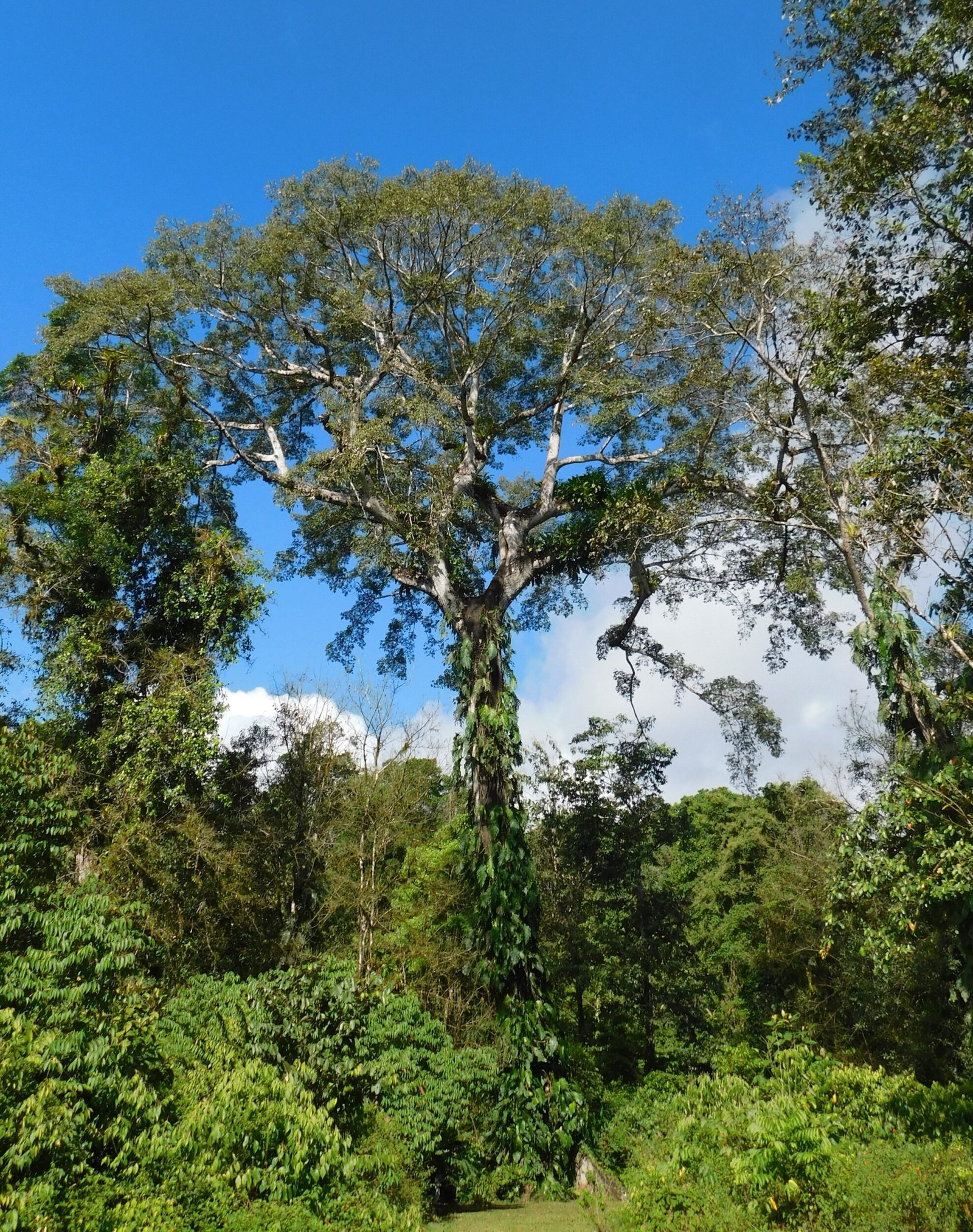
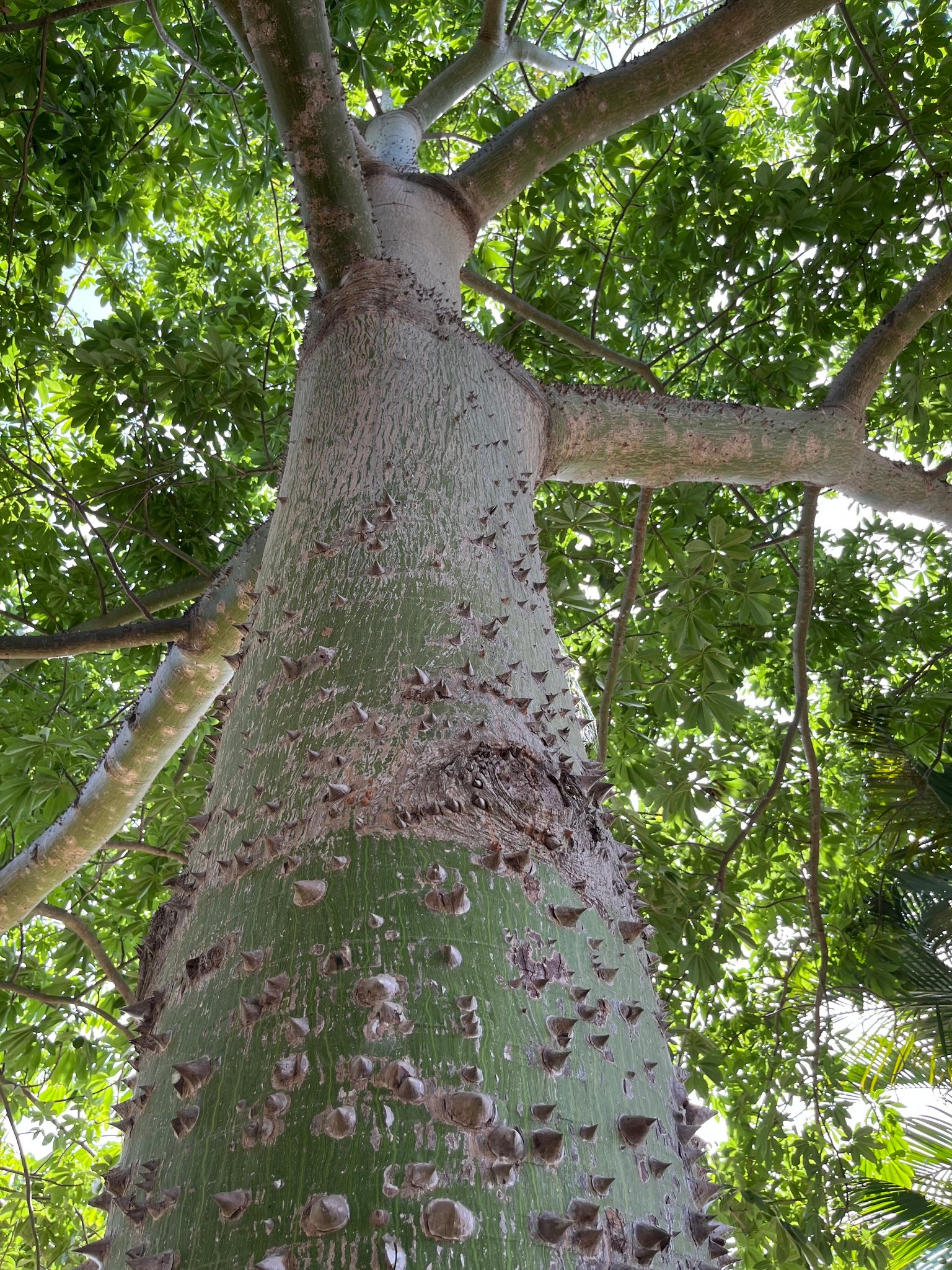
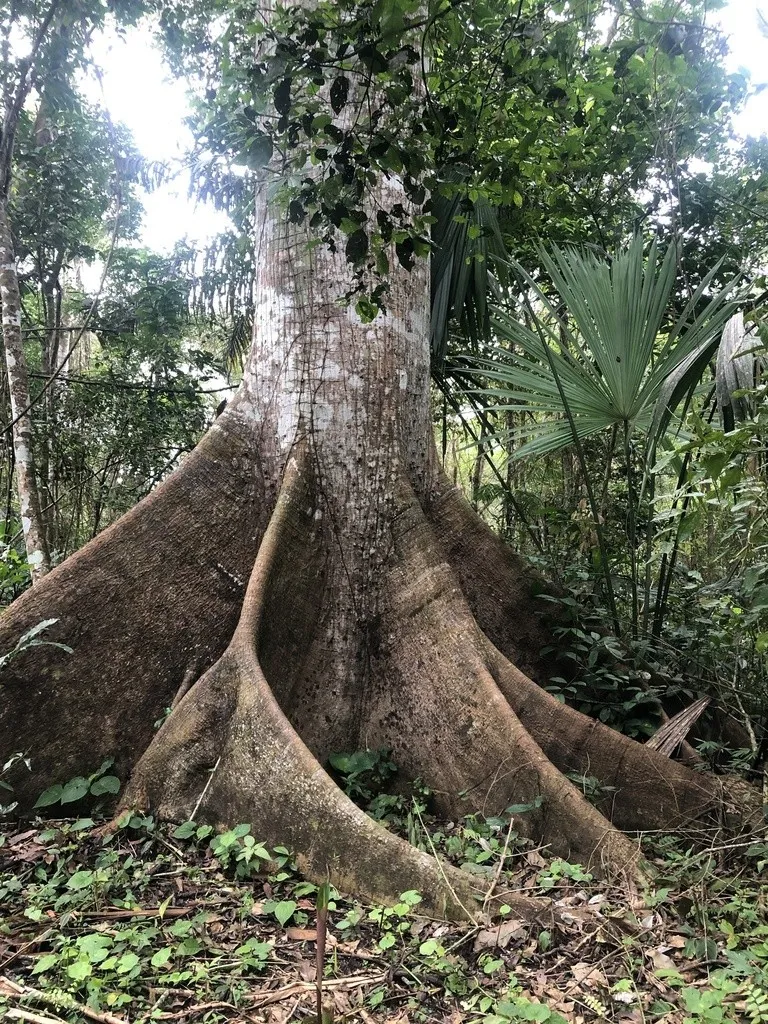
A towering emergent of Neotropical forests, Ceiba pentandra typically develops a straight, cylindrical bole crowned by massive plank‑like buttresses that may rise 3–5 m up the trunk. Juvenile bark is grey‑green and armed with stout conical spines, becoming smoother and grey with age. Leaves are palmately compound with 5–9 lanceolate leaflets (8–18 cm long).
Creamy‑white, five‑petalled flowers 6–8 cm across open in the dry season on leafless branches, releasing a musky odour that attracts nocturnal bats. Woody ovoid pods (12–18 cm) mature in early rains, splitting to expose hundreds of 5 mm brown seeds embedded in silky, water‑repellent kapok fibres. Trees reach 45–70 m tall and to ≥ 3 m diameter at breast height (DBH).
Has Sexual Diamorphism?
No
Sexual dimorphism refers to the physical differences between males and females of the same species that go beyond reproductive organs. For example, size, colour or form.
LIFE‑HISTORY & VITAL STATISTICS OF THE Ceiba Tree(S)
Average Height / Length / Diameter
45–70 m height; 1.5–3 m DBH
Average Adult Weight / Mass
Data deficient (Several Tons)
Typical Lifespan / Longevity
200–300 yr (occasionally longer)
Typical Lifespan / Longevity for males
Data deficient (monoecious)
Typical Lifespan / Longevity for Females
Data deficient (monoecious)
Age at Sexual Maturity
5–15 yr (first flowering)
Breading Season
Flowers December – February (dry season)
Gestation
Seed maturation 4–5 mo; germination rapid in moist soils
Reproductive Outcome
Ecology and Behaviour for Ceiba Tree(s)
A towering emergent of Neotropical forests, Ceiba pentandra typically develops a straight, cylindrical bole crowned by massive plank‑like buttresses that may rise 3–5 m up the trunk. Juvenile bark is grey‑green and armed with stout conical spines, becoming smoother and grey with age. Leaves are palmately compound with 5–9 lanceolate leaflets (8–18 cm long).
Creamy‑white, five‑petalled flowers 6–8 cm across open in the dry season on leafless branches, releasing a musky odour that attracts nocturnal bats. Woody ovoid pods (12–18 cm) mature in early rains, splitting to expose hundreds of 5 mm brown seeds embedded in silky, water‑repellent kapok fibres. Trees reach 45–70 m tall and to ≥ 3 m diameter at breast height (DBH).
Habitat
Predominantly active during Widespread in lowland evergreen and seasonal dry forests below ~1 200 m; thrives on alluvial terraces, riverbanks and seasonally inundated flats where competition for light favours emergent stature.
Trophic Chain
Primary producer and keystone nectar source for sphingid moths, nectar‑feeding bats and parrots; kapok seeds consumed by primates and birds, aiding dispersal.
Roots form arbuscular mycorrhizae (e.g., Glomus spp.) that boost phosphorus uptake; fungi obtain photosynthate.
Commensalism + / 0
Epiphytic bromeliads and orchids anchor on Ceiba trunks to gain light and moisture; tree structure is not harmed.
Inquilinism + / 0
Scarlet macaws (Ara macao), barn owls and kinkajous nest or den in natural hollows of mature Ceiba trunks.
Phoresy + / 0
No documented case.
Tanatocresis + / 0
Following branch death, hollow limbs are colonised by stingless bees (Melipona spp.) for hive sites; former branch tissue is repurposed, tree unaffected.
Parasitism + / –
Strangler fig (Ficus spp.) seedlings germinate in canopy crotches; as aerial roots encircle the trunk they can constrict and eventually kill host Ceiba.
Predation + / –
Scarlet macaws and great green macaws crack open unripe pods to consume seeds, reducing Ceiba’s reproductive output.
Amensalism 0 / –
Dense shade and allelopathic leaf litter suppress germination of understory herbs without affecting the Ceiba’s own growth.
Competition – / –
Competes with other emergent canopy trees (e.g., Dipteryx panamensis) for light and below‑ground resources—mutual growth rates decline in crowded stands.
Social behaviour of Ceiba Tree
“Social” Traits & Reproductive Behaviour
Flowering phenology: leafless canopy displays masses of creamy‑white flowers during the late dry season (Dec – Feb).
Pollination: primarily by nectar‑feeding bats—e.g., the Pallas’s long‑tongued bat (Glossophaga soricina) and the greater spear‑nosed bat (Phyllostomus hastatus)—which lap copious nocturnal nectar while transferring pollen. Large sphingid moths provide secondary pollination.
Breeding system: self‑incompatible; cross‑pollination promotes high genetic diversity in emergent populations.
Seed dispersal: fruits dehisce at the start of the rainy season; wind and up‑drafts carry the buoyant kapok‑fiber parachutes kilometres; seeds that land in rivers can float for weeks, enabling riparian colonisation.
Structural “sociality”: massive buttresses and forked limbs host a micro‑community of epiphytes, ants, tree frogs and cavity‑nesting birds; fallen buttresses create nurse logs that foster seedling recruitment of other species.
Distribution and Sighthings ofCeiba Tree(s) in Costa Rica
General Regions of Costa Rica where to find Ceiba Trees
Tropical
Mangroves
Seasonal dry forest (Guanacaste)
Tropical rainforest (Caribbean and North Pacific slopes)
Pre Montano
National Parks and Reserves of Costa Rica where to find Ceiba Trees
Parque Nacional Barbilla
Parque Nacional Barra Honda
Parque Nacional Cahuita
Parque Nacional Carara
Parque Nacional Corcovado
Parque Nacional Guanacaste
Parque Nacional Marino Las Baulas de Guanacaste
Parque Nacional Manuel Antonio
Parque Nacional Piedras Blancas
Parque Nacional Santa Rosa
Parque Nacional Tortuguero
Reserva Biológica Hitoy-Cerere
Reserva Biológica Isla de los Pájaros
Reserva Biológica Lomas de Barbudal
Reserva Bosque Nuboso Santa Elena
Refugio Nacional de Vida Silvestre Barra del Colorado
Refugio Nacional de Fauna Silvestre Caño Negro
Refugio Nacional de Vida Silvestre Curú
Best Time to seeCeiba Tree(s) in Costa Rica
Dry Season
Wet Season
January
February
March
March_copy
April
June
July
August
September
October
November
December
Media
Videos
Sounds and calls
log in to help us with this an other posts.
This sheet is marked as: Complete
Taxonomy
Taxonomic classification is a hierarchical system used in biology to organize and name living organisms. It arranges species into nested groups based on shared characteristics and evolutionary relationships.
Kingdom Plantae
Phylum Tracheophyta
Class Magnoliopsida
Order Malvales
Genus Ceiba
Conservation Status
Status IUCN
🌍 The IUCN status refers to the conservation category assigned to a species by the International Union for Conservation of Nature, based on its risk of extinction
Least Concern
Threats
⚠️Conversion of lowland forest to cattle pasture, oil‑palm and pineapple plantations.
⚠️Selective felling for lightweight, termite‑resistant timber.
⚠️Decline of chiropteran pollinators and frugivorous dispersers from habitat fragmentation.
⚠️Increased drought frequency reducing seedling establishment in dry zones.
Fun Facts
Kapok fibre was the principal stuffing for life‑jackets in World War II due to its buoyancy.
Sacred in many Mesoamerican cosmologies; Maya viewed the Ceiba as the axis mundi connecting underworld, earth and heavens.
Shallow coral and rocky reefs, sand flats, seagrass beds and mangrove channels from intertidal pools to ≈ 70 m; in Costa Rica abundant around Isla del Caño, Golfo Dulce, Bahía Culebra, and Caribbean patch reefs of Cahuita.