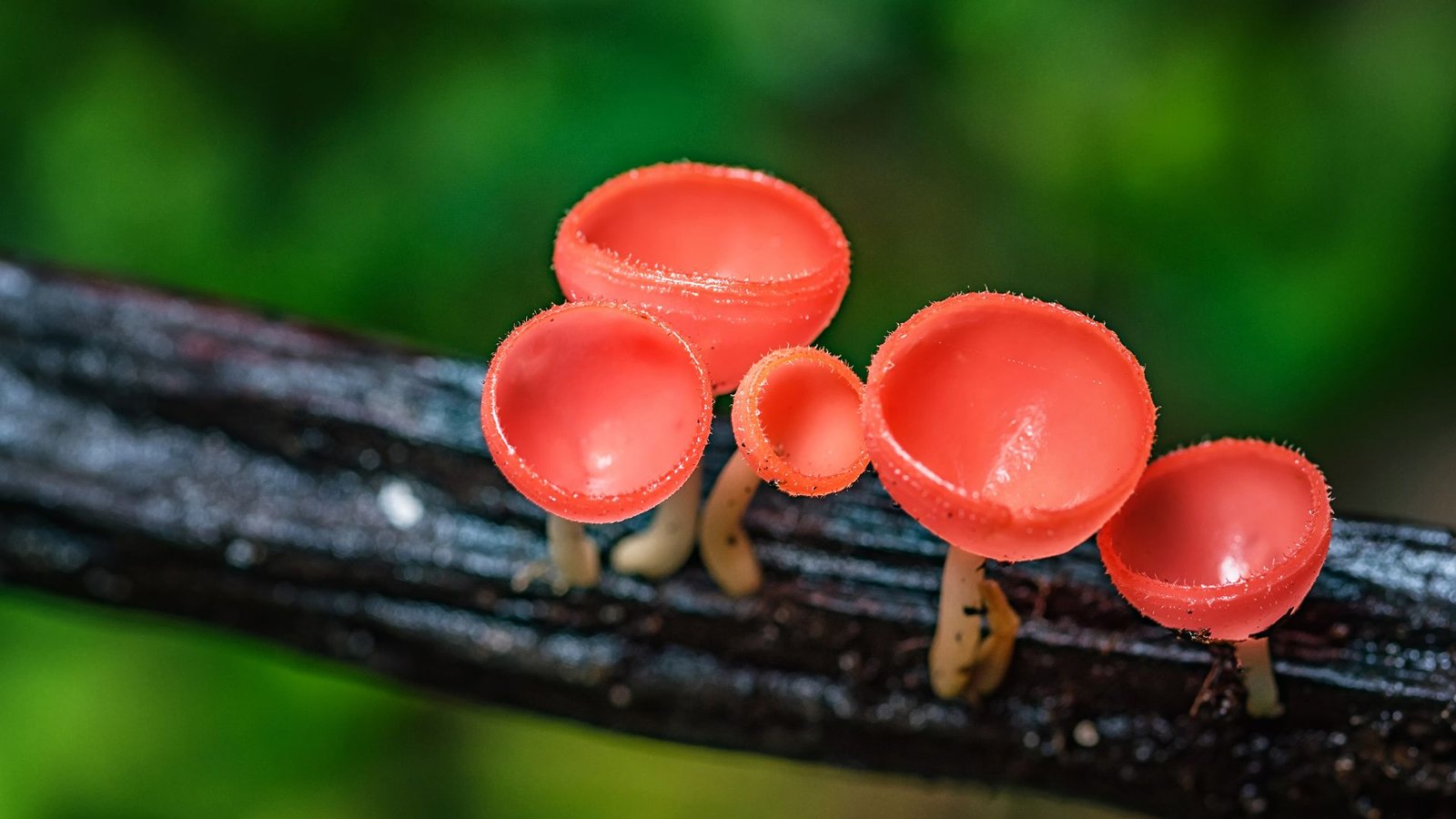
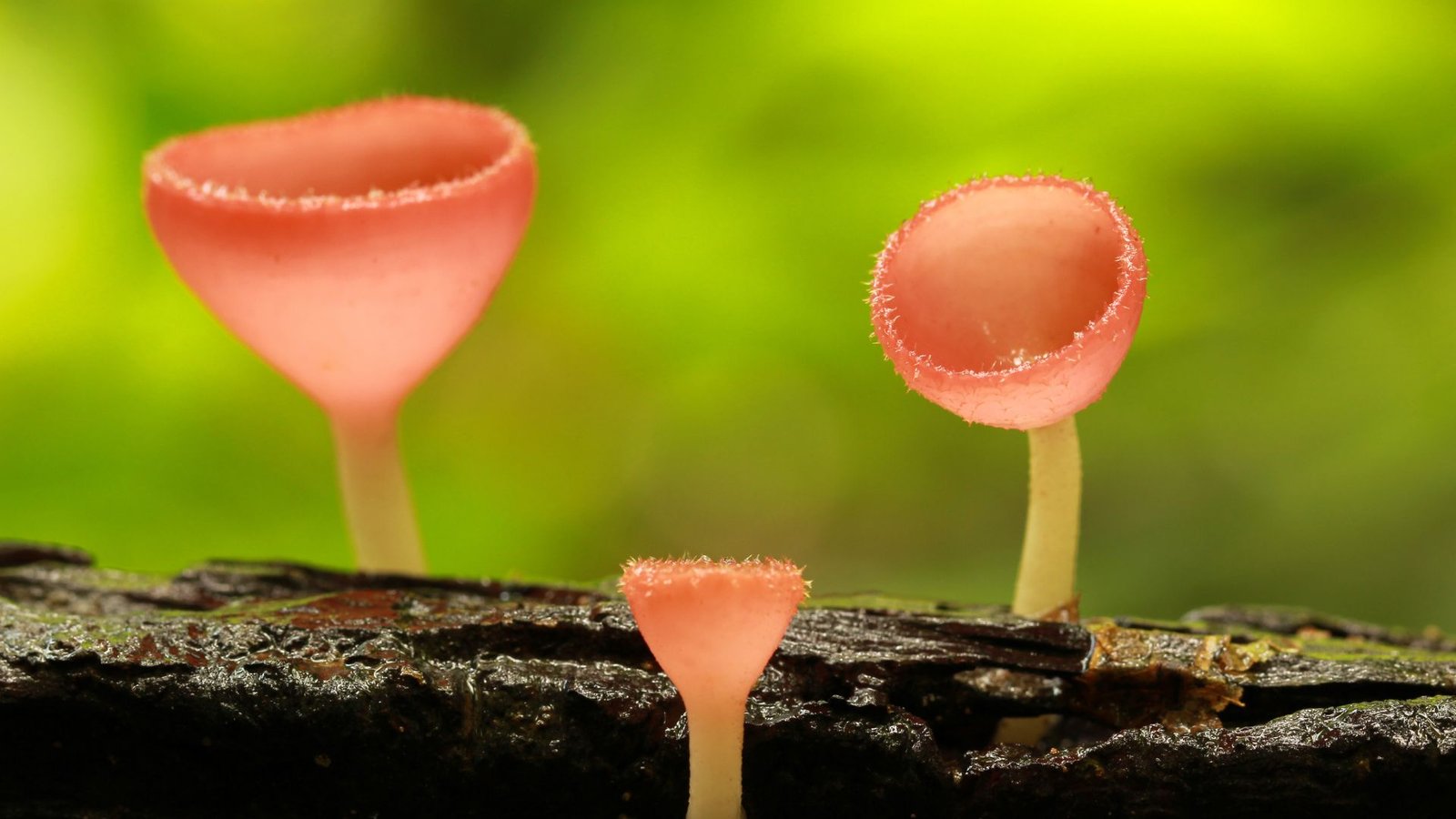
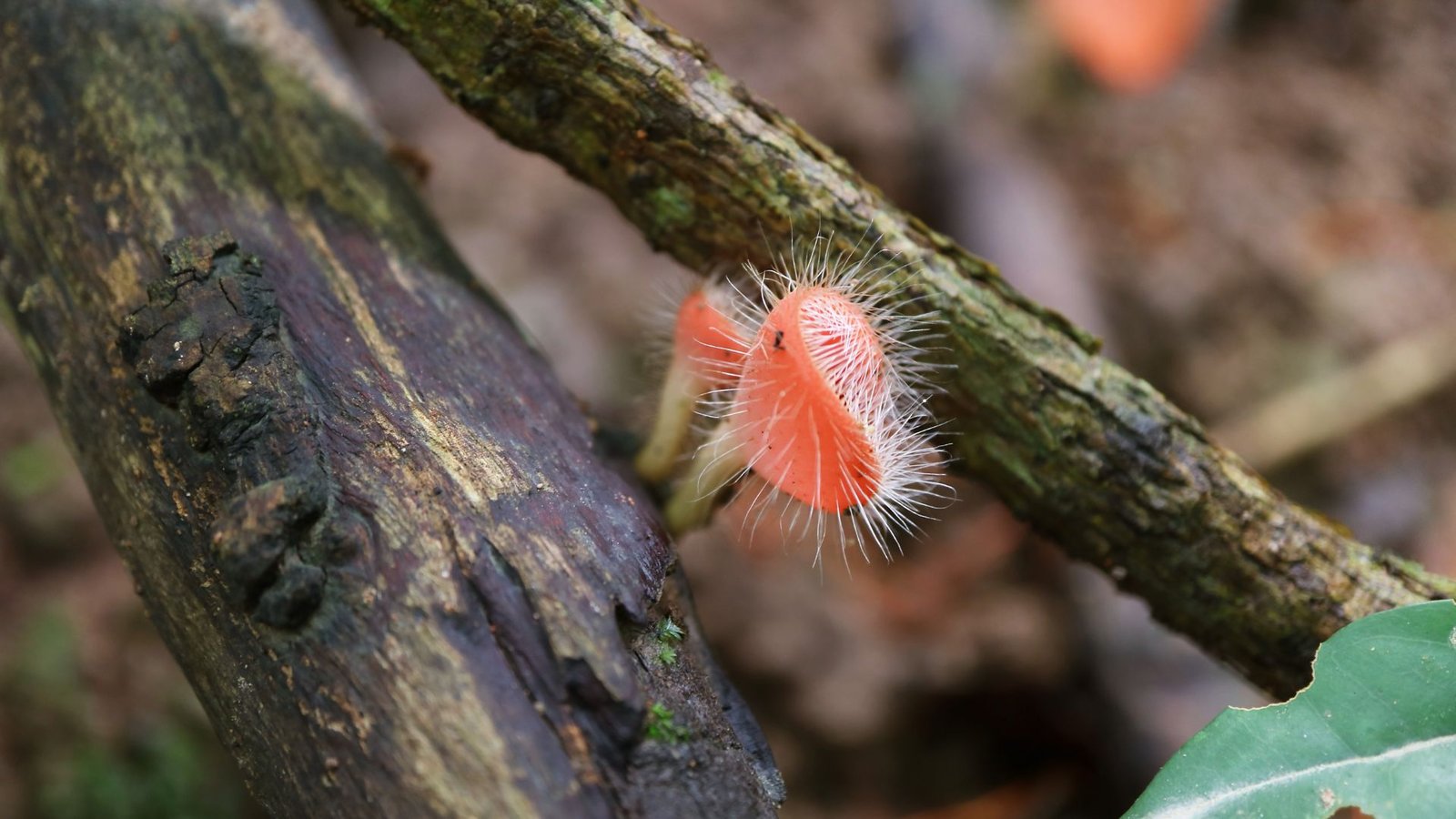
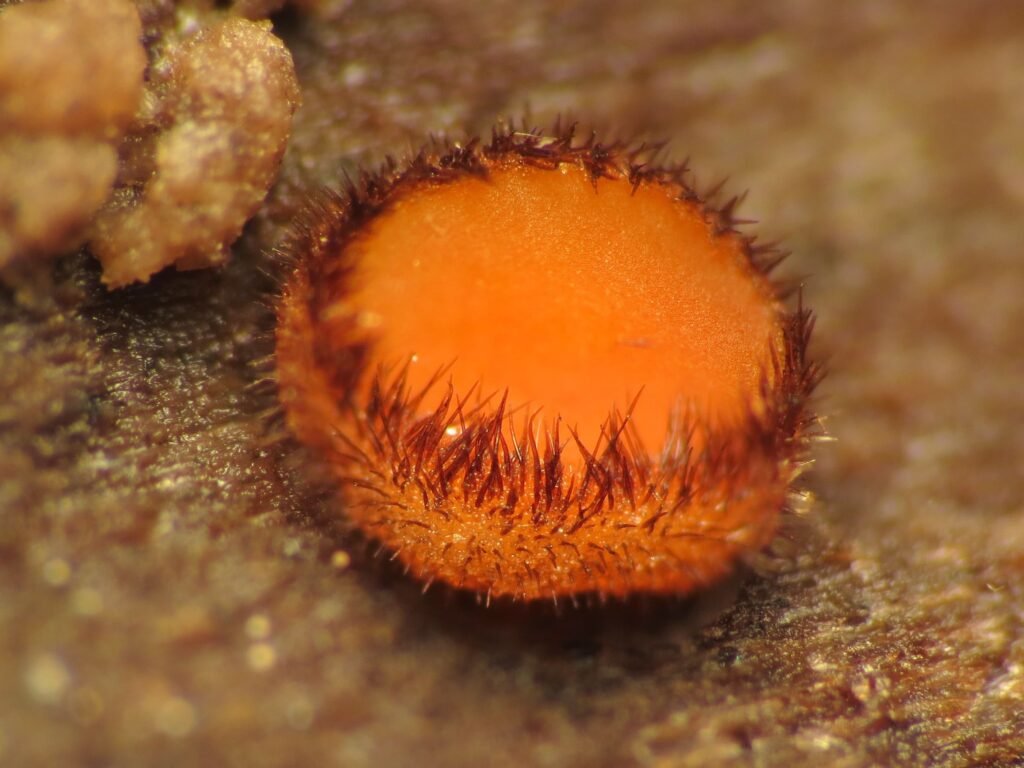




Apothecial, stalked cup fungus 1 – 3 cm in diameter held atop a slender, whitish stipe 2 – 5 cm tall. Cup exterior and limb densely covered with fine white to translucent bristles (setae) 1–2 mm long; inner hymenial surface smooth, vivid salmon‑pink to orange. Flesh thin, rubbery; when hydrated the cup margin flares outward. Asci cylindrical, eight‑spored; ascospores hyaline, ellipsoid, 40 – 48 × 6 – 8 µm with guttules. Emits no noticeable odour. Often fruits in small, trooping clusters on well‑decayed hardwood sticks.
Sexual dimorphism refers to the physical differences between males and females of the same species that go beyond reproductive organs. For example, size, colour or form.
Cup 1–3 cm Ø; stipe 2–5 cm tall, 0.2–0.4 cm Ø
Single apothecium ≈ 1–2 g
5–10 days in humid conditions
No enough Data
No enough Data
Primordium to spore discharge in 7–10 days at 24 °C
Year‑round in wet forest; peaks shortly after first heavy rains (May – June, Oct – Nov).
Apothecial, stalked cup fungus 1 – 3 cm in diameter held atop a slender, whitish stipe 2 – 5 cm tall. Cup exterior and limb densely covered with fine white to translucent bristles (setae) 1–2 mm long; inner hymenial surface smooth, vivid salmon‑pink to orange. Flesh thin, rubbery; when hydrated the cup margin flares outward. Asci cylindrical, eight‑spored; ascospores hyaline, ellipsoid, 40 – 48 × 6 – 8 µm with guttules. Emits no noticeable odour. Often fruits in small, trooping clusters on well‑decayed hardwood sticks.
Saprotrophic on rotting twigs, palm petioles and bamboo culms in shaded gullies, along stream banks and on mossy logs within humid lowland and premontane rain/cloud forests (200 – 1 400 m) on both slopes.
Saprotroph—degrades cellulose and hemicellulose, accelerating decomposition of small woody debris in wet forests.
Social Structure & Behaviour
Fruiting pattern: often arises in trooping clusters or short arcs along a single branch.
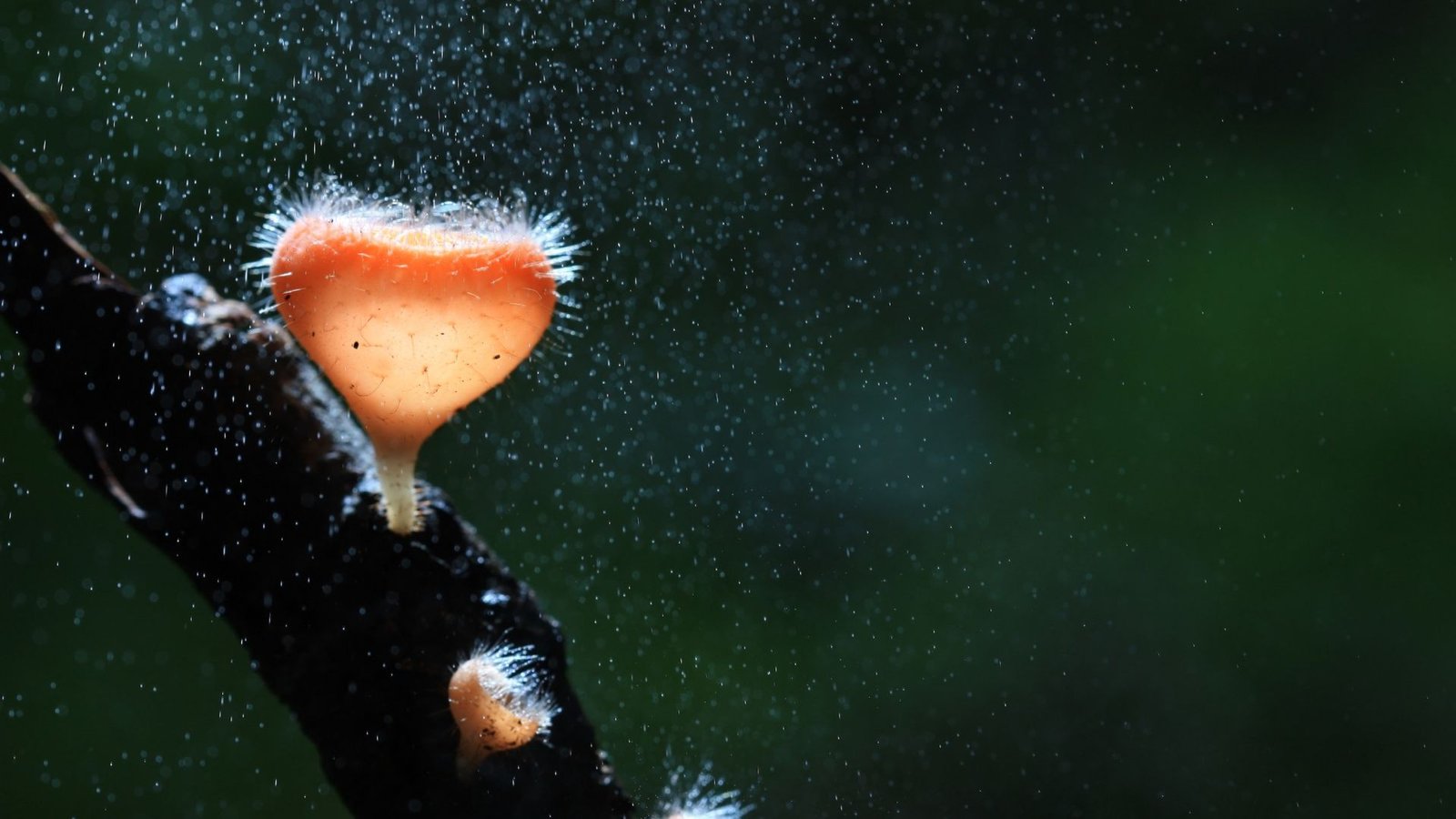
Spore discharge: ballistic release followed by rain‑splash secondary dispersal; diurnal pattern peaks at dawn.
Faunal visitors: springtails graze inner hymenium; Dolichopodid flies shelter inside cups during rain.
Taxonomic classification is a hierarchical system used in biology to organize and name living organisms. It arranges species into nested groups based on shared characteristics and evolutionary relationships.
🌍 The IUCN status refers to the conservation category assigned to a species by the International Union for Conservation of Nature, based on its risk of extinction
Cup surface is superhydrophobic—raindrops bead and catapult spores up to 30 cm.
Indigenous Cabécar use dried cups as natural “whistles” in children’s games.
Bright pigmentation derives from carotenoid “cookeinaxanthin,” an antioxidant under pharmacological study.
Frequently co‑fruits with Lentinus strigosus, indicating similar substrate preferences.
DNA barcoding (ITS) confirms Costa‑Rican material clusters with pan‑Neotropical lineage “Cookeina tricholoma sensu stricto.”


Apothecial, stalked cup fungus 1 – 3 cm in diameter held atop a slender, whitish stipe 2 – 5 cm tall. Cup exterior and limb densely covered with fine white to translucent bristles (setae) 1–2 mm long; inner hymenial surface smooth, vivid salmon‑pink to orange. Flesh thin, rubbery; when hydrated the cup margin flares outward. Asci cylindrical, eight‑spored; ascospores hyaline, ellipsoid, 40 – 48 × 6 – 8 µm with guttules. Emits no noticeable odour. Often fruits in small, trooping clusters on well‑decayed hardwood sticks.
