Blue Morpho (Common Morpho)

Morpho helenor (Cramer, 1776)

Also known / common namesSpanish – Morfo azul, Morfo común; Indigenous names

Blue Morpho (Common Morpho)(s) General Description

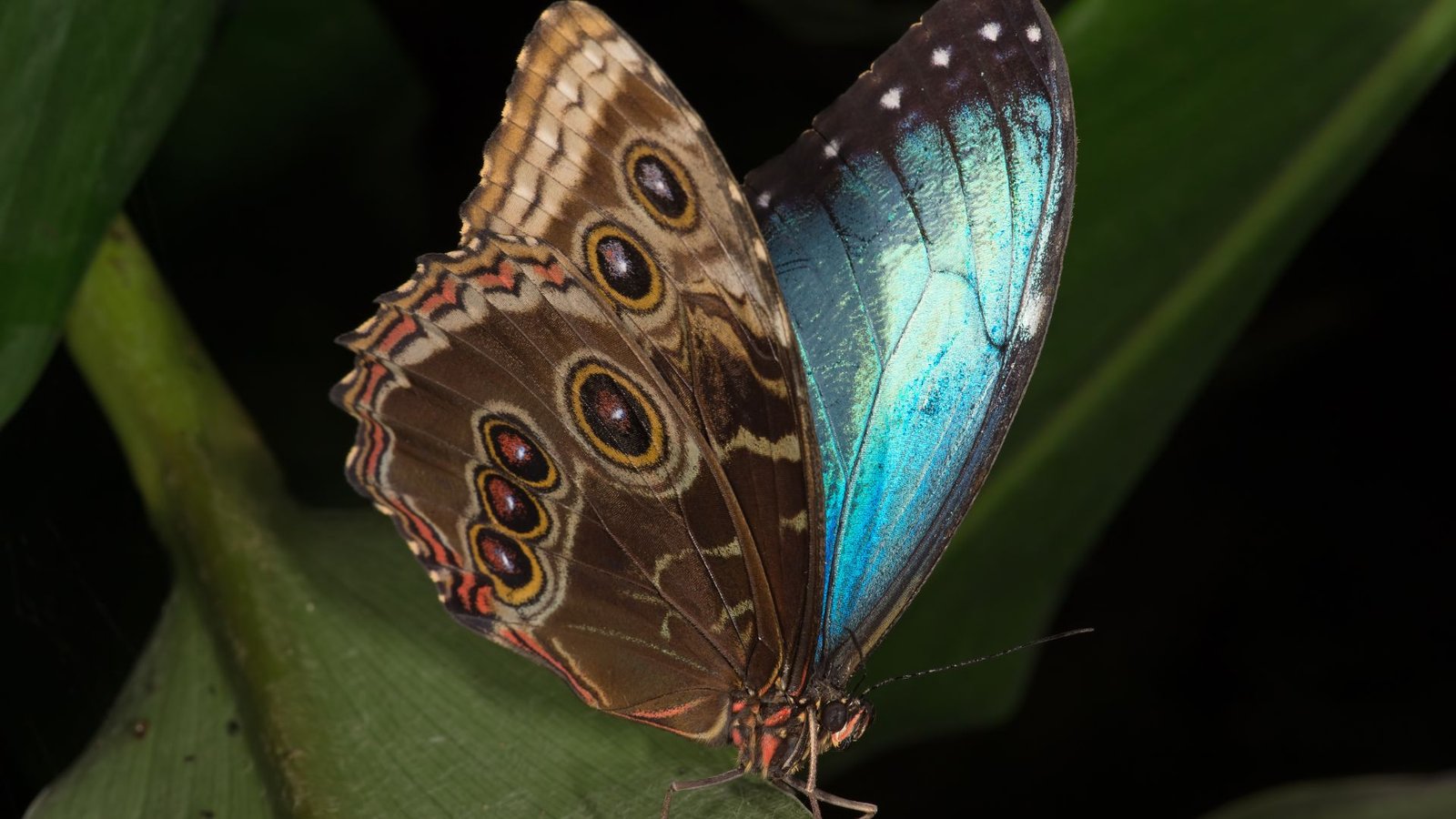
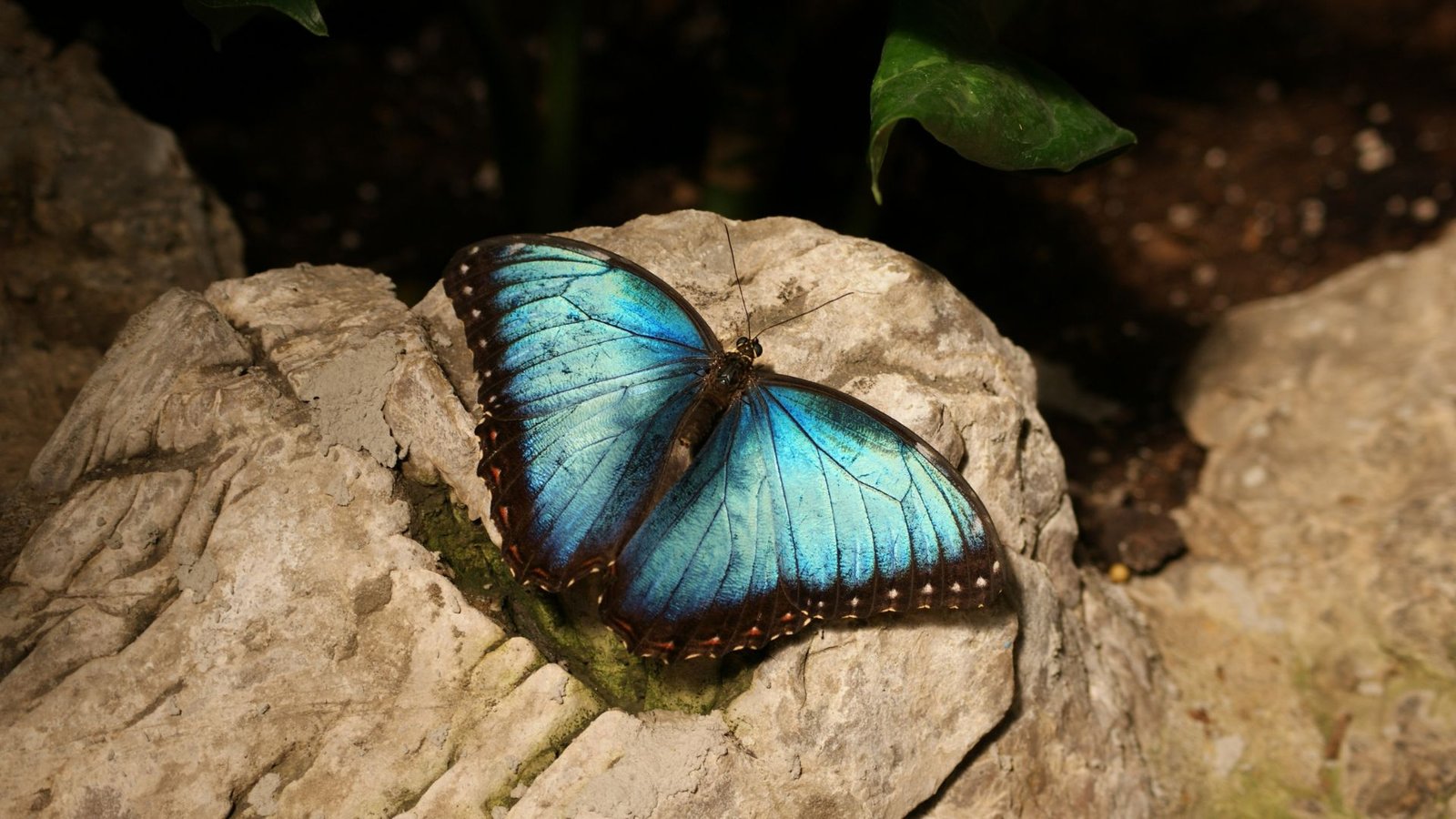
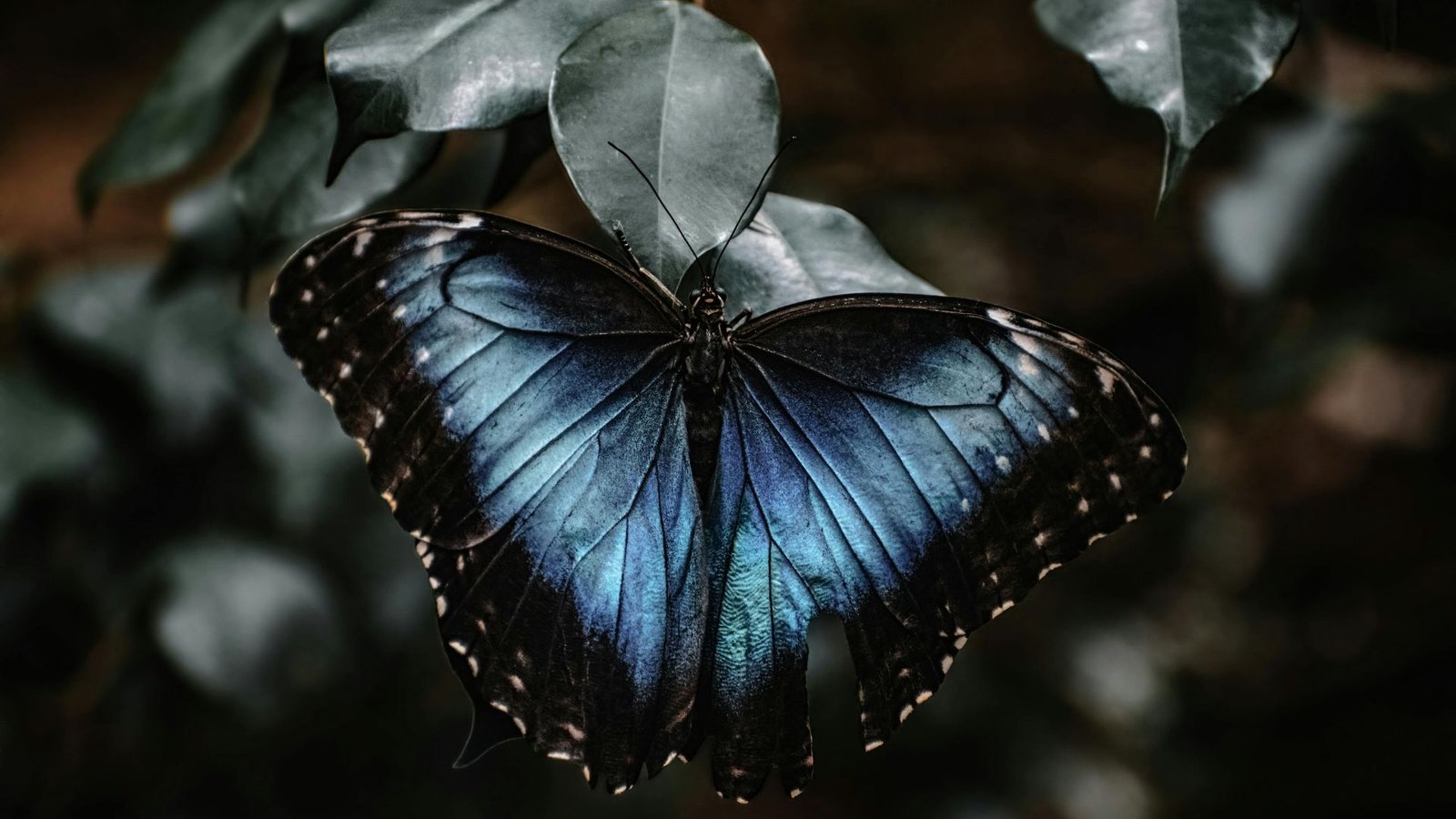
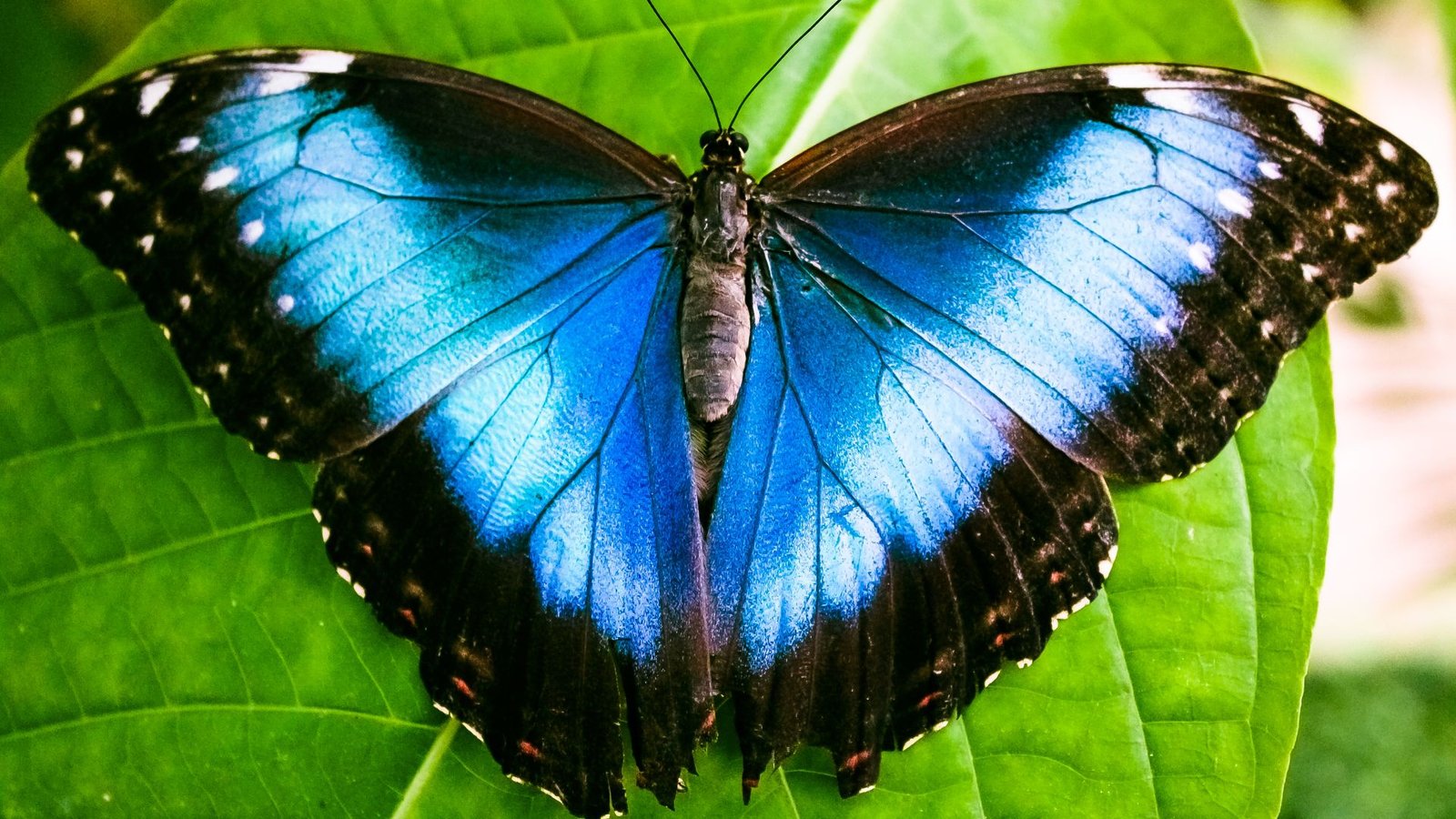
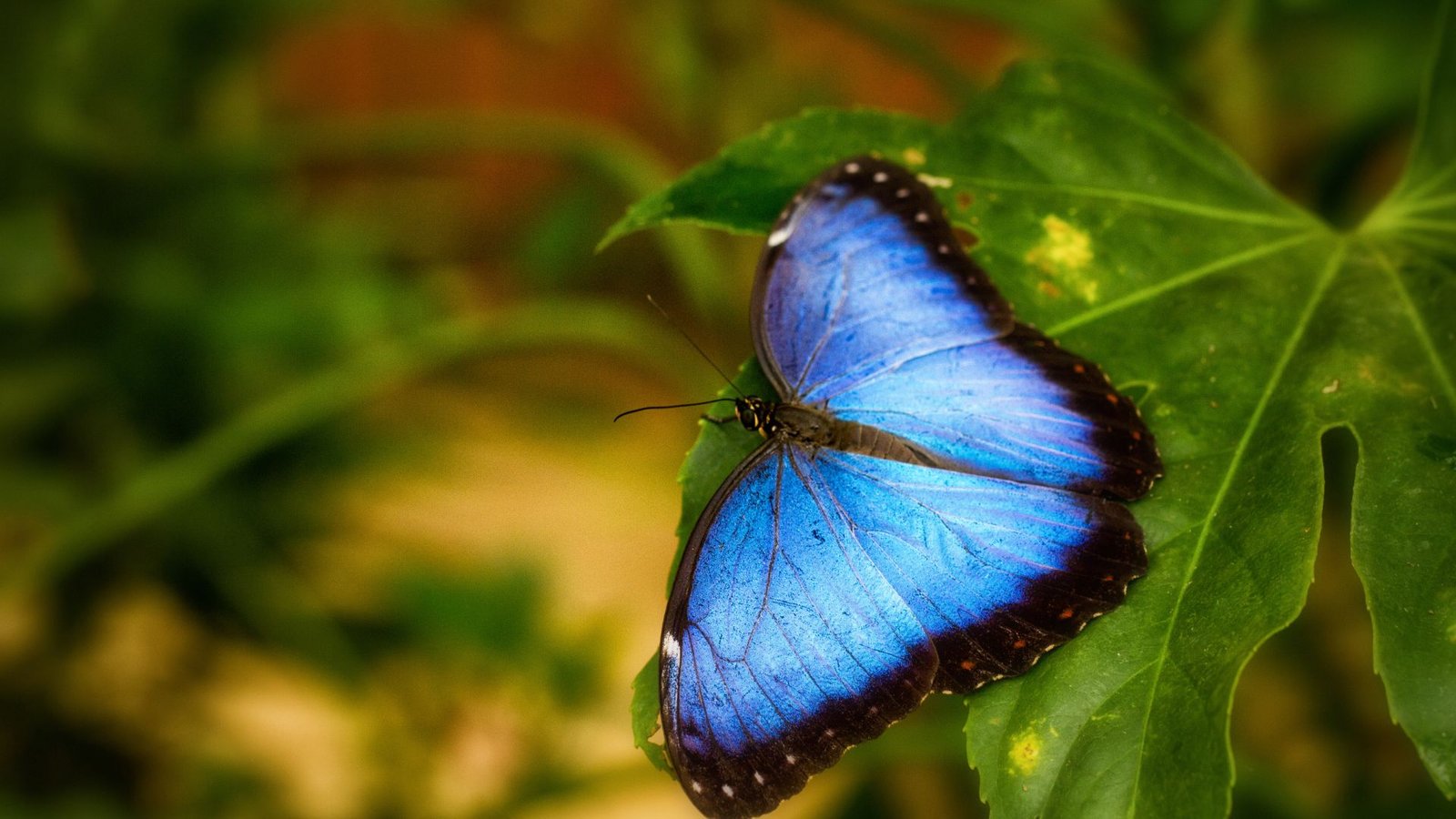
Large Neotropical nymphalid butterfly with a broad, rounded forewing and robust abdomen. Dorsal wings in males are vivid, iridescent electric blue produced by nanostructured scales; females are browner with more limited blue patches. Ventral surfaces are cryptic chocolate-brown with pale lines and several conspicuous ocelli that function in startle/camouflage. Wingspan typically 10–15 cm; body length ~3–4 cm. Antennae clubbed; forelegs reduced (brush-footed). At rest, wings close to expose mottled underside; in flight, alternating flashes of blue and brown create a “blink” effect along trails and river margins. The blue arises from a multilayered ridge system and thin-film lower lamina in the scales (not pigment).

Has Sexual Diamorphism?

Males are brighter blue dorsally and patrol edges/streams; females are larger, browner with restricted blue and fly higher/within canopy gaps.

LIFE‑HISTORY & VITAL STATISTICS OF THE Blue Morpho (Common Morpho)(S)

Average Height / Length / Diameter

10–15 cm

Average Adult Weight / Mass

0.8gr

Typical Lifespan / Longevity

Adults ~2–4 weeks (wild); whole life cycle ≈ 100–120 days (egg→adult)

Typical Lifespan / Longevity for males

No enough data

Typical Lifespan / Longevity for Females

No enough data

Age at Sexual Maturity

Reached at eclosion (adulthood)

Breading Season

Year-round in humid lowlands; activity peaks in wet season

Gestation

Females lay ~100–200 eggs singly on host plants over several weeks (varies)

Reproductive Outcome

Ecology and Behaviour for Blue Morpho (Common Morpho)(s)

Large Neotropical nymphalid butterfly with a broad, rounded forewing and robust abdomen. Dorsal wings in males are vivid, iridescent electric blue produced by nanostructured scales; females are browner with more limited blue patches. Ventral surfaces are cryptic chocolate-brown with pale lines and several conspicuous ocelli that function in startle/camouflage. Wingspan typically 10–15 cm; body length ~3–4 cm. Antennae clubbed; forelegs reduced (brush-footed). At rest, wings close to expose mottled underside; in flight, alternating flashes of blue and brown create a “blink” effect along trails and river margins. The blue arises from a multilayered ridge system and thin-film lower lamina in the scales (not pigment).

Habitat

Humid lowland to premontane forest on both slopes; most often along forest trails, river corridors and edges, including second-growth and plantations. Occurs from near sea level to roughly 1 200–1 500 m in Costa Rica.

Trophic Chain

Adults are primarily frugivores/sap feeders, visiting fallen fermenting fruit, tree sap, dung and carrion; larvae feed on various trees, especially Fabaceae (e.g., Inga, Machaerium, Platymiscium, Andira, Pterocarpus) and Rubiaceae (Genipa americana).

Interespecies relationships noted for Blue Morpho (Common Morpho)

Mutualism +/+

Fruit trees benefit from seed/yeast dispersal on adult proboscis; butterfly gains energy-rich fermenting substrates.

Symbiosis +/+

Gut microbiota aid digestion/detox of fermenting substrates; microbes gain habitat (inferred from frugivorous nymphalid literature).

Commensalism +/0

Regularly exploits monkey-dropped fruit on trails; primates unaffected.

Inquilinism +/0

Pupae hang on human structures/bridge undersides in forest edges; host surfaces unaffected. (Field reports summarized.)

Phoresy +/0

No documented case.

Tanatocresis +/10

Dead adults provide carotenoid/melanin substrates for nest-building ants; butterfly already deceased. (General detrital pathway.)

Parasitism +/-

Tachinid flies & braconid wasps attack larvae/pupae, reducing recruitment. (Reported broadly for fruit-feeding nymphalids.)

Predation +/-

Prey for jacamars and bats when blue “flash” reveals position; underside crypsis counters when perched.

Amensalism 0/-

Alcohol-rich baits used in monitoring suppress nearby small ants/wasps; no direct benefit to butterfly beyond feeding.

Competition -/-

Competes with other fruit-feeding nymphalids (e.g., Caligo) at limited fruit sources during dry season.

Social behaviour of Blue Morpho (Common Morpho)

  • Activity: Diurnal; males patrol linear features (trails/streams), gliding 1–3 m above ground and chasing rivals.
  • Feeding guild: Adult fruit-feeder/sap-feeder; congregates at fermenting fruit and baits.
  • Reproduction: Eggs laid singly on larval host leaves; larvae are mostly nocturnal feeders with cryptic resting postures.


Distribution and Sighthings ofBlue Morpho (Common Morpho)(s) in Costa Rica

General Regions of Costa Rica where to find Blue Morpho (Common Morpho)s

Tropical

National Parks and Reserves of Costa Rica where to find Blue Morpho (Common Morpho)s

Parque Nacional Volcán Arenal
Parque Nacional Braulio Carrillo
Parque Nacional Cahuita
Parque Nacional Carara
Parque Nacional Corcovado
Parque Nacional Manuel Antonio
Parque Nacional Palo Verde
Parque Nacional Piedras Blancas
Parque Nacional Rincón de la Vieja
Parque Nacional Tenorio
Parque Nacional Tortuguero
Reserva Bosque Nuboso Monteverde

Best Time to seeBlue Morpho (Common Morpho)(s) in Costa Rica

Dry Season
January
February
March
April
June
July
August
September
October
November
December

Media

Videos

Sounds and calls

Taxonomy

Conservation Status

Status IUCN

Threats

⚠️Habitat loss/fragmentation of lowland forest and riparian corridors.
⚠️Over-collection for the curio trade in some regions (pressure varies locally).
⚠️Agrochemical exposure reducing fermenting fruit resources and larval hosts near plantations.
⚠️Road and trail mortality from edge-biased flight in disturbed mosaics (inferred from edge activity).

Fun Facts

  • The blue is purely structural, produced by multilayered ridges plus a thin-film lower lamina; ground scales contain melanin to sharpen saturation.
  • The blue is purely structural, produced by multilayered ridges plus a thin-film lower lamina; ground scales contain melanin to sharpen saturation.
  • Subspecies diversity is high; M. h. marinita is listed for SW Costa Rica (Pacific slope).
  • The striking blue “flash” alternates with cryptic brown undersides during flight, helping evade predators along forest trails and rivers.

Origins & Record

Origin Status

Native

Population trend

Stable

Added by

Reviewed by

More Species