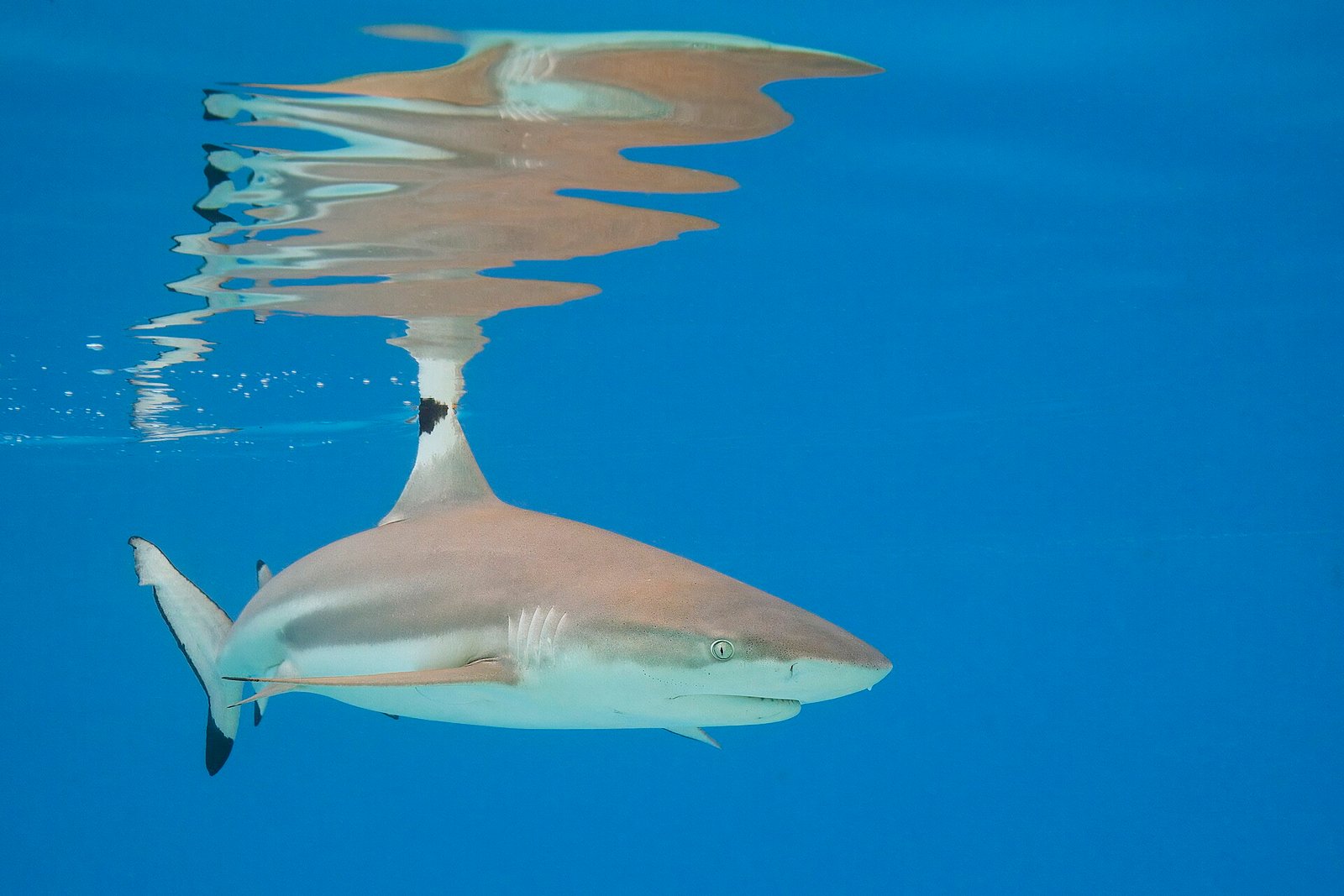
Blacktip Reef Shark

Carcharhinus melanopterus (Quoy & Gaimard, 1824)

Also known / common namesSpanish – Tiburón punta negra de arrecife; Bribri – Ŧékwa‑sér; Cabécar – Tsunu‑bíra

Blacktip Reef Shark(s) General Description

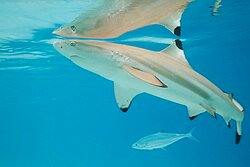
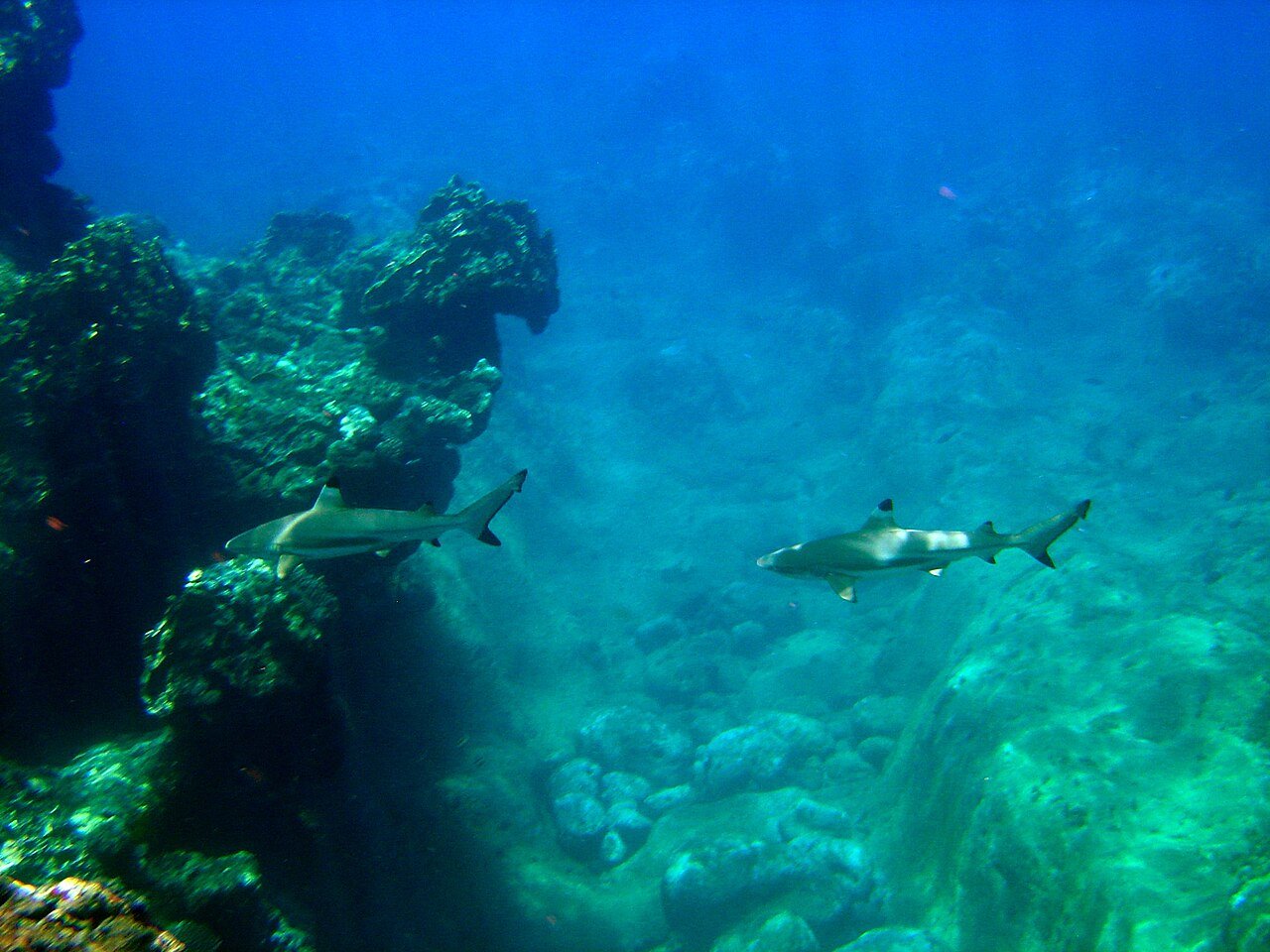
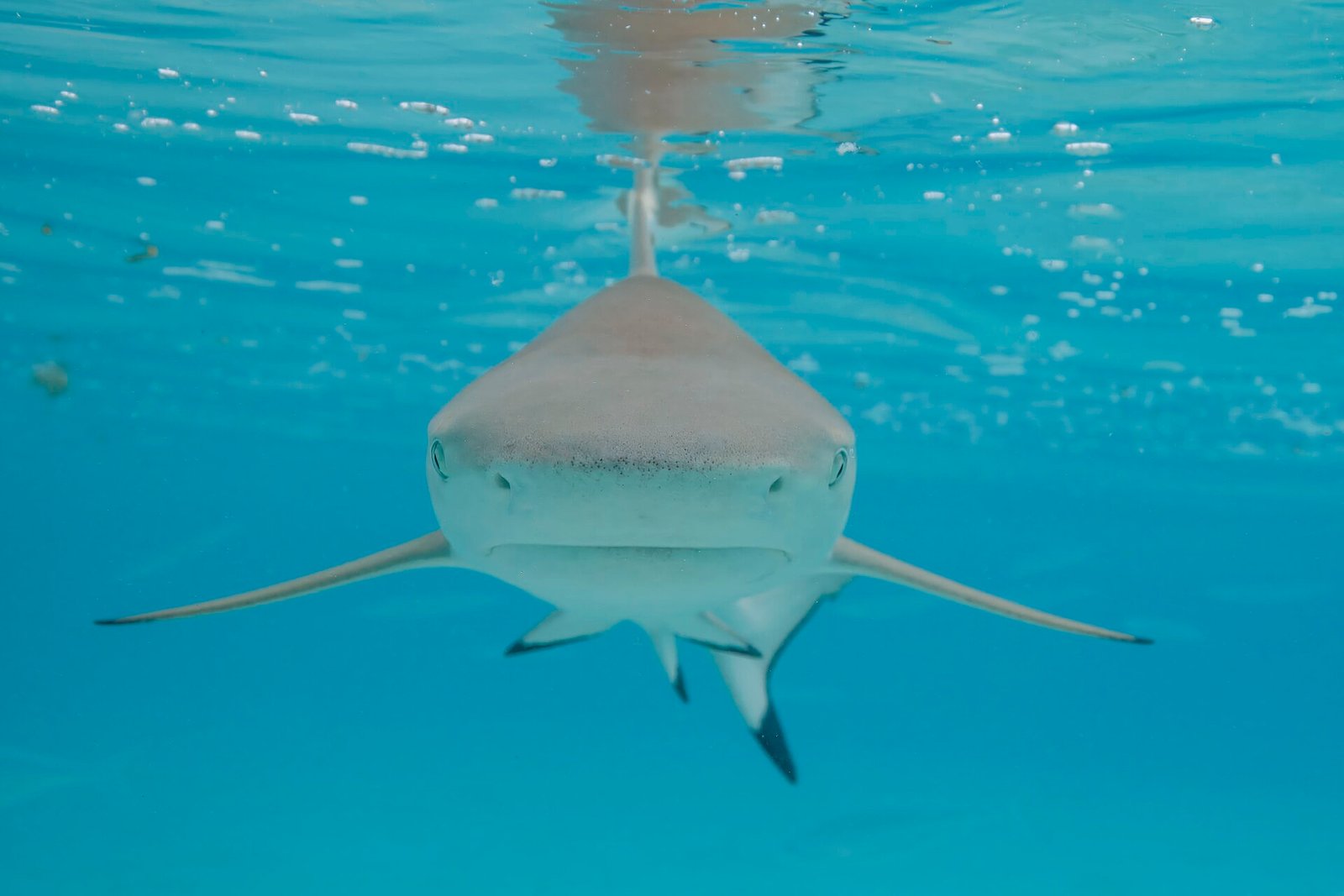
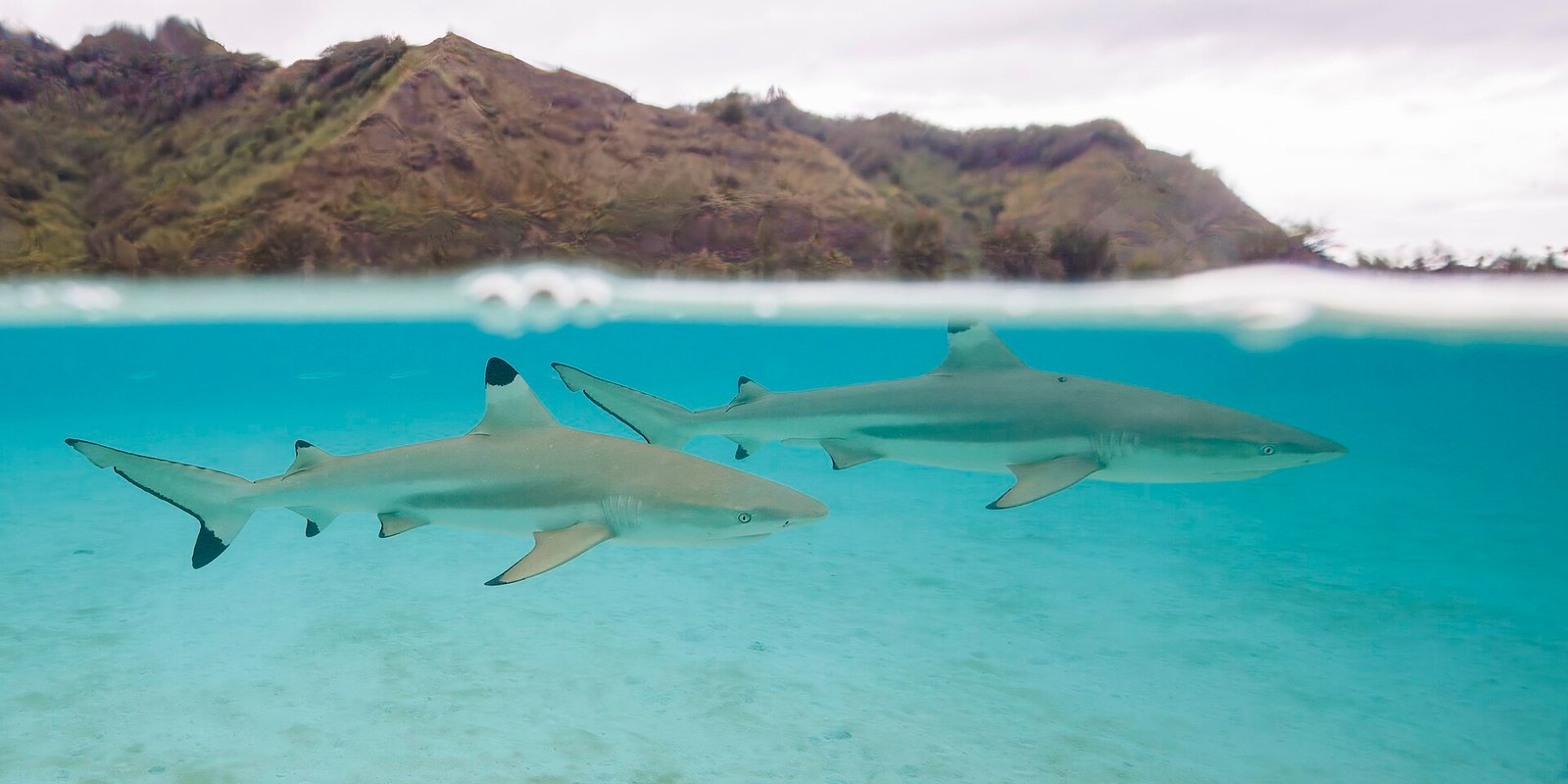
Slender reef shark with strongly black‑tipped first dorsal, caudal, pelvic and pectoral fins. Dorsum light grey‑brown; ventrum white; faint dusky band rises diagonally from belly toward first dorsal base. Snout long and pointed; eyes large, round with nictitating membrane. First dorsal originates above or slightly behind pectoral rear tips and has a white leading‑edge band prior to broad black apex. Second dorsal and caudal lower lobe each bear smaller black tips. Adults typically 1.3 – 1.6 m total length (TL), maximum verified 1.9 m; mass 20 – 30 kg. Juveniles (< 70 cm) show proportionally wider dark band across body. Sexes similar; females marginally larger, males possess claspers.

Has Sexual Diamorphism?

LIFE‑HISTORY & VITAL STATISTICS OF THE Blacktip Reef Shark(S)

Average Height / Length / Diameter

Average Adult Weight / Mass

Typical Lifespan / Longevity

Typical Lifespan / Longevity for males

Typical Lifespan / Longevity for Females

Age at Sexual Maturity

Breading Season

Gestation

Reproductive Outcome

Ecology and Behaviour for Blacktip Reef Shark(s)

Slender reef shark with strongly black‑tipped first dorsal, caudal, pelvic and pectoral fins. Dorsum light grey‑brown; ventrum white; faint dusky band rises diagonally from belly toward first dorsal base. Snout long and pointed; eyes large, round with nictitating membrane. First dorsal originates above or slightly behind pectoral rear tips and has a white leading‑edge band prior to broad black apex. Second dorsal and caudal lower lobe each bear smaller black tips. Adults typically 1.3 – 1.6 m total length (TL), maximum verified 1.9 m; mass 20 – 30 kg. Juveniles (< 70 cm) show proportionally wider dark band across body. Sexes similar; females marginally larger, males possess claspers.

Habitat

Clear, warm fringing reefs, lagoon flats and seagrass‑sand mosaics from surface to 40 m; in Costa Rica recorded at Bahía Culebra, Golfo Papagayo, Isla del Caño back‑reef and rare Caribbean estuary mouths (Cahuita).

Trophic Chain

Diurnal/crepuscular mesopredator feeding on wrasses, mullet, juvenile parrotfish, cephalopods and crustaceans; juveniles consume shrimp and gobies.

Interespecies relationships noted for Blacktip Reef Shark

Mutualism + / +

Cleaner wrasses remove parasites; gain food while shark health improves.

Symbiosis + / +

Gut microbes aid digestion of crustacean exoskeletons.

Commensalism + / 0

Juvenile trevallies shelter under shark belly, reducing predation risk.

Inquilinism + / 0

Striped remoras attach, gaining transport; shark unaffected.

Phoresy + / 0

Barnacle larvae settle on caudal fin and disperse.

Tanatocresis + / 0

Shark carcass provides reef nutrients and shelter for polychaetes.

Parasitism + / –

Copepods (Kroeyerina) and leeches attach to gills/skin, drawing blood.

Predation + / –

Consumes parrotfish, crustaceans; juveniles preyed upon by tiger and bull sharks.

Amensalism 0 / –

Flushes sand, burying sessile invertebrates while hunting; no benefit to shark.

Competition – / –

Overlaps with whitetip reef shark for nocturnal reef fish prey.

Social behaviour of Blacktip Reef Shark

A. Social Structure & Behaviour

  • Activity pattern: crepuscular peaks; rests on sandy patches midday.

  • Group size: small loose groups (3–8) on lagoon flats; solitary hunting at dusk.

  • Movements: tidal excursions into mangroves; strong attachment to core reef.

  • Communication: threat display involves hunching back, pectoral lowering; juveniles use body contact in crèches.

  • Special behaviours: “head‑shake” prey handling to stun mullet; uses lateral head thrash to flush sand‑buried gobies.

Distribution and Sighthings ofBlacktip Reef Shark(s) in Costa Rica

General Regions of Costa Rica where to find Blacktip Reef Sharks

Coral reefs (Cocos and coastal bathymetries)
Pacific Ocean

National Parks and Reserves of Costa Rica where to find Blacktip Reef Sharks

Parque Nacional Isla del Coco

Best Time to seeBlacktip Reef Shark(s) in Costa Rica

Dry Season
January
February
March
April
June
July
August
September
October
November
December

Media

Videos

Sounds and calls

Taxonomy

Conservation Status

Status IUCN

Threats

⚠️Artisanal gill‑nets and handlines set in shallow reef channels.
⚠️Coastal development degrading lagoon and seagrass nursery habitat.
⚠️Rising sea‑surface temperature causing coral bleaching and prey decline.
⚠️Tourism disturbance: frequent pursuit by snorkelers alters resting/feeding behaviour.

Fun Facts

  • Exhibits site fidelity to home reef < 1 km² for months, tracked by acoustic tags.

  • Often “spy‑hops,” lifting head above water to investigate splashes in knee‑deep flats.

  • Neonates form loose crèches of 5–15 individuals in ankle‑deep sand shallows at high tide.

  • Skin denticles so fine they scatter polarized light, reducing glare for stealth predation.

  • Recorded leaping fully clear of water when startled by snorkelers at Isla del Caño.

Origins & Record

Origin Status

Native

Population trend

Decreasing

Added by

Reviewed by

More Species

Jaguar

The jaguar is the largest felid native to the Americas and a stocky, powerfully built big cat with a massive head, very strong jaws, and relatively short, muscular limbs.

Coat ground color ranges from pale yellow to tawny or reddish, overlaid with distinctive black rosettes that typically encircle one or more central spots (helping distinguish it from the leopard).

Read More »