Professor Trisia Farrelly, a New Zealand social anthropologist and science‑policy specialist, stands at the forefront of the global campaign for an effective plastics treaty. She coordinates the Scientists’ Coalition for an Effective Plastics Treaty, a network of over 400 independent experts from more than 60 countries, and serves as a technical advisor for Pacific Island negotiators

Negotiations for a legally binding global plastics treaty—resumed in August 2025 in Geneva under the Intergovernmental Negotiating Committee (INC‑5.2)—collapsed without agreement, despite the urgent environmental, human-health, and economic stakes involved
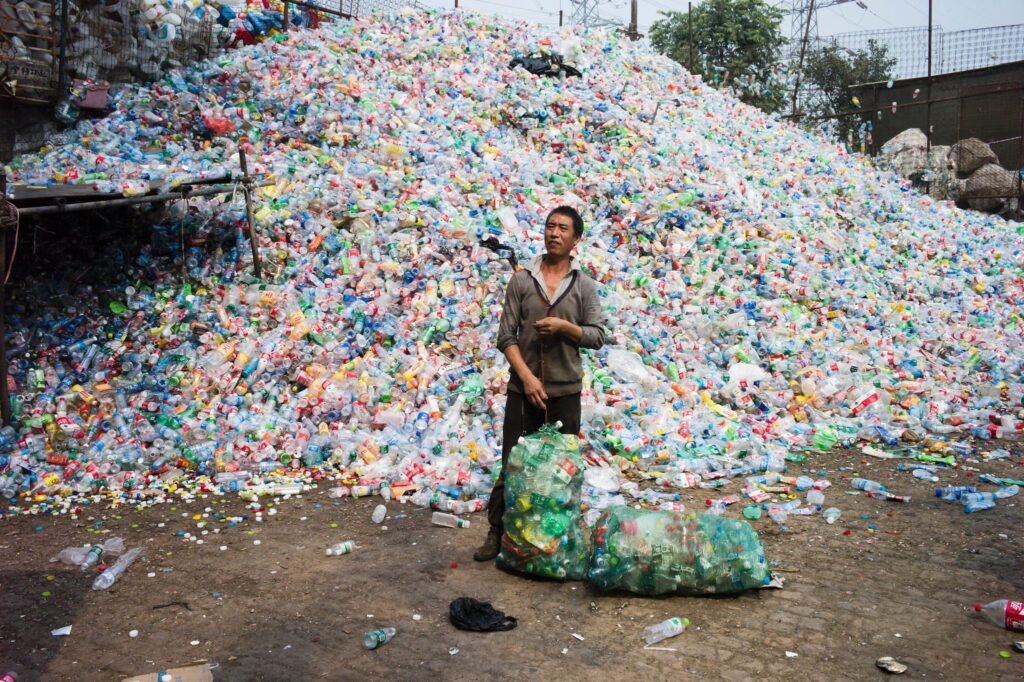
INC‑5.2, the second half of the fifth negotiating session (held 5–15 August 2025), was anticipated to finalize a treaty addressing plastic pollution across the full lifecycle—from design and production to disposal. Yet, disputes over production limits, toxic chemical regulation, financing mechanisms, and decision-making procedures brought talks to a standstill
Environmental advocates view the failure as a severe blow to multilateralism. As The Guardian reported, many countries and NGOs demanded legally binding controls on production and chemicals; yet, obstructions by petrochemical-aligned nations undermined progress.



Reuters underscored the shift in U.S. policy under the Trump administration, which opposed binding provisions and sided with oil-producing states like Saudi Arabia, adding to the impasse. Panama’s delegate lamented that without production caps, it was like “mopping the floor without turning off the tap”
Farrelly’s Scientific Mandate
Against this backdrop, Trisia Farrelly underscores the indispensable role of independent science. At INC‑4 earlier in 2024, she urged negotiators to ground treaty decisions in impartial scientific evidence and to adopt a full-lifecycle perspective on plastics—alerting decision-makers to the thousands of chemicals implicated in pollution and health hazards, including micro- and nanoplastics
As coordinator of the Scientists’ Coalition, Farrelly’s group produced scientific assessments of the “Chair’s Text” during INC‑5.2—offering evidence-based commentary on critical extracts such as chemical restrictions, product design, and environmental leakages


Concrete Examples of Breakdown
- The draft treaty stalled over resistance to regulating virgin plastic output—despite science showing unchecked production as the root of pollution .
- Disagreements on toxic chemicals persisted; negotiators could not reach consensus on banning additives of concern despite health warnings.
- Procedurally, the consensus-based model hampered decision-making; an abrupt closure of the final plenary left many delegates bewildered
Calls for a Reboot
Environmental law experts echoed the scale of the setback. The Center for International Environmental Law labeled the breakdown “an abject failure,” warning that without reform, agreement remains unlikely. The Recycling Partnership’s Anthony Tusino expressed disappointment with the lack of follow-through on 2022’s commitment and urged alternative policy routes in the meantime.

Despite the collapse, some pragmatic progress emerged. Notably, China—currently the top plastic producer—acknowledged the need to address plastics throughout their life cycle, signaling a potential opening for future talks.
The failure of INC‑5.2 is a critical setback, but Trisia Farrelly’s leadership and the rigorous scientific contributions of the Scientists’ Coalition stand as a beacon. Their advocacy underscores that without an evidence-based approach, informed by robust science, any treaty will fall short. As plastic production surges and ecosystem and human-health impacts multiply, the urgency for a strong, scientifically anchored treaty has never been more evident.