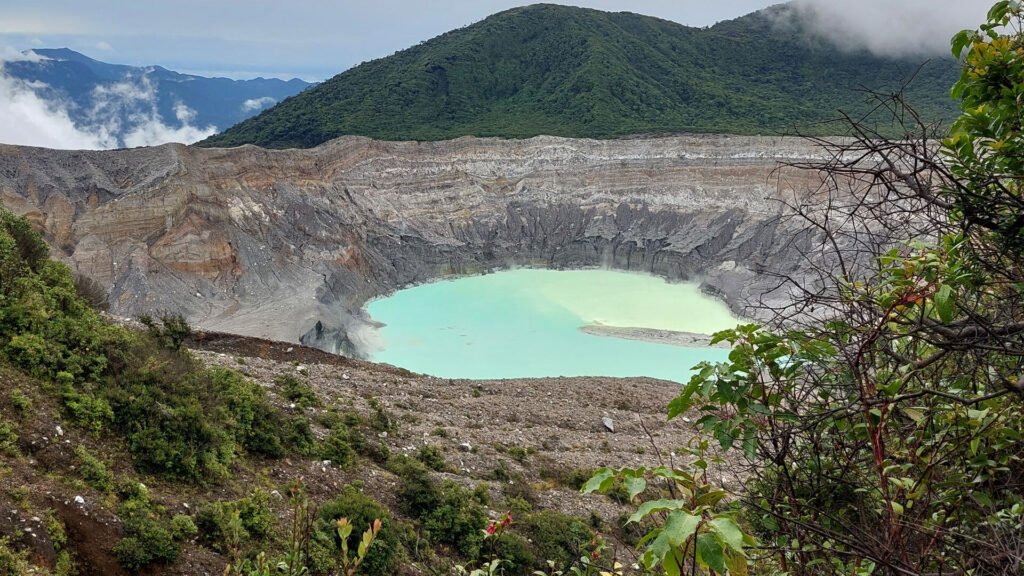
The reopening of Poás Volcano National Park on July 30, 2025, represents a significant event not only for tourism but also for ecological observation. While the geological power of its main crater is the primary draw, the park serves as a crucial high-altitude biological corridor and a living laboratory for studying ecological succession and species adaptation in a volcanically active environment.
The park’s dramatic elevation gradient (from 2,300 to 2,708 meters) and its unique edaphic conditions—soils rich in volcanic minerals yet highly acidic—have given rise to distinct and highly specialized ecosystems. The reopening now allows researchers and naturalists to once again monitor these environments and the species they support.



Key Ecosystems within the Park
Poás National Park encompasses several life zones, primarily the Montane Rain Forest and the Subalpine Rain Páramo.
- Montane Cloud Forest: This ecosystem is characterized by high humidity, persistent cloud cover, and a canopy dominated by gnarled, slow-growing trees. The trunks and branches are heavily laden with epiphytes, including a diverse array of mosses, lichens, ferns, bromeliads, and orchids. This complex structure creates a multi-layered habitat that supports a high density of invertebrate and vertebrate species.
- Subalpine Rain Páramo and Volcanic Scrub: Closer to the crater’s summit, the environment becomes more extreme. Here, the forest gives way to a low-growing scrubland. Plants in this zone are adapted to withstand high winds, intense ultraviolet radiation, and periodic acid deposition. This is where one can observe classic examples of hardy, pioneering vegetation colonizing geologically recent and frequently disturbed terrain.

Noteworthy Flora: Adaptations to a Volcanic Landscape
The flora of Poás is a prime example of resilience. Key species for observation include:
- Gunnera insignis (Poor Man’s Umbrella): This iconic plant with massive, rhubarb-like leaves is a dominant species in disturbed, open areas. It thrives in the moist, mineral-rich volcanic soil and is a critical component of early-stage ecological succession.
- Ericaceae Family: The páramo and scrubland are rich in plants from the heath family, such as the Costa Rican blueberry (Vaccinium consanguineum). These species are adapted to acidic soils and form a critical food source for local fauna.
- Dwarf Bamboo (Chusquea sp.): Dense thickets of dwarf bamboo provide essential cover and habitat for many small mammals and birds.


Endemic and High-Altitude Fauna
The park is a vital sanctuary for several endemic and high-altitude specialist species. While megafauna is not prevalent, the smaller species offer a fascinating glimpse into high-altitude adaptation.
- Birds (Aves): Poás is a key site for observing high-altitude birds. Look for the Slaty Flowerpiercer (Diglossa plumbea), which has a unique hooked bill for piercing the base of flowers to rob nectar, and the Sooty-capped Chlorospingus (Chlorospingus pileatus). The most sought-after hummingbird is the Fiery-throated Hummingbird (Panterpe insignis), which defends feeding territories in the Ericaceae shrubs. Also present is the Sooty Robin (Turdus nigrescens), a common sight on the ground in the páramo.
- Mammals (Mammalia): The park’s most significant mammal is the Poás Squirrel (Syntheosciurus brochus). This rare, olive-brown squirrel is endemic to the high mountains of Costa Rica and is considered a near-threatened species. Its presence is an indicator of a healthy, intact forest ecosystem. Other mammals include the Dusky Rice Rat (Melanomys caliginosus) and coyotes (Canis latrans).
Conservation and a New Visitor Protocol
The new visitor management system, which mandates online ticket purchases and timed entry slots, serves a dual purpose. Primarily for human safety, it also functions as a valuable conservation tool by limiting soil compaction, reducing noise disturbance, and minimizing overall human impact on the park’s fragile ecosystems, particularly the sensitive páramo vegetation.
The reopening of Poás offers a valuable opportunity to observe a dynamic landscape where geology and biology are intrinsically linked. It allows for the continued study of how life adapts to and recovers from the powerful, shaping forces of volcanism.