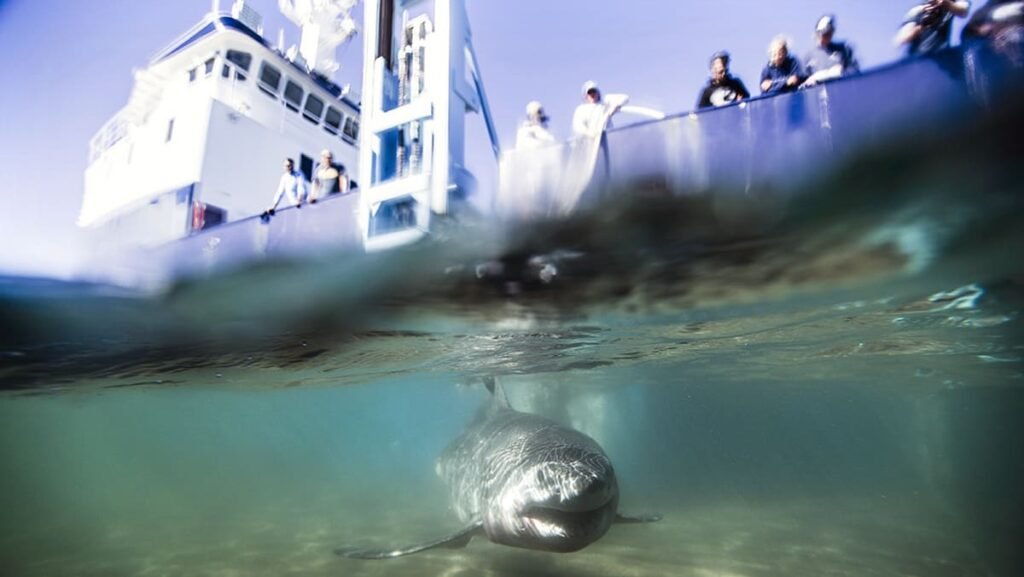



The recent discovery of a great white shark (Carcharodon carcharias) nursery off the coast of New York represents a major milestone in marine science and conservation. For the first time, researchers have gathered solid evidence of a nursery zone for this species in the North Atlantic, providing key insights into one of the most elusive stages of the shark’s life cycle.
A Nursery Hidden in a Busy Coastline
The site, located in the New York Bight between Long Island and Cape May, New Jersey, is an area heavily influenced by human activity. Yet, research revealed that juvenile sharks are using these coastal waters as a vital growth habitat. By employing advanced tracking tools, including satellite tags and cameras attached to the animals, scientists observed that the young sharks spend nearly 90 percent of their time within this specific area. This indicates that the region provides food abundance, relative protection from larger predators, and favorable environmental conditions.
Why Shark Nurseries Are Critical
Nurseries are essential for the survival of shark populations. They function as safe havens where juveniles can feed and develop until they are large enough to venture into open waters. Protecting these habitats is crucial because the survival rate of young sharks directly influences the long-term stability of the species.
In the case of the great white shark, identifying a nursery helps fill an important gap in our understanding of their population dynamics. It also emphasizes that conservation strategies must go beyond the protection of adult individuals and take into account the early stages of their life cycle.
Technology Unlocking Hidden Behavior
The study combined innovative methods, such as the use of “camera tags,” which allowed researchers to directly observe the sharks’ daily movements, feeding patterns, and interactions with their environment. This technological approach provided data that was previously unattainable and is setting a new standard for marine research.
Such discoveries demonstrate how technology can transform the way scientists understand marine megafauna. They also reinforce the need for continuous monitoring to reveal habitats that are fundamental to species survival but that remain largely invisible without advanced tools.
A Call for Global Conservation
The identification of a great white shark nursery in one of the most densely populated coastlines in the world highlights both the resilience and the fragility of marine ecosystems. Even in areas with intense human activity, critical habitats can persist and support threatened species.
This finding is a powerful reminder that marine conservation must consider not only pristine or remote environments but also those near major population centers. Protecting shark nurseries worldwide is essential for maintaining healthy oceans, as these top predators play a key role in regulating marine ecosystems.
The discovery off New York’s coast is not only a scientific achievement but also a message: safeguarding nurseries is safeguarding the future of the oceans.