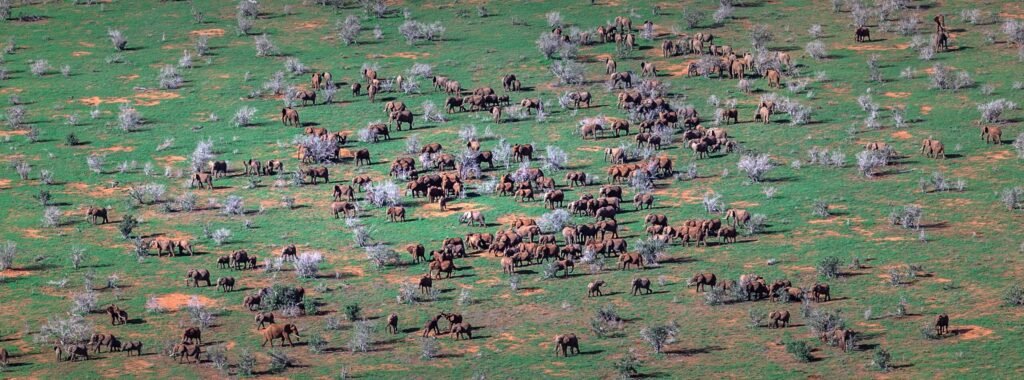
For the first time in decades, Africa is witnessing the resurgence of massive elephant herds—gatherings of 500 or more individuals traveling together across the savanna. This remarkable phenomenon, absent since the 1970s, signals a potential turning point in elephant conservation efforts and offers renewed hope for wildlife protection worldwide.
Factors Enabling Recovery
The resurgence of elephant mega-herds can be attributed to several key conservation efforts:
- Conservation Programs: Dedicated habitat restoration and the establishment of wildlife corridors have provided elephants with safer spaces to roam and migrate.
- Anti-Poaching Initiatives: Enhanced patrols and monitoring have significantly reduced poaching pressure in certain regions, allowing populations to stabilize and grow.
- Climate and Ecology: Favorable rainfall patterns and abundant water sources during wet seasons encourage elephants to congregate in large numbers to exploit seasonal resources.
- International Cooperation: Cross-border agreements and collaborative conservation efforts have strengthened protection for these vulnerable giants.



Conservation Implications
The resurgence of mega-herds represents a significant milestone for global elephant conservation. These gatherings indicate:
- Population Stability: Larger aggregations suggest healthier, more stable populations capable of sustained growth.
- Ecological Recovery: The return of these massive herds demonstrates the effectiveness of long-term conservation strategies and ecosystem restoration.
- Regional Success: Specific regions in Africa have become strongholds for elephant protection, serving as models for other conservation areas worldwide.
Human-Elephant Conflict and Ongoing Challenges
Despite these successes, significant challenges remain. The growing elephant population, coupled with habitat fragmentation and human expansion, has increased conflict in certain regions. Human-wildlife conflicts have escalated, with reports of crop destruction, infrastructure damage, and occasional attacks on people. Some governments, including Zimbabwe, have proposed culling programs to manage population density and minimize human casualties.


Genetic Resilience Discoveries
Recent studies in Cambodia and other Asian regions have revealed surprising genetic diversity within elephant populations. Populations previously thought to be near extinction show greater genetic variation than expected, suggesting that with continued protection, these populations possess strong potential for long-term viability and natural recovery.
The return of elephant mega-herds represents one of conservation’s most inspiring achievements. However, this success demands continued commitment to habitat protection, anti-poaching efforts, and strategies for managing human-wildlife coexistence. As these magnificent creatures continue to recover, they serve as ambassadors for the power of dedicated conservation, reminding us that with determination and international cooperation, even species facing the brink of extinction can bounce back. The future of elephants depends on maintaining these hard-won gains and adapting our approach to address emerging challenges.