The State Phytosanitary Service (SFE) of Costa Rica has confirmed a new outbreak of the Giant African Snail, Lissachatina fulica, in a residential area of Heredia. This detection is of high scientific and ecological concern as it marks the first confirmed presence of the species within the Central Valley, significantly expanding its known range from the initial 2021 focus in Curubandé, Guanacaste.
Classified by the International Union for Conservation of Nature (IUCN) as one of the 100 worst invasive alien species globally, L. fulica poses a multi-faceted threat to agriculture, public health, and native ecosystems. This article provides a detailed biological profile of the species, explains its impacts, and outlines the critical reporting protocols necessary to manage its spread.



Taxonomic Profile and Identification
Scientific Name: Lissachatina fulica (Bowdich, 1822) (Note: This species was formerly and is still sometimes classified under the genus Achatina.)
Taxonomy:
- Class: Gastropoda
- Family: Achatinidae
Origin: Native to East Africa, specifically regions like Kenya and Tanzania.


Morphological Identification: Accurate identification is the first step in managing this pest. Key features include:
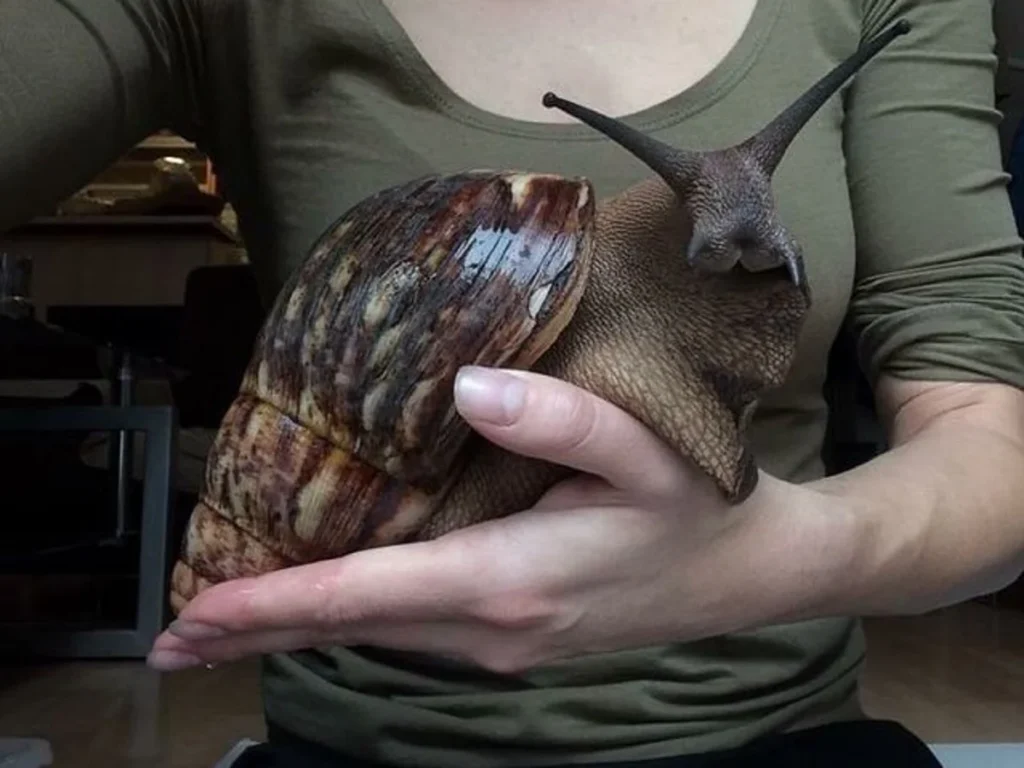
- Shell: The most distinct feature is its large, conical, and elongated shell, which is typically dextral (coiling to the right). The shell is robust and pointed at the apex.
- Size: It is one of the largest terrestrial gastropods, with adult shells capable of reaching up to 20 cm (nearly 8 inches) in length, though specimens are often found at 10-12 cm.
- Coloration: The shell exhibits a characteristic pattern of irregular, longitudinal bands of dark brown overlaying a cream, yellowish, or light brown background. This pattern is often most pronounced in younger snails.
- Body: The exposed body (foot) is dark brown or grayish, moist, and has a distinct, rubbery texture.
Differentiating from Native Species: It is vital not to confuse L. fulica with large native Costa Rican gastropods. For example, species from the genus Megabulimus (colloquially known as ‘zo vevo’ or ‘chumbala’) also grow very large but tend to have more globose (rounder, less pointed) shells and a more uniform, pale brown coloration, lacking the sharp, contrasting stripes of the Giant African Snail.
Biology and Invasive Behavior
The invasive success of L. fulica is linked to its resilient biology and rapid reproductive strategy.
Reproduction and Life Cycle:
- Hermaphroditism: The species is hermaphroditic, meaning each individual possesses both male and female reproductive organs. While self-fertilization is possible, cross-fertilization is more common, allowing for greater genetic diversity.
- High Fecundity: It possesses enormous fecundity. A single snail can lay 100 to 500 eggs in a clutch and can produce multiple clutches per year, often totaling over 1,000 eggs annually. The eggs are small (4-5 mm), yellowish, and deposited in soil or organic debris.
- Rapid Maturity: Maturity is reached in as little as 5 to 6 months under optimal conditions, allowing populations to explode exponentially.
Diet and Feeding Habits (Polyphagy): L. fulica is famously polyphagous, with a documented diet of over 500 different plant species. It poses a direct threat to Costa Rican agriculture (including staple crops like citrus, banana, papaya, and yuca), ornamental plants, and native flora.
Its diet is not limited to living plants. It is also a detritivore (consuming decomposing organic matter) and will consume sources of calcium to build its shell. This leads to it eating stucco or plaster from buildings, paint, and even the shells of other snails, including native species.
Impact and Threats in Costa Rica
The establishment of L. fulica populations presents three clear and present dangers.
1. Ecological Impact (Threat to Biodiversity): As an invasive species, it poses a direct threat to Costa Rica’s native biodiversity. It aggressively outcompetes native terrestrial gastropods for food and habitat, potentially leading to local extinctions and a reduction in biodiversity. Its voracious appetite can alter local plant community structures and disrupt soil nutrient cycles.
2. Economic Impact (Agricultural Security): The SFE has highlighted the severe economic risk. Beyond direct crop loss from the snail’s feeding, its presence in agricultural fields can trigger strict quarantine barriers from international trade partners. This could jeopardize Costa Rica’s vital fresh produce export market.
3. Public Health Hazard (Vector for Parasites): This is the most direct threat to the human population. L. fulica is a known intermediate host for the nematode Angiostrongylus cantonensis, the rat lungworm.
- Parasite Cycle: Rodents (the definitive hosts) excrete parasite larvae in their feces. Snails (intermediate hosts) ingest the larvae. Humans become accidental hosts by ingesting raw or undercooked snail meat, or more commonly, by consuming raw fruits and vegetables that have been contaminated with the snail’s slime trail, which contains the infectious larvae.
- Pathology: In humans, the larvae migrate to the central nervous system, causing eosinophilic meningitis, a serious condition involving inflammation of the brain and spinal cord, which can lead to severe neurological damage or death.
- Other Pathogens: The snail can also mechanically transport other pathogens, such as bacteria like Aeromonas, which can cause gastrointestinal infections in humans.
Protocol for Reporting and Management
Given the threats, public vigilance and adherence to a strict protocol are essential for containment.
What NOT To Do (Critical Safety Warning):
- DO NOT HANDLE the snail or its slime with bare hands.
- DO NOT CRUSH the snail. This does not kill the parasites and can release thousands of eggs from its body, exacerbating the problem.
- DO NOT TRANSPORT the specimen, alive or dead. Moving it only spreads the infestation.
Official Reporting Procedure (SFE): Any suspected sighting must be reported immediately to the State Phytosanitary Service (SFE). This allows trained personnel to confirm the identification and manage the site appropriately.
- Required Information: Provide a precise location (GPS coordinates if possible), clear photographs of the shell and body, and your contact information.
- SFE Contact Information:
- Phones: 2549-3501, 2549-3652, 2549-3651
- Email:
dmatamoros@sfe.go.cr
Containment Protocol: If you must capture a specimen while awaiting SFE response, do so with extreme caution:
- Wear thick gloves or use a double plastic bag to cover your hands completely.
- Place the snail in a sealed, airtight container (e.g., a glass jar with a secure lid).
- Store the container in a safe place, out of reach of children and pets, until it can be turned over to SFE authorities.
- Thoroughly wash your hands with soap and water afterward.
Conclusion: A New Threat to Costa Rica’s Biodiversity
The expansion of Lissachatina fulica into the Central Valley represents a new and serious challenge. This species is not merely a garden pest; it is an ecological threat, an economic risk, and a public health hazard. Its presence endangers Costa Rica’s unique native gastropod fauna and delicate flora.
Immediate reporting by informed citizens is one of the primary tools to support the SFE’s containment efforts and protect the nation’s world-renowned ecosystems from this biological invasion.