I. Introduction: The Two-Sided Coin of the IUCN Red List
The latest update to the IUCN Red List of Threatened Species has delivered a rare and welcome wave of positive news: 20 animal species have officially improved their conservation status. In a field dominated by dire statistics, these victories are essential for morale and prove that conservation efforts can work.
However, this victory must be placed in its critical context. These 20 successes are measured against the backdrop of over 160,000 species assessed. Of those, over 9,700 remain Critically Endangered, and many others saw their status deteriorate.
This article will not just celebrate the good news. It will dig deeper into the data to understand what specific interventions led to these 20 recoveries, how we define “improvement,” and what lessons these successes hold for the thousands of species still on the brink.



II. Decoding Success: What Does “Recovery” Mean on the Red List?
Before analyzing the successes, it’s crucial to understand what “recovery” means in IUCN terms, as it is a specific technical definition.
Analyzing the Categories The Red List is a spectrum of extinction risk. The main categories of threat are:
- CR (Critically Endangered)
- EN (Endangered)
- VU (Vulnerable)
- NT (Near Threatened)
- LC (Least Concern)
Defining “Improvement” An “improvement” or “recovery” in this context means a species has been downgraded in its threat category (for example, moving from Critically Endangered to Endangered, or from Endangered to Vulnerable). This change is not based on sentiment; it is a rigorous assessment based on hard data showing that population numbers have increased, geographic range has expanded, or primary threats have been demonstrably reduced.
The Gold Standard (The Deeper Data) A vital, deeper layer of data is the IUCN Green List of Species. It is crucial to understand the difference:


- The Red List measures extinction risk (how close a species is to disappearing forever).
- The Green List measures ecological recovery (how far a species is from its original, fully functional population size in its native range).
A species can “improve” on the Red List (e.g., move from CR to EN) but still be “Largely Depleted” on the Green List. The key question we must ask is: are these 20 species truly recovering ecologically, or are they just temporarily “less endangered”?
III. In-Depth Case Studies: The Anatomy of a Recovery
The list of 20 recovering species is diverse, but they were not saved by chance. Their improvements are the result of decades of targeted, often costly, interventions. Analyzing these cases reveals clear blueprints for success.
Case Study 1: The Fortress Model (Black Rhino)
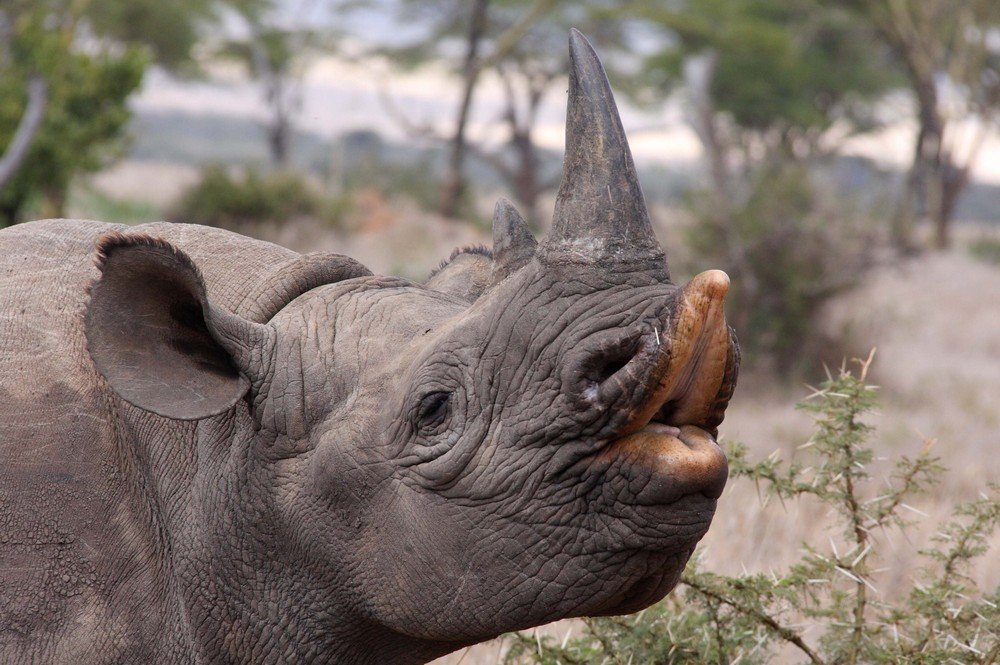
The Black Rhino (Diceros bicornis) is a high-profile example.
- Starting Point (The Crisis): In the 1990s, the species was at its nadir, with populations having crashed by over 95% due to a catastrophic wave of poaching for their horns. They were listed as Critically Endangered (CR), with only around 2,000 individuals remaining.
- The Intervention (The ‘How’): The recovery (from CR to Endangered (EN), and a population now over 6,500) was not achieved through one single action. It required a multi-decade “fortress conservation” approach:
- Intensive Anti-Poaching: Aggressive, on-the-ground protection by rangers, often with military-style support.
- Strategic Translocations: Moving rhinos between reserves to establish new, genetically diverse populations in secure locations.
- International Legal Action: Enforcing CITES bans on horn trade to reduce market demand.
- The Deeper Data: This success demonstrates that for species under extreme commercial threat, nothing shortof intensive, long-term, and expensive security operations can work.
Case Study 2: The Habitat Model (Island Endemics)
Many successes on the list, particularly for birds and amphibians confined to small areas, follow a different model.
- Starting Point (The Crisis): A species confined to a single island or small habitat fragment, listed as EN or CR. The primary threats are not poaching, but invasive species (e.g., rats, cats) and habitat degradation (e.g., deforestation for agriculture).
- The Intervention (The ‘How’): The solution was ecological, not security-based:
- Invasive Species Eradication: Targeted programs to completely remove the predator (e.g., rats) from the island, allowing ground-nesting birds to reproduce.
- Active Habitat Restoration: Replanting native flora to restore the specific food sources and shelter the species relies on.
- The Deeper Data: This model proves that when the primary threat is ecological, a one-time, high-impact intervention (like removing an invasive species) can yield dramatic, self-sustaining population rebounds.
IV. Cross-Cutting Analysis: Common Patterns in the 20 Success Stories
When we analyze all 20 recoveries, they are not 20 different stories. Instead, they fall into a few key strategic categories. The data shows that success is driven by four primary types of intervention.
1. Direct, Enforced Protection
This is the Black Rhino model. It applies to species facing direct commercial exploitation (poaching, illegal logging, or overfishing). Success here is directly correlated with robust law enforcement, anti-poaching patrols, and strong legal frameworks (like CITES) that are actually enforced.
2. Active Habitat Management
This is the Island Bird model. This pattern is seen where species are not being actively hunted but are collapsing because their ecosystem is broken. Success hinges on:
- Creating and managing Protected Areas.
- Actively restoring habitat (reforestation, wetland restoration).
- Removing the core ecological threat, most notably invasive alien species.
3. Intensive Ex-situ Conservation (The Last Resort)
Several species on the list, particularly amphibians decimated by the chytridiomycosis fungus, were saved only by ex-situ (off-site) conservation. This involves:
- Creating “ark” populations in biosecure, captive-breeding facilities.
- Intensive, hands-on breeding programs.
- Attempting reintroduction only after the threat in the wild (like a disease) has been managed or has passed.
4. Community Governance and Incentives
Underpinning many of these successes is a shift in local governance. Conservation projects are most effective when local communities are given ownership and see a direct economic benefit from protecting the species (e.g., through eco-tourism revenue or direct employment as rangers) rather than from poaching or destroying habitat.
V. Conclusion: The Most Important Lesson from the Data
The recovery of these 20 species is more than just a piece of good news; it is a vital data point. It serves as definitive proof that conservation is not a passive hope, but a deliberate and effective science. The data overwhelmingly shows that when species are protected from direct exploitation, their habitats are restored, and targeted interventions are well-funded and sustained, recovery is possible.
But this success comes with a critical warning. These 20 victories are the result of massive, decades-long investments, often focused on iconic, charismatic species. We cannot allow the success of the Black Rhino or a specific island bird to mask the cascading losses in less “famous” species—the insects, fungi, and plants that form the foundation of those same ecosystems. The wider trend highlighted by the IUCN—with thousands of species still in decline—remains the dominant narrative.
The ultimate lesson, therefore, is one of scalability. We have the blueprint. The success patterns of law enforcement, habitat restoration, and community involvement are proven to work. The challenge now is not a lack of knowledge, but a lack of will and funding to apply these proven interventions at the scale and speed required to save the thousands of other species still heading silently toward extinction.