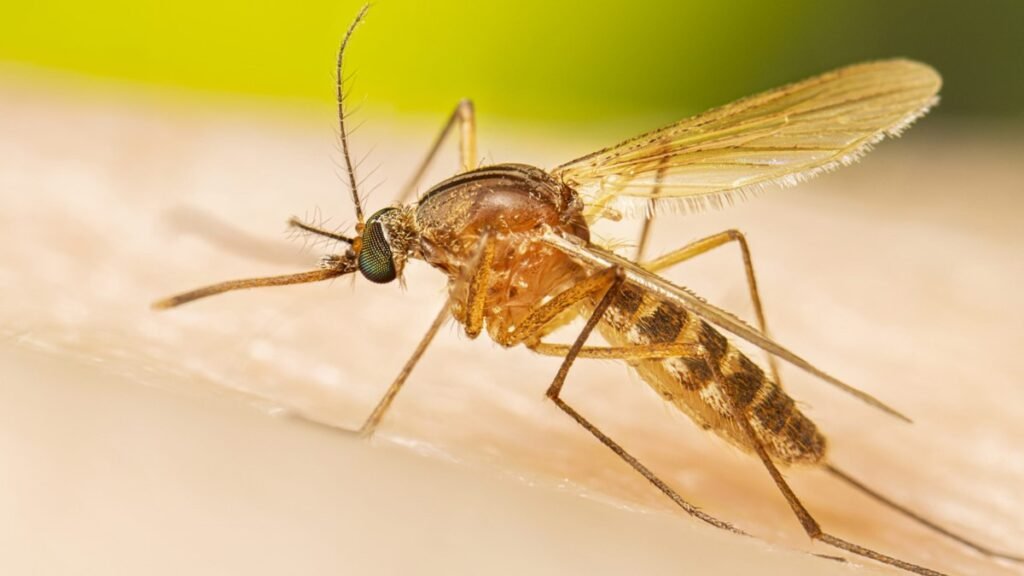
A biological event of great magnitude has been confirmed by the Icelandic Institute of Natural History (IINH): the establishment of the first known breeding population of mosquitoes (Culex sp.) in Iceland. This finding is scientifically significant as Iceland has long been a biogeographical case study as one of the only countries in the world without native or established populations of these insects.
This phenomenon is not a random biological anomaly; it is a direct and tangible indicator of rapid ecosystem change driven by anthropogenic climate warming.



The Ecological Mechanism of Absence
Historically, Iceland’s sub-Arctic climate has functioned as an impenetrable physiological barrier for mosquitoes. The key limiting factor has been the winter freeze cycle.
Mosquitoes, in their larval development stages, require stagnant bodies of water. In a traditional Icelandic winter, these shallow ponds and puddles freeze solid, an event that is lethal to overwintering larvae and interrupts the life cycle before it can be completed.
Accelerated warming in the Arctic and sub-Arctic region is altering this regime. With milder winters, water bodies no longer freeze completely, allowing larvae to survive the winter. This, combined with longer and warmer summers, now provides a sufficient phenological window for species like Culex to complete their life cycle and establish viable populations.
Culex sp.: The Pioneer Invader
The Culex genus (the common house mosquito) is the first to cross this threshold. While the specific species involved in Iceland is primarily ornithophilic (bird-biting) and a nuisance, its importance should not be underestimated. The Culex genus is a known global vector for pathogens, especially arboviruses like West Nile Virus.
The establishment of this pioneer species demonstrates that Iceland’s abiotic conditions have fundamentally changed. The climatic barrier has fallen.


Implications: Niche Expansion and Future Vectors
What we are witnessing in Iceland is a classic example of climate-driven ecological niche expansion. It demonstrates that species can and will colonize new territories (likely introduced via air transport or wind) as soon as environmental conditions become hospitable.
For ecologists, this sets an alarming precedent. If Culex could establish itself, the “ecological door” is now open. As warming continues, the country will theoretically become habitable for other mosquito genera with far more serious public health implications, such as Aedes (vector for dengue, zika) or Anopheles (vector for malaria).
Relevance to Tropical Ecosystems
This event in the far north has direct relevance to species ecology in Costa Rica. The same mechanism allowing temperate species to move north (latitudinal expansion) is allowing tropical, lowland species in Costa Rica to move upslope in altitude (altitudinal expansion).
We are observing how species and the pathogens they carry, such as Aedes aegypti, are invading communities at higher elevations that were historically too cold for their survival. The Icelandic phenomenon is a warning that the climatic barriers that have defined the world’s ecosystems—whether tropical, temperate, or arctic—are actively dissolving.