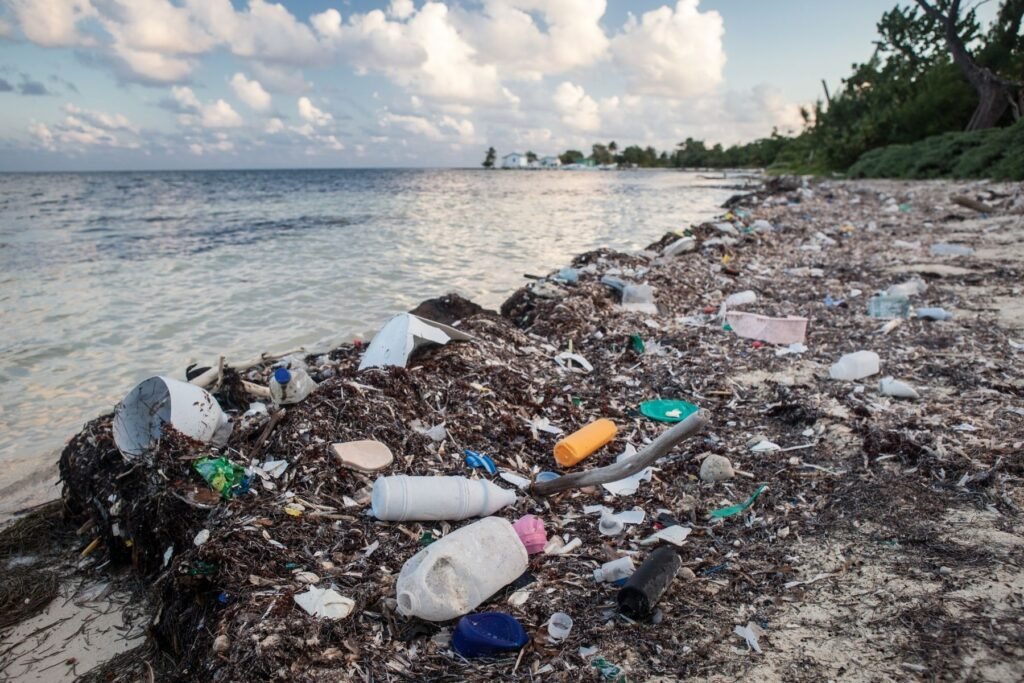
The latest round of international negotiations to forge a historic, legally binding treaty to end plastic pollution has concluded in a stalemate, failing to produce a consensus on the most critical issue: curbing the production of new plastics. This impasse places the entire treaty in jeopardy and magnifies the crucial leadership role of nations like Costa Rica on the global environmental stage.
The goal of the United Nations-led talks was to create the world’s first comprehensive agreement to tackle the plastic crisis throughout its entire lifecycle—from production and design to disposal and recycling. However, the negotiations have revealed a deep and fundamental divide among the participating nations.



The Core Conflict: Capping Production vs. Managing Waste
The heart of the disagreement lies in two opposing philosophies.
On one side is the High-Ambition Coalition to End Plastic Pollution (HAC), co-chaired by Costa Rica and Rwanda. This group of over 60 countries argues that the crisis cannot be solved without a significant reduction in the manufacturing of virgin plastic polymers. They advocate for binding global targets to cut production, stating that recycling efforts alone are overwhelmed by the sheer volume of new plastic entering the market.
On the other side, a group of petrochemical and oil-producing nations, including Saudi Arabia and Russia, staunchly opposes any limits on production. They insist the treaty should focus exclusively on downstream solutions like waste management, promoting a “circular economy,” and improving recycling technology.
Why This Matters for Costa Rica’s Species and Ecosystems
For a nation celebrated for its extraordinary biodiversity, the failure to secure a strong plastics treaty has dire consequences. The unchecked flow of plastic pollution is a direct threat to the very species Costa Rica strives to protect:
- Marine Life: Sea turtles mistake plastic bags for jellyfish, leading to fatal ingestion. Whales, dolphins, and seabirds become entangled in discarded fishing nets and other plastic debris.
- River and Mangrove Health: Our rivers act as conduits, carrying plastic waste from urban centers to the delicate mangrove ecosystems on the Pacific and Caribbean coasts, smothering roots and harming countless species that depend on these vital nurseries.
- Microplastic Contamination: As plastics break down, they create microplastics that permeate every corner of our environment—from the soils of our rainforests to the waters of our oceans. These tiny particles are ingested by wildlife, moving up the food chain and posing a yet unknown long-term threat to ecosystem health.


Costa Rica: A Small Country with a Powerful Voice
In this high-stakes environmental battle, Costa Rica has cemented its position as a global leader. By co-chairing the High-Ambition Coalition, the country has leveraged its green reputation to advocate for a treaty with real teeth. The current stalemate doesn’t signify a failure of Costa Rica’s vision but rather underscores the immense challenge of shifting a global economy dependent on fossil fuels.
As the world waits to see if these diplomatic hurdles can be overcome, the message is clear: without a binding commitment to reduce plastic at its source, the pollution tide will continue to rise, threatening the rich natural heritage that defines Costa Rica and the health of our entire planet.