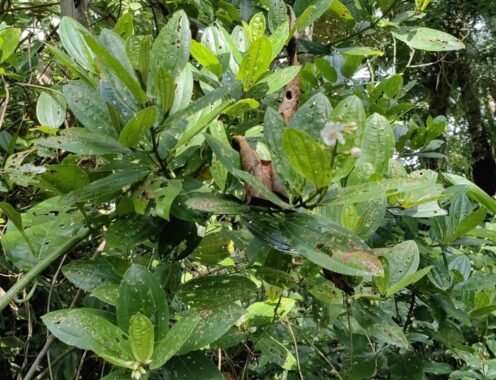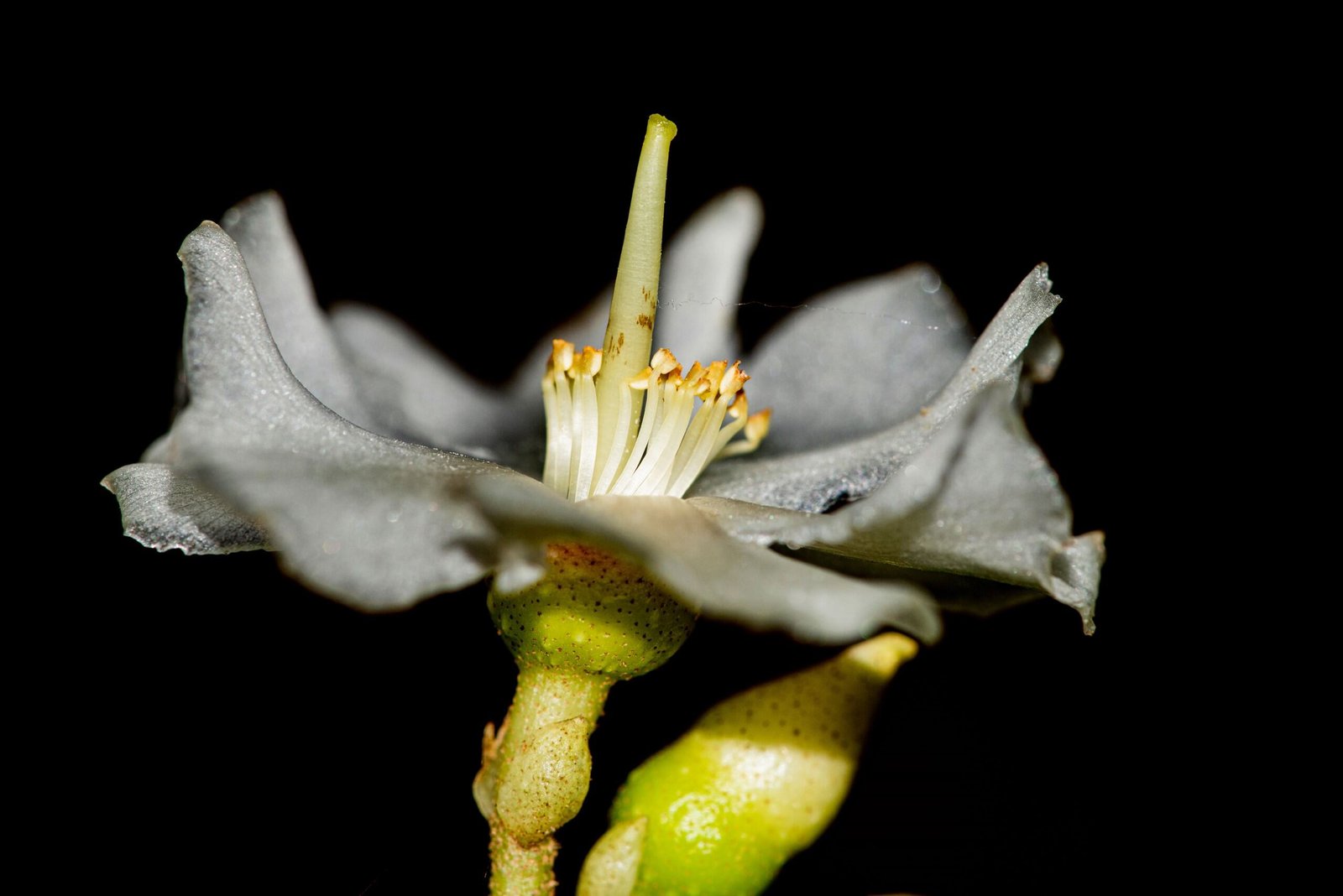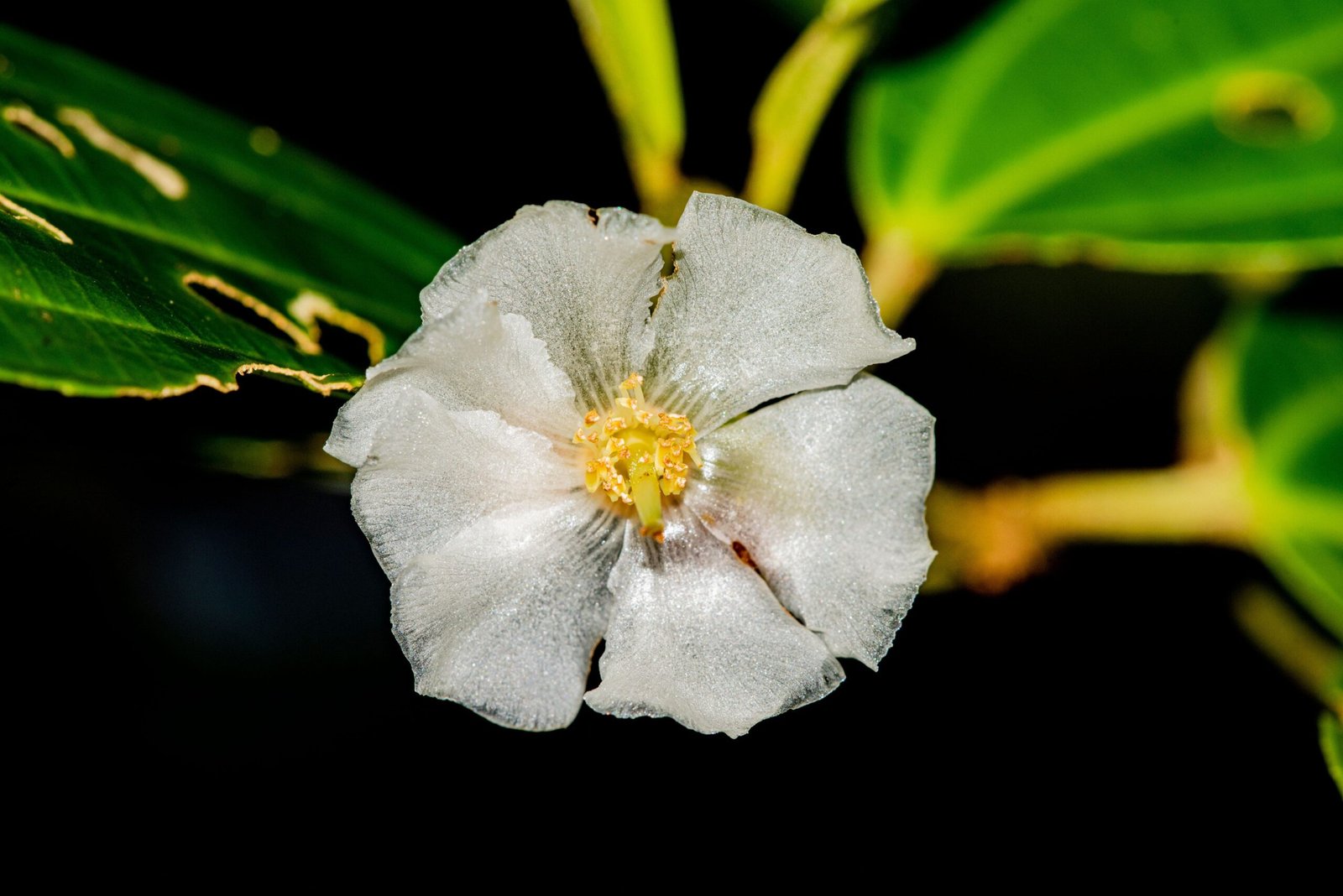
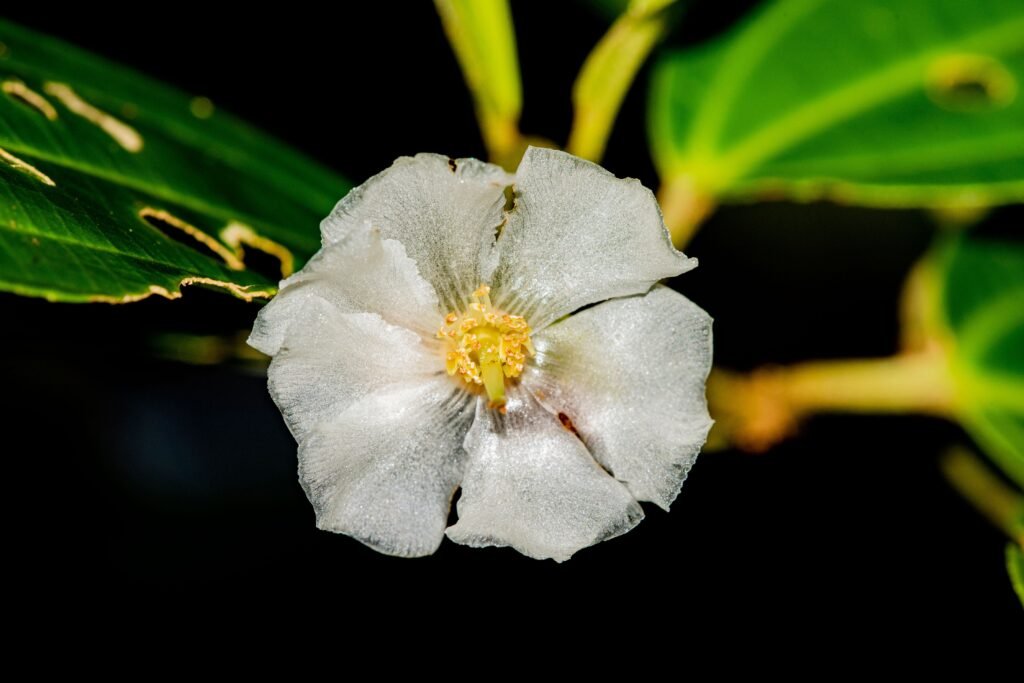



Low shrub to small tree, typically 1–4 m in Costa Rica (up to ~13.6 m elsewhere), with initially flattened twigs becoming terete and sparsely to densely stellate-puberulent. Leaves opposite, 3–5-nerved, elliptic to elliptic-ovate (4–14 × 2–7.3 cm), margins serrulate and ciliate; adaxial surface glabrous, abaxial surface with stellate hairs and distinctive minute white granular secretions. Inflorescences terminal panicles 3–15 cm; buds calyptrate; flowers 5–8-merous, petals 7–9.5 × 5.25–9 mm, white to pinkish; 26–36 stamens; style 8–10 mm. Fruit a dark-purple berry, 6–8 mm in diameter, with numerous small pyramidal seeds.
Sexual dimorphism refers to the physical differences between males and females of the same species that go beyond reproductive organs. For example, size, colour or form.
Height 1–4 m in CR (to ~13.6 m across range); DBH data deficient.
Perennial woody plant; data deficient (likely decades).
Not applicable (plant)
Data deficient
Year-round flowering and fruiting reported in CR.
Fruit maturation weeks–few months (genus-typical); species-specific data deficient
Low shrub to small tree, typically 1–4 m in Costa Rica (up to ~13.6 m elsewhere), with initially flattened twigs becoming terete and sparsely to densely stellate-puberulent. Leaves opposite, 3–5-nerved, elliptic to elliptic-ovate (4–14 × 2–7.3 cm), margins serrulate and ciliate; adaxial surface glabrous, abaxial surface with stellate hairs and distinctive minute white granular secretions. Inflorescences terminal panicles 3–15 cm; buds calyptrate; flowers 5–8-merous, petals 7–9.5 × 5.25–9 mm, white to pinkish; 26–36 stamens; style 8–10 mm. Fruit a dark-purple berry, 6–8 mm in diameter, with numerous small pyramidal seeds.
Coastal lowlands at sea level to ~200(–600) m; mangrove margins, river mouths, swampy back-mangrove and coastal forest. In Costa Rica it is currently confirmed only from Gandoca–Manzanillo WR on the Caribbean coast.
Primary producer; melittophilous flowers attract generalist bees; dark-purple berries are consumed by frugivorous birds and other vertebrates, aiding seed dispersal along coasts and waterways. (Pollinator/disperser guilds generalized for Melastomataceae.)
Not applicable (plant). Perennial coastal shrub/tree of back-mangrove ecotones; tolerates saline influence (leaf salt secretions).
This is a new species more revisions are needed
Taxonomic classification is a hierarchical system used in biology to organize and name living organisms. It arranges species into nested groups based on shared characteristics and evolutionary relationships.
🌍 The IUCN status refers to the conservation category assigned to a species by the International Union for Conservation of Nature, based on its risk of extinction
In the Neotropics’ Melastomataceae, this is the only species recorded naturally in mangroves.
Leaves bear white granular secretions—likely salt exudates linked to coastal tolerance.
The species was long treated as Conostegia polyandra; taxonomic work confirms synonymy with M. rupicola.
First recorded in Costa Rica in 2024, at Gandoca–Manzanillo WR.