Also known / common namesSpanish – Zompopa, Hormiga arrieralo
Leafcutter Ant(s) General Description
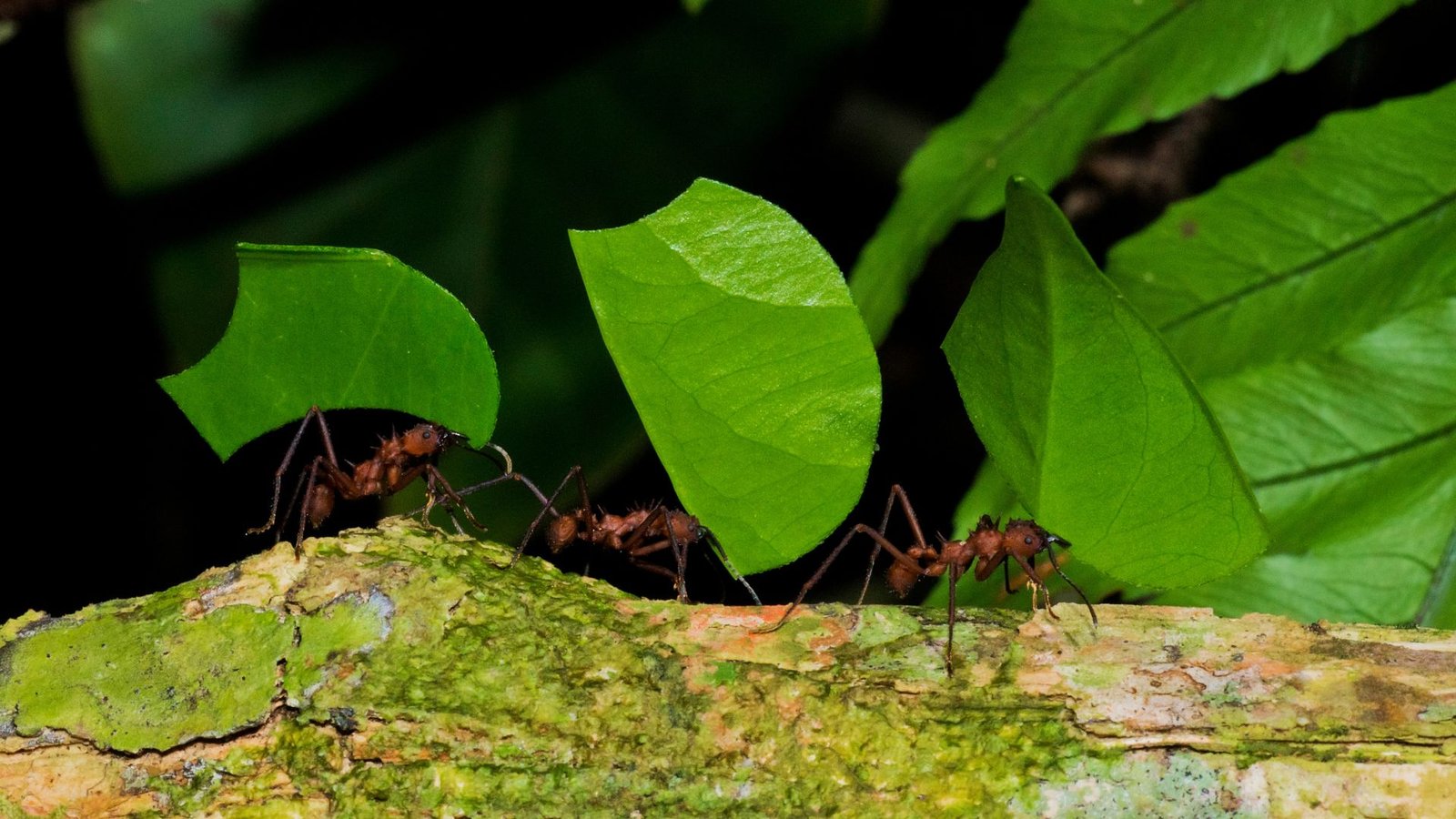
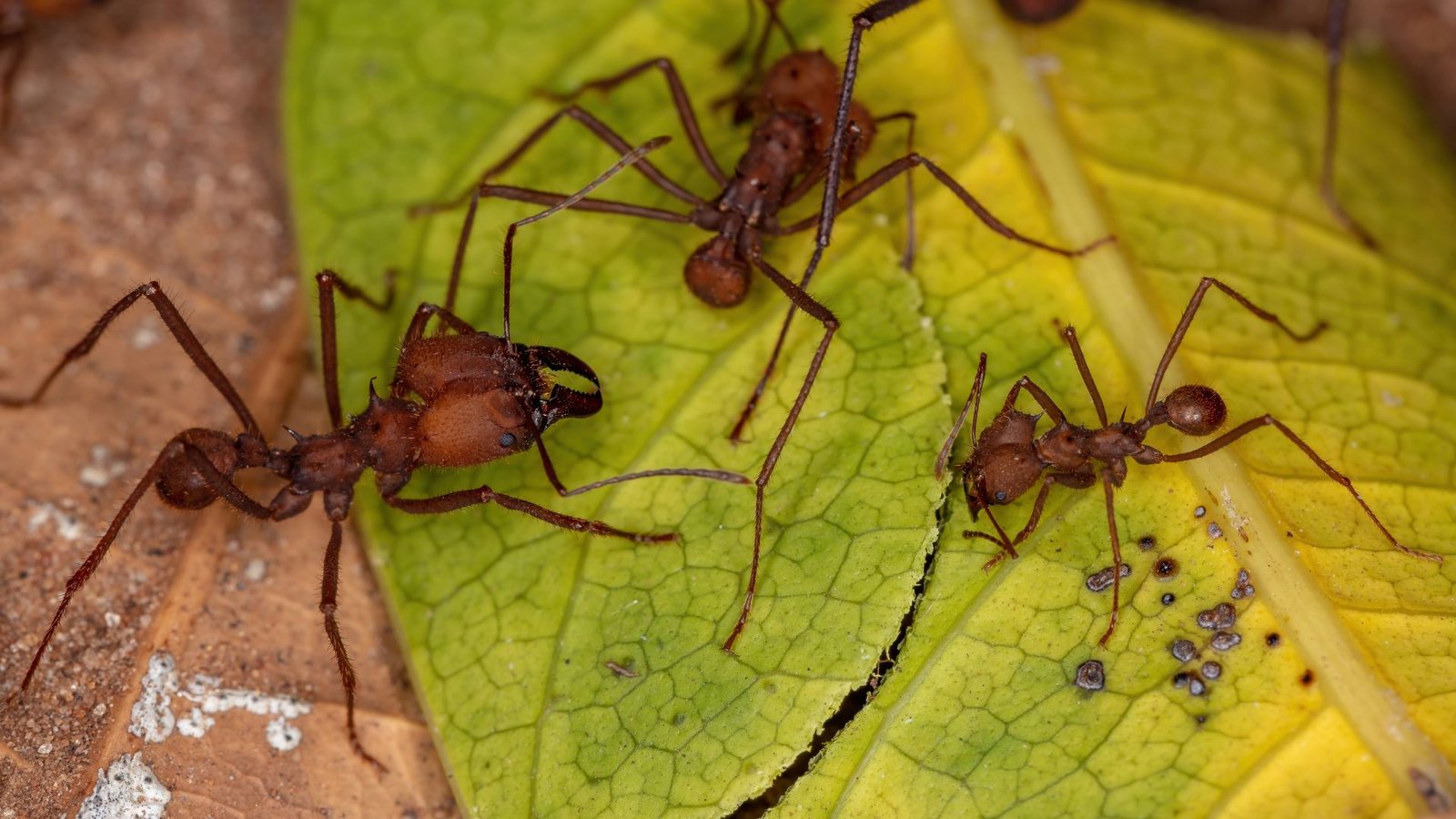
Large Neotropical leaf-cutting ant with extreme worker polymorphism. Minims (3–6 mm) tend the fungus gardens; media workers (7–12 mm) cut and carry leaf fragments; majors/soldiers (13–18 mm) have massive, heart-shaped heads with powerful mandibles for defense and clearing trails. Queens are 22–30 mm, chestnut to dark reddish-brown, with ocelli and wings until mating. Mesosoma armed with several pairs of sharp spines (pronotal/propodeal). Gaster matte; cuticle bears stridulatory file used during leaf-cutting and recruitment. Antennae 12-segmented, geniculate. Colonies build extensive underground nests with dozens to hundreds of crater-like entrances and conspicuous refuse dumps.
Has Sexual Diamorphism?
Sexual dimorphism refers to the physical differences between males and females of the same species that go beyond reproductive organs. For example, size, colour or form.
LIFE‑HISTORY & VITAL STATISTICS OF THE Leafcutter Ant(S)
Average Height / Length / Diameter
Workers 3–18 mm (by caste); queen 22–30 mm; males ~18–22 mm
Average Adult Weight / Mass
varies strongly by caste
Typical Lifespan / Longevity
varies strongly by caste
Typical Lifespan / Longevity for males
workers weeks–months; males days after mating
Typical Lifespan / Longevity for Females
Queens up to 10–15+
Age at Sexual Maturity
Alates (males/queens) mature at eclosion; queens mate once during flight (polyandrous)
Breading Season
Mass nuptial flights at onset of the rainy season (commonly May–July in Costa Rica)
Gestation
Reproductive Outcome
Mature colonies: hundreds of thousands to several million workers; queens lay thousands of eggs per day at peak
Ecology and Behaviour for Leafcutter Ant(s)
Large Neotropical leaf-cutting ant with extreme worker polymorphism. Minims (3–6 mm) tend the fungus gardens; media workers (7–12 mm) cut and carry leaf fragments; majors/soldiers (13–18 mm) have massive, heart-shaped heads with powerful mandibles for defense and clearing trails. Queens are 22–30 mm, chestnut to dark reddish-brown, with ocelli and wings until mating. Mesosoma armed with several pairs of sharp spines (pronotal/propodeal). Gaster matte; cuticle bears stridulatory file used during leaf-cutting and recruitment. Antennae 12-segmented, geniculate. Colonies build extensive underground nests with dozens to hundreds of crater-like entrances and conspicuous refuse dumps.
Habitat
Humid lowland to premontane forest, also second-growth, agroforestry (cacao, coffee) and gardens from sea level to ~1 500 m. Nests in deep soils beneath forest or pasture, often with large earthen mounds and multiple foraging columns radiating to vegetation.
Trophic Chain
Fungus-farming herbivore: harvests leaves/flowers to feed the cultivar fungus; the ants consume the fungus, not the leaves directly. Major ecosystem engineers—accelerate nutrient cycling, create soil biopores, and prune vegetation patterns
Interespecies relationships noted for Leafcutter Ant
Mutualism +/+
Obligatory partnership with the cultivated fungus Leucoagaricus gongylophorus; ants gain food, fungus gains propagation and substrate processing
Symbiosis +/+
Pseudonocardia bacteria on workers produce antibiotics that suppress garden parasite Escovopsis; bacteria gain nutrients/space on cuticle.
Commensalism +/0
Midden heaps support rich detritivore communities (springtails, isopods) that exploit waste; ants unaffected once waste is isolated.
Inquilinism +/0
Myrmecophilous beetles and roaches inhabit peripheral nest chambers/refuse zones, benefiting from warmth and detritus.
Phoresy +/0
Mites ride on foragers between plants and nest; most are harmless hitchhikers.
Tanatocresis +/0
Dead ants and spent fungal substrate are repurposed by decomposers and even used by birds as nest material.
Ants defoliate many native and crop plants (e.g., Inga, citrus, cacao), negatively impacting hosts; anteaters and armadillos prey on ants.
Amensalism 0/-
Ant activity deters other arthropods from EFN-bearing trees without further benefit beyond ant foraging.
Competition -/-
Competes with other Attini (e.g., Acromyrmex spp.) for suitable forage plants around nest territories.
Social behaviour of Leafcutter Ant
Superorganism: Single fertile queen (typically monogynous) and highly polymorphic worker castes with pronounced division of labor (gardeners, foragers, soldiers).
Foraging: Mostly nocturnal/crepuscular columns on trunk trails; pheromone highways maintained and cleared by majors.
Communication: Trail pheromones, tactile cues, and stridulation during cutting/transport.
Distribution and Sighthings ofLeafcutter Ant(s) in Costa Rica
General Regions of Costa Rica where to find Leafcutter Ants
Tropical
Subtropical
Seasonal dry forest (Guanacaste)
Tropical Rain Forest
National Parks and Reserves of Costa Rica where to find Leafcutter Ants
Parque Nacional Volcán Arenal
Parque Nacional Braulio Carrillo
Parque Nacional Cahuita
Parque Nacional Carara
Parque Nacional Corcovado
Parque Nacional Guanacaste
Parque Nacional Marino Las Baulas de Guanacaste
Parque Nacional Piedras Blancas
Parque Nacional Volcán Poás
Parque Nacional Rincón de la Vieja
Parque Nacional Santa Rosa
Parque Nacional Tapantí – Macizo Cerro de la Muerte
Parque Nacional Tenorio
Parque Nacional Tortuguero
Best Time to seeLeafcutter Ant(s) in Costa Rica
Dry Season
January
February
March
April
June
July
August
September
October
November
December
Media
Videos
Sounds and calls
log in to help us with this an other posts.
This sheet is marked as: Complete
Taxonomy
Taxonomic classification is a hierarchical system used in biology to organize and name living organisms. It arranges species into nested groups based on shared characteristics and evolutionary relationships.
Kingdom Animalia
Phylum Arthropoda
Class Insecta
Order Hymenoptera
Genus Myrmicinae
Conservation Status
Status IUCN
🌍 The IUCN status refers to the conservation category assigned to a species by the International Union for Conservation of Nature, based on its risk of extinction
Not Evaluated (NE)
Threats
⚠️Targeted control (baits/insecticides) in agricultural landscapes; nest excavation/destruction.
⚠️Soil compaction & disturbance from intensive cattle or urbanization that collapse gardens/refuse chambers.
⚠️Pathogen spillover risks to cultivar (e.g., Escovopsis) under altered microclimates.
⚠️Localized habitat loss of humid lowlands; nevertheless, species often thrives in disturbed mosaics.
Fun Facts
Their agriculture is >8 million years old, predating human farming by orders of magnitude [5].
A founding queen carries a pellet of fungus in her infrabuccal pocket to seed the new garden (“vertical transmission”) [2].
Workers stridulate while cutting; vibrations may improve cutting efficiency and coordinate handling.
Refuse dumps (“middens”) host distinct decomposer communities and heat up as they compost.
In Costa Rica they are popularly called “zompopas”, and flights of winged queens can be spectacular after first heavy rains.