Leptodactylus savagei (Heyer, 2005) — formerly included in L. pentadactylus complex
Also known / common namesSpanish – Rana ternero ahumada, Rana toro selvática
Smoky Jungle Frog(s) General Description
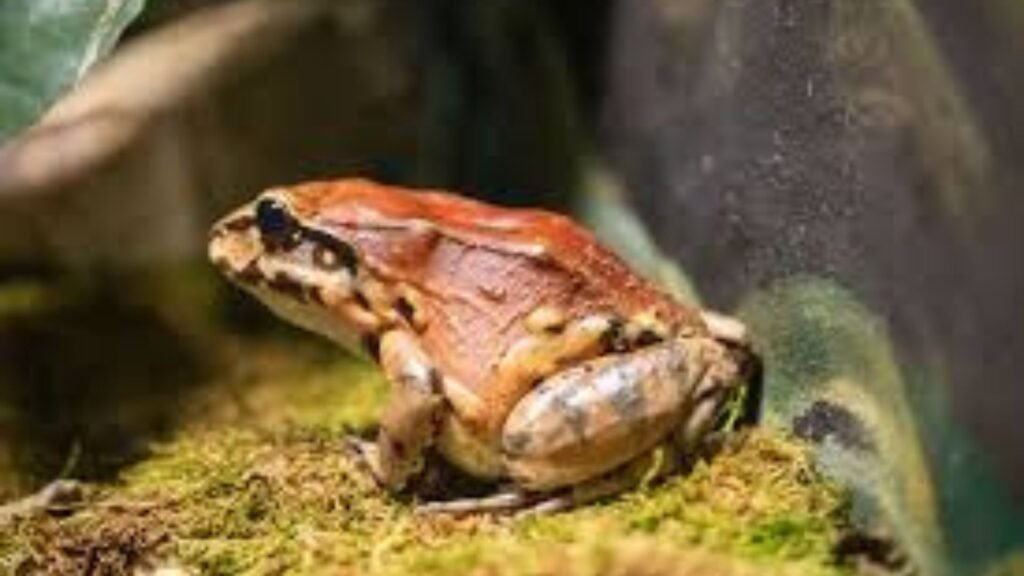
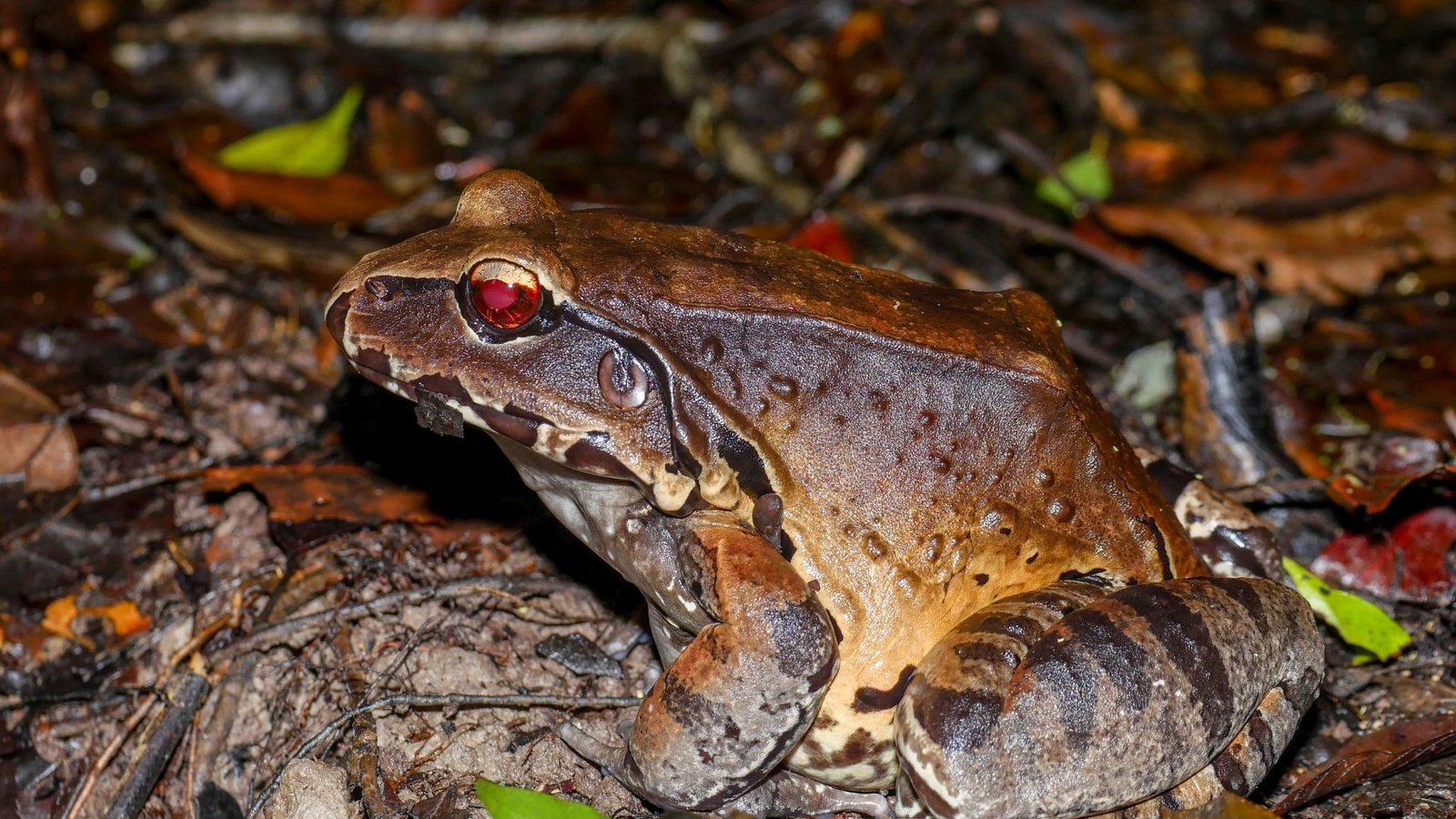
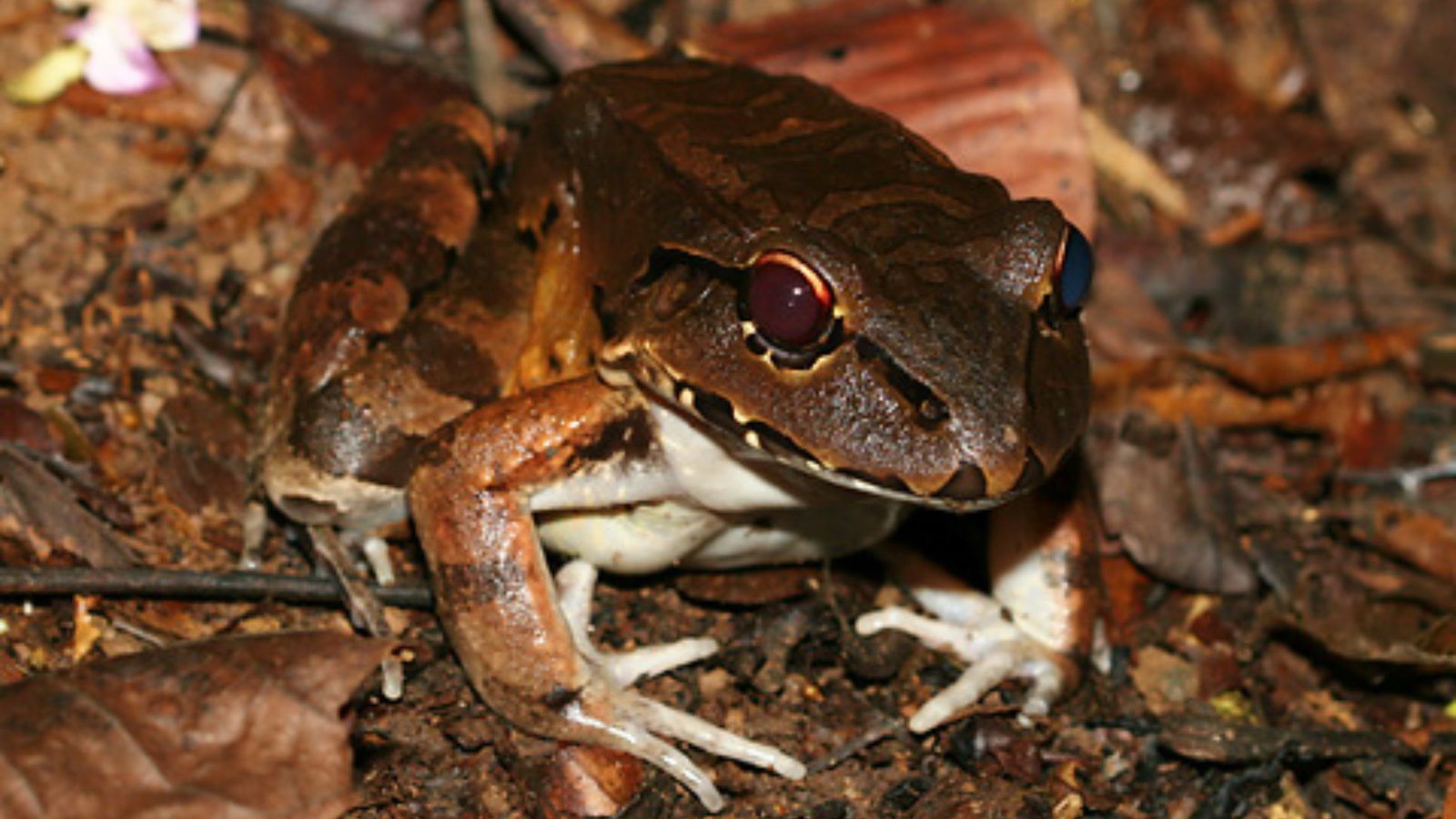
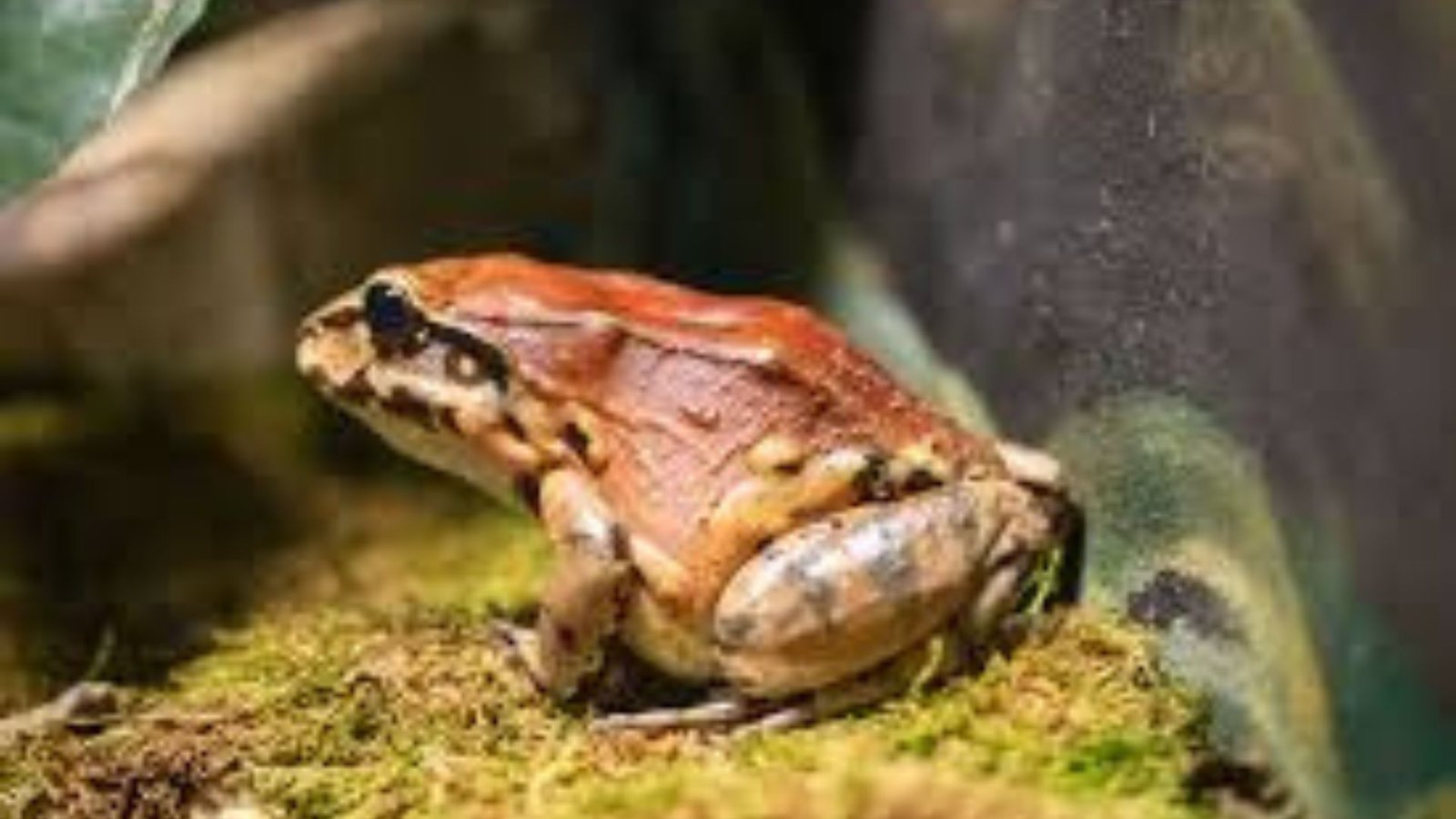
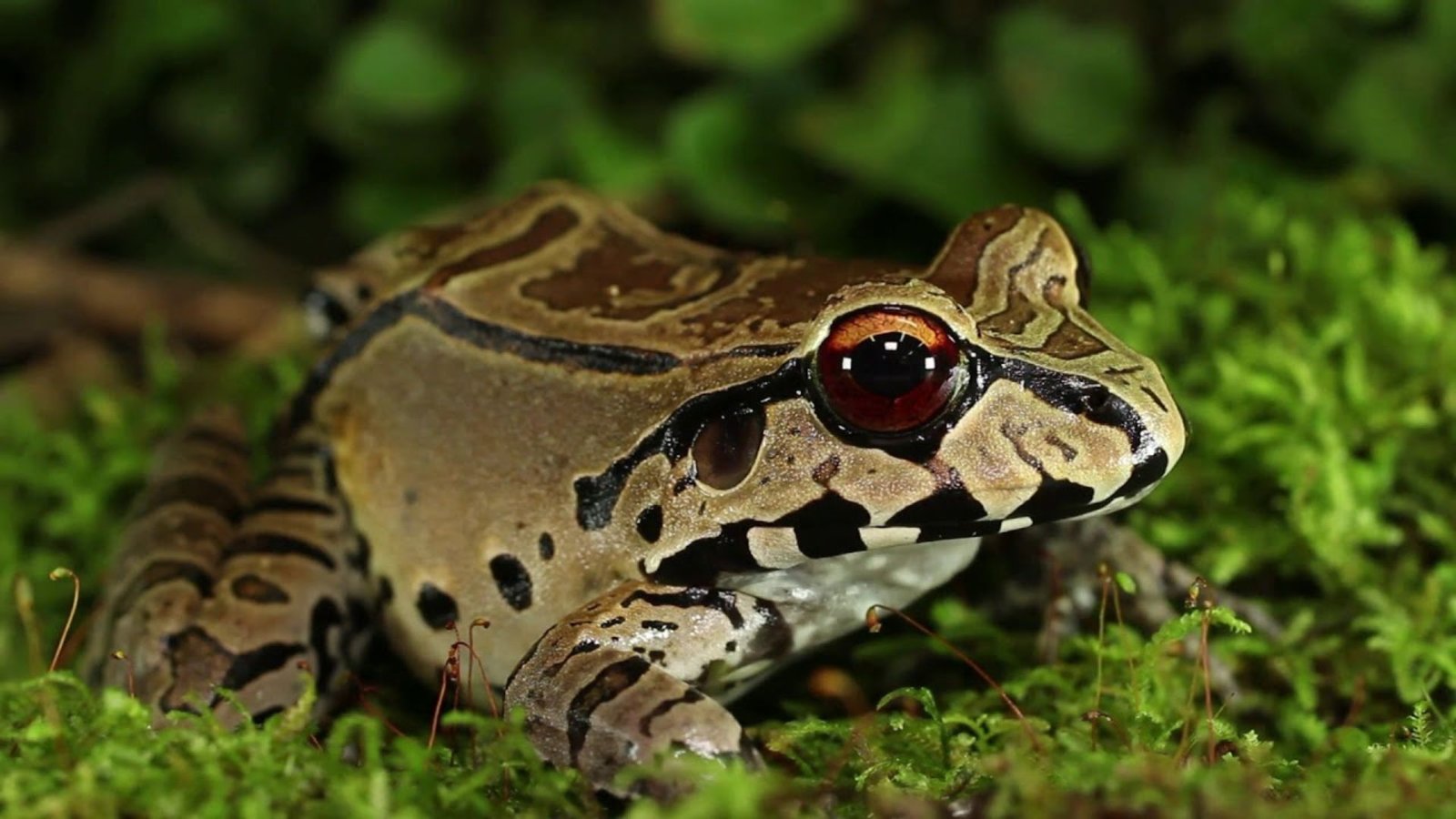
Costa Rica’s largest native frog (adult snout–vent length 130–180 mm; mass 230–480 g). Dorsum chocolate-brown to bronze with darker reticulations; flanks bear cream ocelli and a cream supralabial stripe bordered by black. Skin granular with prominent dorsolateral folds; glandular shoulder region secretes noxious mucus. Eyes large, bronze-gold; tympanum black-edged. Limbs robust; fingers unwebbed, toes basally webbed. Juveniles display reddish dorsum and proportionally longer limbs. Emits a piercing, infant-like scream when seized — an antipredator adaptation
Has Sexual Diamorphism?
Sexual dimorphism refers to the physical differences between males and females of the same species that go beyond reproductive organs. For example, size, colour or form.
LIFE‑HISTORY & VITAL STATISTICS OF THE Smoky Jungle Frog(S)
Average Height / Length / Diameter
Males ≈ 150 mm; females ≈ 165 mm SVL
Average Adult Weight / Mass
300–400 g
Typical Lifespan / Longevity
10–12 yr in captivity; wild data spars
Typical Lifespan / Longevity for males
Not enough data
Typical Lifespan / Longevity for Females
Not enough data
Age at Sexual Maturity
18–24 mo (≥ 110 mm SVL)
Breading Season
Onset of heavy rains (May – August)
Gestation
Reproductive Outcome
Foam nest with 1 000–2 500 eggs deposited in shallow forest pools
Ecology and Behaviour for Smoky Jungle Frog(s)
Costa Rica’s largest native frog (adult snout–vent length 130–180 mm; mass 230–480 g). Dorsum chocolate-brown to bronze with darker reticulations; flanks bear cream ocelli and a cream supralabial stripe bordered by black. Skin granular with prominent dorsolateral folds; glandular shoulder region secretes noxious mucus. Eyes large, bronze-gold; tympanum black-edged. Limbs robust; fingers unwebbed, toes basally webbed. Juveniles display reddish dorsum and proportionally longer limbs. Emits a piercing, infant-like scream when seized — an antipredator adaptation
Habitat
Mostly terrestrial in lowland and foothill humid forest, forest edge pasture and swamps (0 – 660 m); by day hides in leaf litter, buttress cavities or armadillo burrows; breeds in rain-filled roadside ditches, ponds and slow streams.
Trophic Chain
Nocturnal mesopredator consuming large insects, spiders, other frogs, lizards and small rodents; occasionally predated by pit-vipers and opossums.
Interespecies relationships noted for Smoky Jungle Frog
Mutualism +/+
Foam nests enrich vernal pools with nutrients; mosquito larvae feed on detritus, reducing fungal infections on eggs.
Symbiosis +/+
Skin microbiome (Pseudomonas spp.) inhibits Batrachochytrium; bacteria gain moist niche.
Commensalism +/0
Ground beetles trail frogs to capture flushed invertebrates; frogs unaffected.
Inquilinism +/0
Paedomorphic salamanders seek refuge in abandoned frog burrows.
Phoresy +/0
Frog-biting midges (Corethrella) locate calling males and obtain blood meals; frog usually unharmed
Preyed on by Fer-de-Lance (Bothrops asper) and crab-eating raccoon; frog predates rodents, other frogs, large insects.
Amensalism 0/-
Frog mucus exudate suppresses fungal hyphae on leaf litter without further benefit.
Competition -/-
Overlaps with Rhinella horribilis tadpoles in temporary pools, leading to resource depletion.
Social behaviour of Smoky Jungle Frog
Males establish calling stations on muddy banks; combat includes lateral kicks and inflated body postures.
Exhibits “explosive startle jump” (> 1.5 m) when threatened, aided by robust hind limbs.
Tadpoles emit substrate-borne clicks that may deter predatory dragonfly larvae.
Distribution and Sighthings ofSmoky Jungle Frog(s) in Costa Rica
General Regions of Costa Rica where to find Smoky Jungle Frogs
Tropical
Seasonal dry forest (Guanacaste)
Tropical rainforest (Caribbean and North Pacific slopes)
National Parks and Reserves of Costa Rica where to find Smoky Jungle Frogs
Parque Nacional Braulio Carrillo
Parque Nacional Corcovado
Parque Nacional Palo Verde
Parque Nacional Piedras Blancas
Parque Nacional Santa Rosa
Parque Nacional Tortuguero
Best Time to seeSmoky Jungle Frog(s) in Costa Rica
Dry Season
January
February
March
April
June
July
August
September
October
November
December
Media
Videos
Sounds and calls
log in to help us with this an other posts.
This sheet is marked as: Complete
Taxonomy
Taxonomic classification is a hierarchical system used in biology to organize and name living organisms. It arranges species into nested groups based on shared characteristics and evolutionary relationships.
Kingdom Animalia
Phylum Chordata
Class Amphibia
Order Anura
Genus Leptodactylus
Conservation Status
Status IUCN
🌍 The IUCN status refers to the conservation category assigned to a species by the International Union for Conservation of Nature, based on its risk of extinction
Least Concern
Threats
⚠️Habitat conversion to banana, pineapple and cattle pasture draining breeding swales.
⚠️Road mortality during mass post-rain movements.
⚠️Local harvest for bush-meat in Caribbean communities.
⚠️Pollution: agrochemicals reduce larval survival and deformities.
Fun Facts
When handled, secretes copious sticky mucus and utters a loud scream that startles predators
Produces strong musky odour detectable by herpetologists metres away, aiding field surveys.
Tadpoles are carnivorous and may consume eggs of other amphibians sharing pools.
Named in honour of Dr. Jay M. Savage, doyen of Costa-Rican herpetology.
Eyeshine reflects bright red under torch-light, revealing frogs during night walks.