Also known / common names Spanish – Hongo zombie de hormigas, Cordyceps
Zombie-Ant Fungus(s) General Description
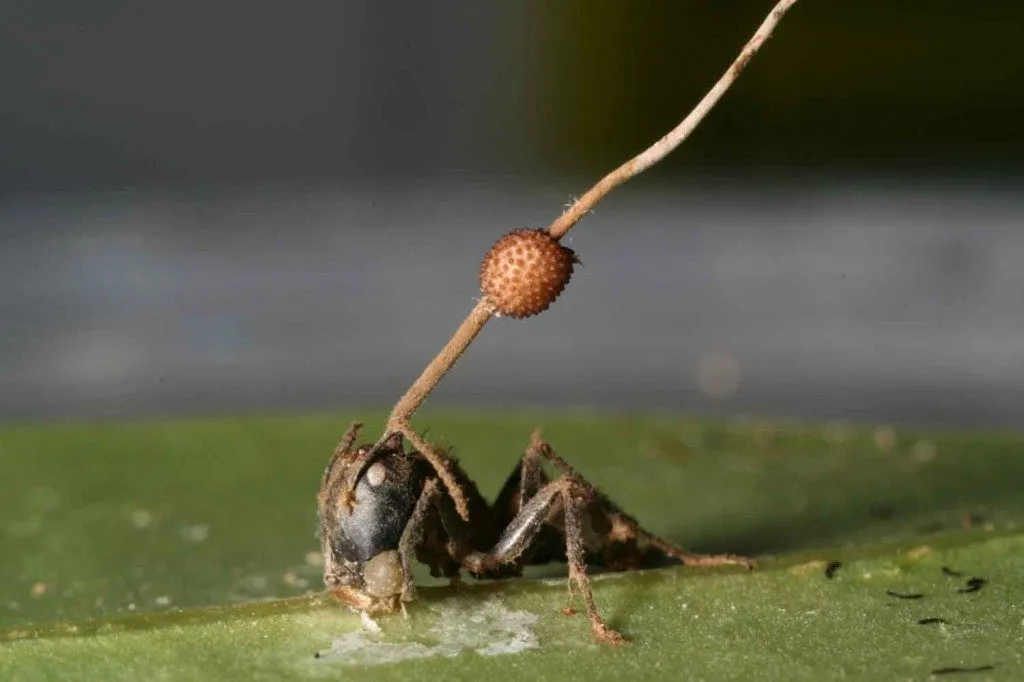
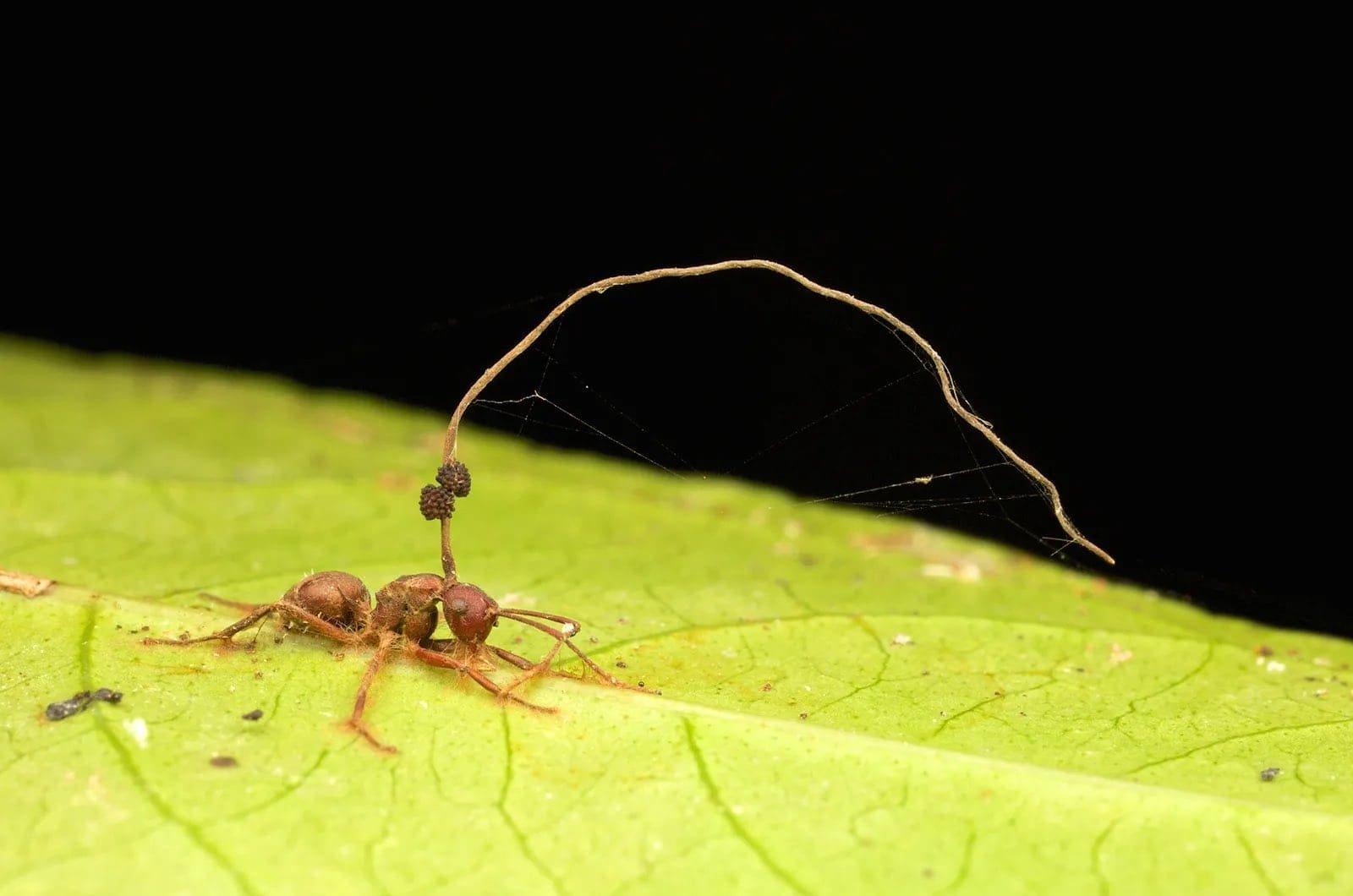
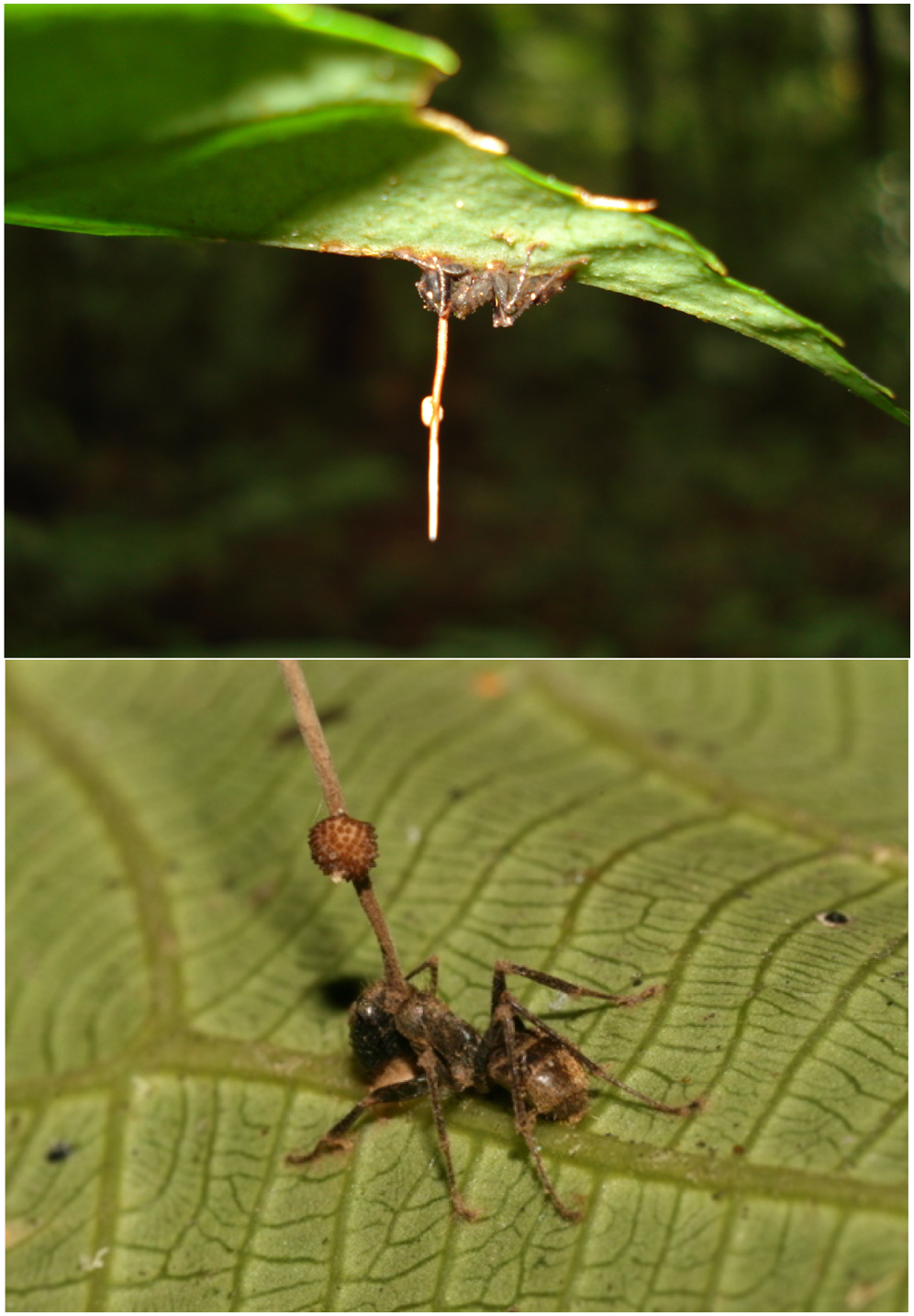
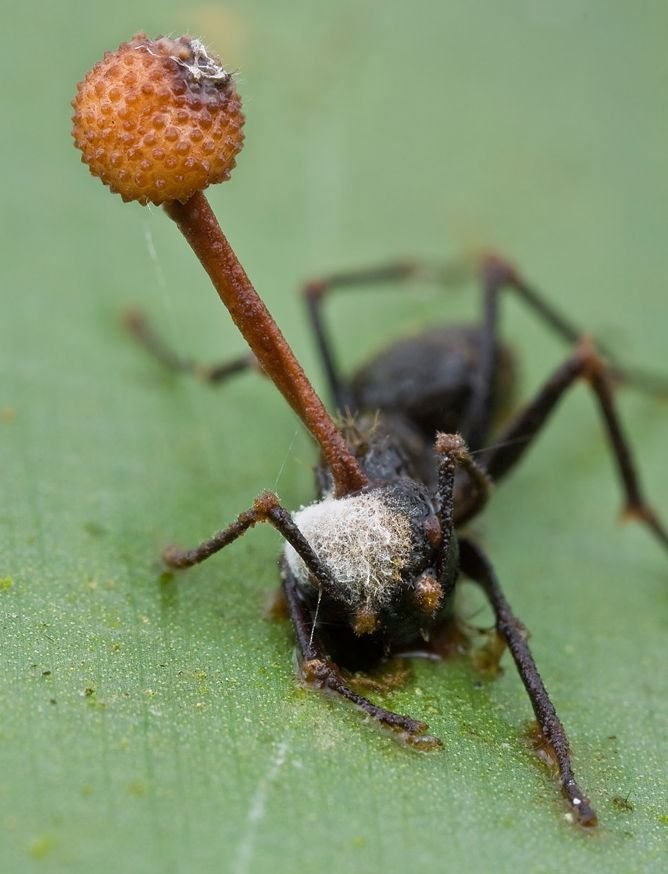
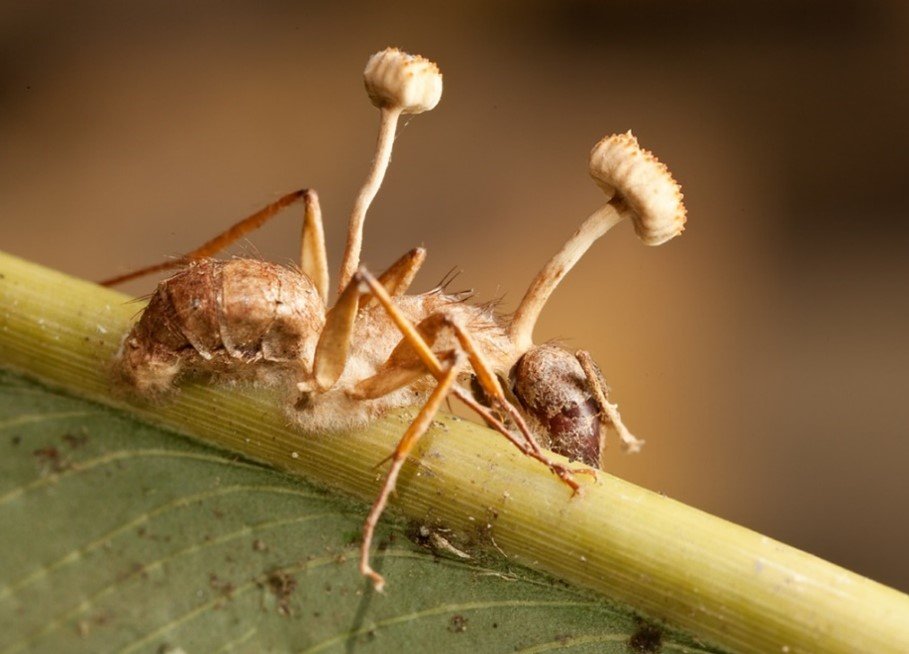
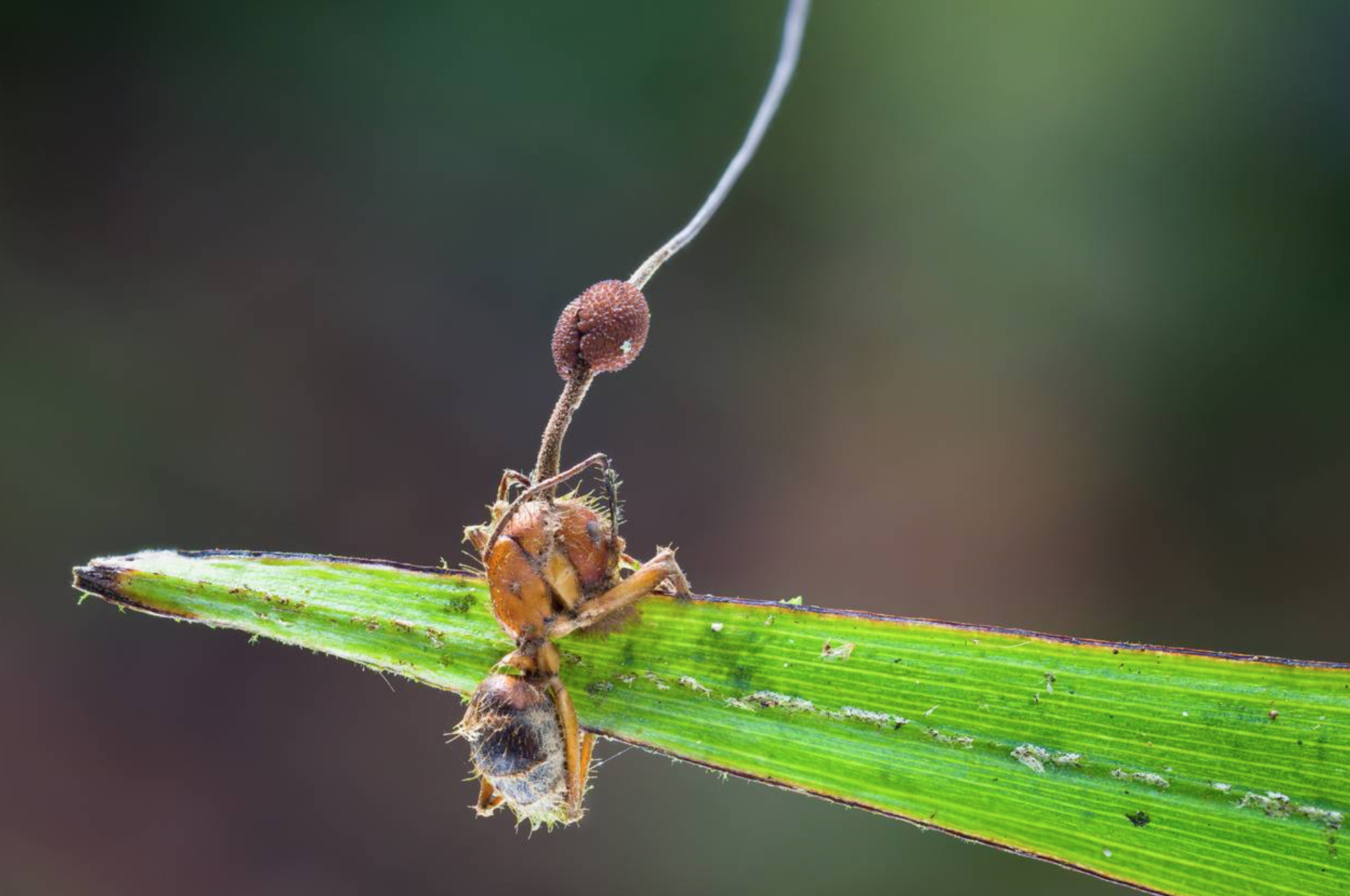
Endoparasitic ascomycete that infects carpenter ants (Camponotus spp.). Internally, white mycelium proliferates through host tissues while leaving vital organs functional. Upon host death, a single dark-brown stromatal stalk (5–20 mm) erupts from the ant’s pronotum, ending in a clavate, velvety fertile head bearing asexual Hirsutella-type conidiophores followed by perithecial (sexual) maturation. Perithecia flask-shaped, embedded; ascospores filiform, 100–130 × 3 µm, fragmenting into secondary spores. Fruiting body covered by orange–rust patches of parasitic hyperfungi (Calonectria sp.) late in decay. Characteristic “death grip” of host ant on abaxial leaf veins or twigs at 25–35 cm above ground optimises humidity for fungal development.
Has Sexual Diamorphism?
No
Sexual dimorphism refers to the physical differences between males and females of the same species that go beyond reproductive organs. For example, size, colour or form.
LIFE‑HISTORY & VITAL STATISTICS OF THE Zombie-Ant Fungus(S)
Average Height / Length / Diameter
5–20 mm; fertile head Ø 2–3 mm
Average Adult Weight / Mass
≈ 20–40 mg
Typical Lifespan / Longevity
Stromata viable 3–6 weeks; mycelium persists indeterminately in cadaver
Typical Lifespan / Longevity for males
Fungi do not apply
Typical Lifespan / Longevity for Females
Fungi do not apply
Age at Sexual Maturity
≈ 10–14 days post-host death (≥ 95 % RH)
Breading Season
Peak May–July (early wet season) in Costa Rica
Gestation
Reproductive Outcome
Ecology and Behaviour for Zombie-Ant Fungus(s)
Endoparasitic ascomycete that infects carpenter ants (Camponotus spp.). Internally, white mycelium proliferates through host tissues while leaving vital organs functional. Upon host death, a single dark-brown stromatal stalk (5–20 mm) erupts from the ant’s pronotum, ending in a clavate, velvety fertile head bearing asexual Hirsutella-type conidiophores followed by perithecial (sexual) maturation. Perithecia flask-shaped, embedded; ascospores filiform, 100–130 × 3 µm, fragmenting into secondary spores. Fruiting body covered by orange–rust patches of parasitic hyperfungi (Calonectria sp.) late in decay. Characteristic “death grip” of host ant on abaxial leaf veins or twigs at 25–35 cm above ground optimises humidity for fungal development.
Habitat
Humid understory of lowland tropical rain forest (0–1 000 m) on both Pacific and Caribbean slopes; requires closed canopy (RH > 90 %, T 22–28 °C) and abundant Camponotus host colonies
Trophic Chain
Obligate entomopathogen/parasite; recycles nutrients via cadaver decomposition and influences ant population dynamics.
Interespecies relationships noted for Zombie-Ant Fungus
Parasitism + / –
Kills Camponotus ants, extracting nutrients for reproduction.
Mutualism + / +
Secondary bacteria on cadaver inhibit competitor fungi, benefiting both.
Symbiosis + / +
Endosymbiotic Burkholderia spp. produce toxins aiding host manipulation.
Commensalism + / 0
Springtails feed on spore residue; fungus unaffected.
Inquilinism + / 0
Mites inhabit hollowed ant cadaver post-sporulation.
Phoresy +/0
No documented case.
Tanatocresis + / 0
Degraded cadavers enrich micro-patches of forest litter.
Amensalism 0 / –
Ant death reduces colony foraging without advantage to fungus once sporulation complete.
Competition – / –
Competes with Beauveria bassiana for ant hosts; chemical warfare via antimicrobials.
Social behaviour of Zombie-Ant Fungus
Developmental Behaviour & Manipulation
Infection route: airborne ascospores adhere to ant cuticle, germinate, penetrate exoskeleton.
Host manipulation: 8–10 days post-infection, ant leaves trail, climbs vegetation, bites vein (“death grip”) then dies; fungus sporulates.
Social context: infected ants are removed by nest-mates if detected; parasite counters by manipulating individual to die away from colony.
Distribution and Sighthings ofZombie-Ant Fungus(s) in Costa Rica
General Regions of Costa Rica where to find Zombie-Ant Funguss
Tropical
Tropical rainforest (Caribbean and North Pacific slopes)
National Parks and Reserves of Costa Rica where to find Zombie-Ant Funguss
Parque Nacional Braulio Carrillo
Parque Nacional Corcovado
Parque Nacional Tortuguero
Reserva Biológica Hitoy-Cerere
Refugio Nacional de Vida Silvestre Gandoca-Manzanillo
Best Time to seeZombie-Ant Fungus(s) in Costa Rica
Dry Season
January
February
March
April
June
July
August
September
October
November
December
Media
Videos
Sounds and calls
log in to help us with this an other posts.
This sheet is marked as: Complete
Taxonomy
Taxonomic classification is a hierarchical system used in biology to organize and name living organisms. It arranges species into nested groups based on shared characteristics and evolutionary relationships.
Kingdom Fungi
Phylum Ascomycota
Class Sordariomycetes
Order Hypocreales
Genus Ophiocordyceps
Conservation Status
Status IUCN
🌍 The IUCN status refers to the conservation category assigned to a species by the International Union for Conservation of Nature, based on its risk of extinction