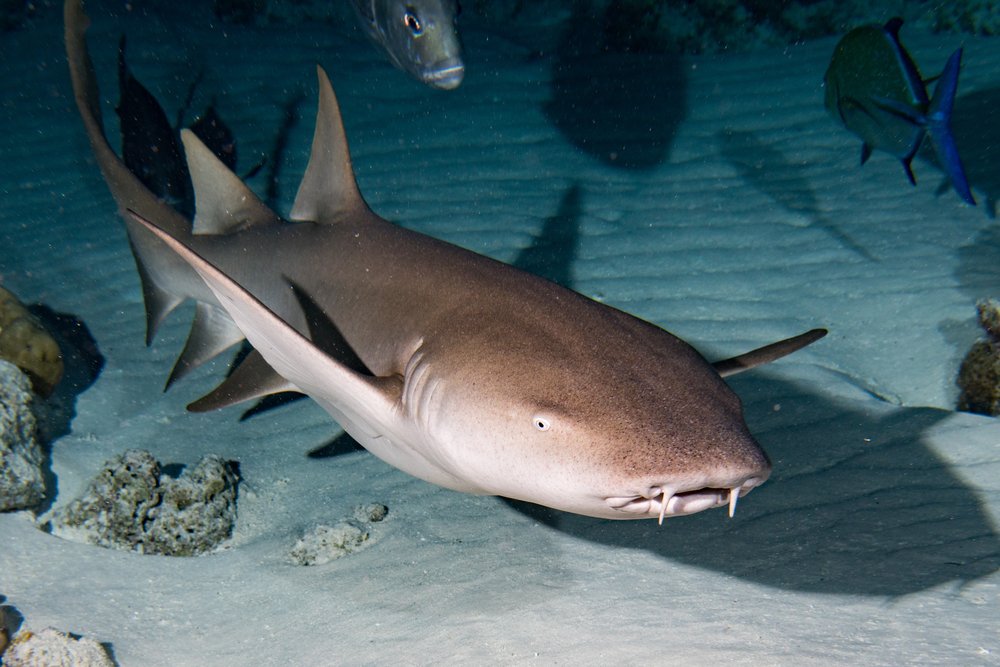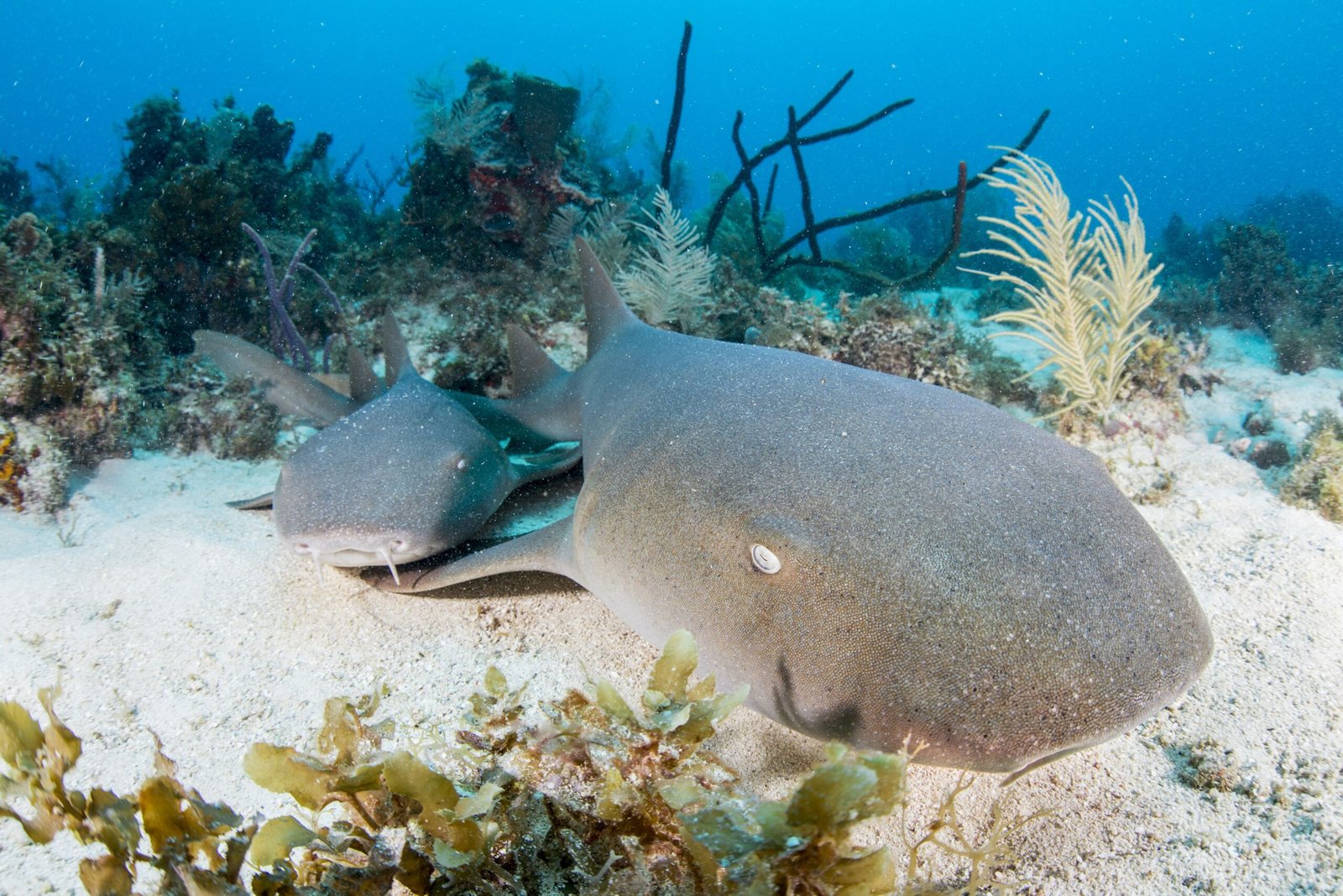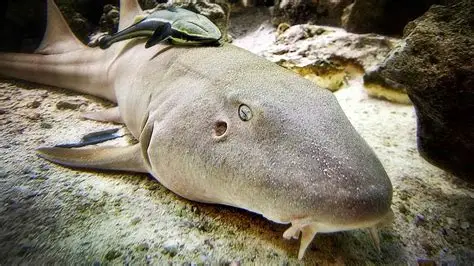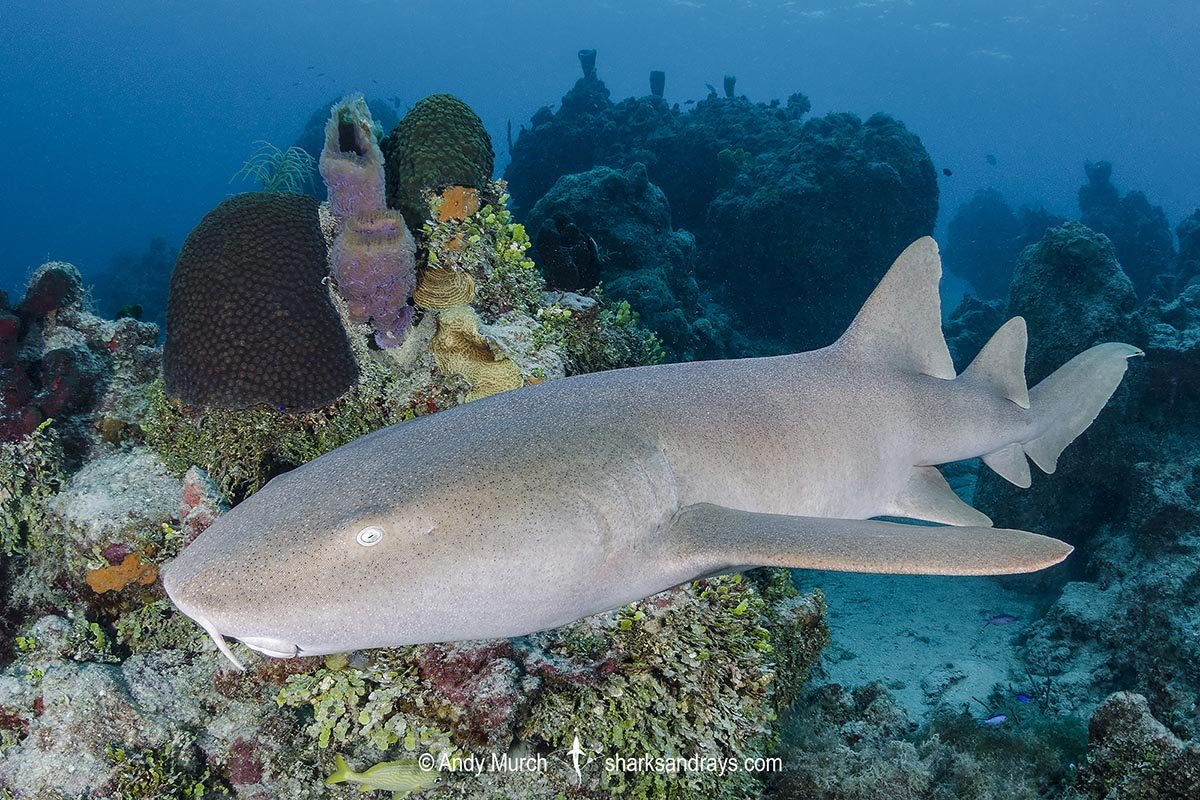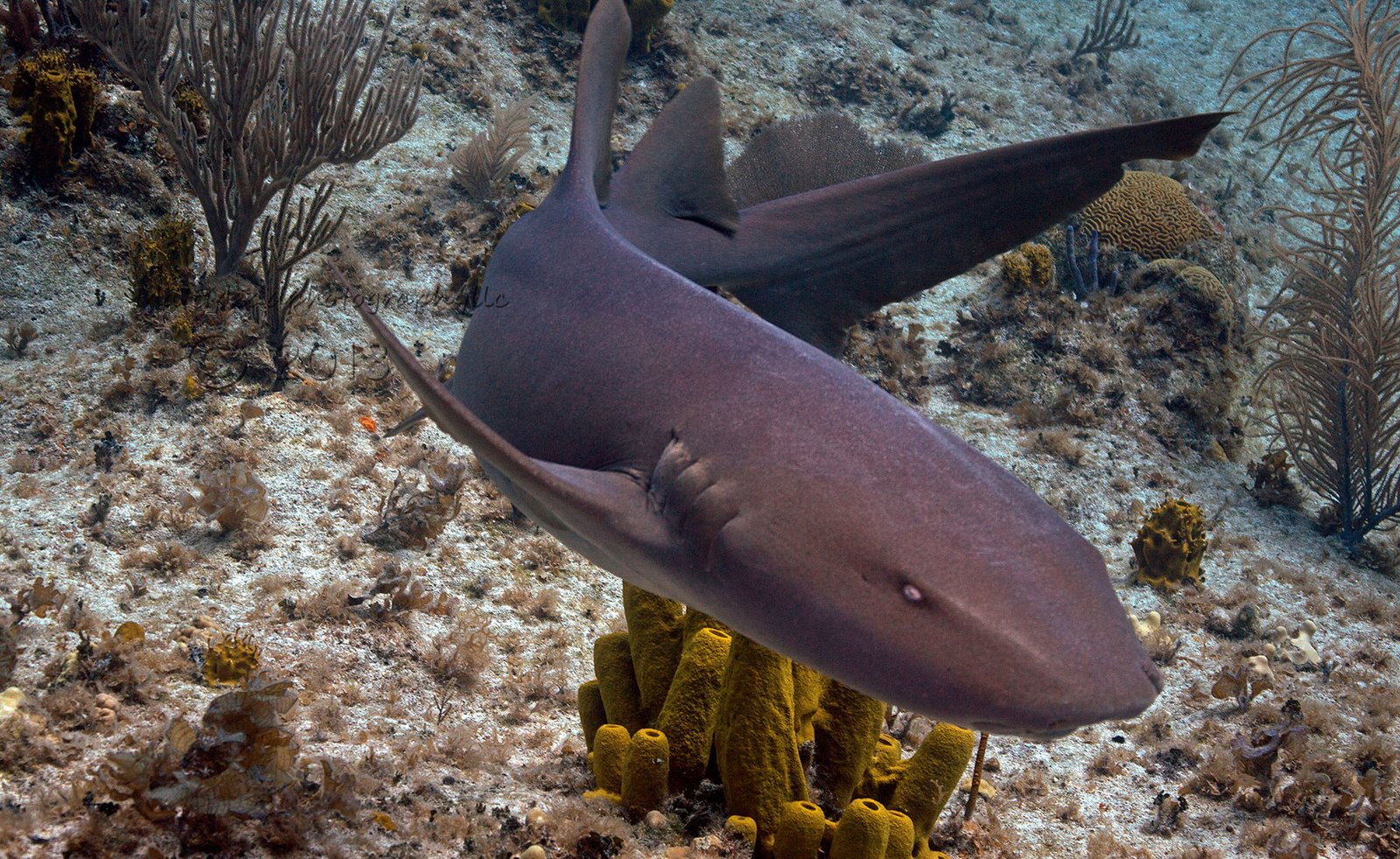



Stout, catshark‑like benthic shark with a broad, slightly flattened head, small eyes and two conspicuous barbels on each side of the lower snout. Mouth well in front of eyes; spiracles small, behind eyes. Body yellow‑brown to grey‑brown dorsally, lighter ventrally; juveniles display scattered dark spots that fade by 80 cm TL. Two nearly equal rounded dorsal fins set far back; caudal fin broad with subequal lobes. Dermal denticles coarse, giving rough skin. Adults typically 2.2 – 2.7 m total length (TL) and 90 – 120 kg; maximum verified 4.3 m, 150 kg. Females slightly larger than males.
Sexual dimorphism refers to the physical differences between males and females of the same species that go beyond reproductive organs. For example, size, colour or form.
Males ≈ 2.3 m; females ≈ 2.5 m
90 – 120 kg
25–35 yr (aging of vertebral bands)
Data deficient
Data deficient
Males 15–18 yr / 210–220 cm TL; females 18–20 yr / 230–240 cm TL
Biennial; mating June – August (wet season) in shallow reefs and mangroves
21 – 50 pups (mean ≈ 30); pups born 27–30 cm TL
Stout, catshark‑like benthic shark with a broad, slightly flattened head, small eyes and two conspicuous barbels on each side of the lower snout. Mouth well in front of eyes; spiracles small, behind eyes. Body yellow‑brown to grey‑brown dorsally, lighter ventrally; juveniles display scattered dark spots that fade by 80 cm TL. Two nearly equal rounded dorsal fins set far back; caudal fin broad with subequal lobes. Dermal denticles coarse, giving rough skin. Adults typically 2.2 – 2.7 m total length (TL) and 90 – 120 kg; maximum verified 4.3 m, 150 kg. Females slightly larger than males.
Shallow coral and rocky reefs, sand flats, seagrass beds and mangrove channels from intertidal pools to ≈ 70 m; in Costa Rica abundant around Isla del Caño, Golfo Dulce, Bahía Culebra, and Caribbean patch reefs of Cahuita.
Nocturnal benthic predator/scavenger feeding on octopus, crustaceans, urchins and demersal bony fishes sucked from holes; chemosensory barbels locate hidden prey.
Social Structure & Behaviour
Activity pattern: nocturnal forager, diurnal rest under ledges/caves.
Group size: solitary while hunting; clusters of 4–15 sharing daytime shelters.
Movements: home range small (< 3 km²); high site fidelity to resting ledge.
Communication: tactile contact and body stacking maintain group cohesion; minimal aggression.
Special behaviours: creates suction up to 140 kPa to extract lobsters; uses barbels & electroreception to detect prey in sand.
Taxonomic classification is a hierarchical system used in biology to organize and name living organisms. It arranges species into nested groups based on shared characteristics and evolutionary relationships.
🌍 The IUCN status refers to the conservation category assigned to a species by the International Union for Conservation of Nature, based on its risk of extinction
Often lies stacked in “piles” of up to 15 individuals under ledges.
Skin historically tanned into durable rough leather (“shagreen”).
Exhibits tidal homing—returns nightly to the same foraging circuit.
Possesses spiral intestine with 30–32 turns, maximizing nutrient absorption from shelled prey.
Documented to enter freshwater canals of Tortuguero for short periods during high tides.
Native
Decreasing


Apothecial, stalked cup fungus 1 – 3 cm in diameter held atop a slender, whitish stipe 2 – 5 cm tall. Cup exterior and limb densely covered with fine white to translucent bristles (setae) 1–2 mm long; inner hymenial surface smooth, vivid salmon‑pink to orange. Flesh thin, rubbery; when hydrated the cup margin flares outward. Asci cylindrical, eight‑spored; ascospores hyaline, ellipsoid, 40 – 48 × 6 – 8 µm with guttules. Emits no noticeable odour. Often fruits in small, trooping clusters on well‑decayed hardwood sticks.