Also known / common namesSpanish – Tiburón tigre; Bribri – Dökwa (tiburón grande); Cabécar – Tsunú
Tiger Shark(s) General Description
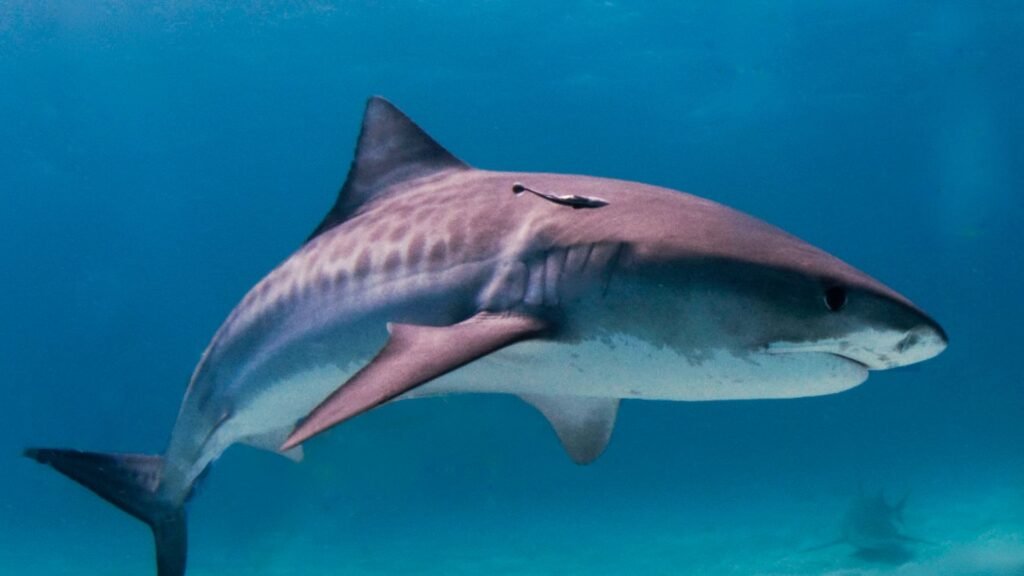
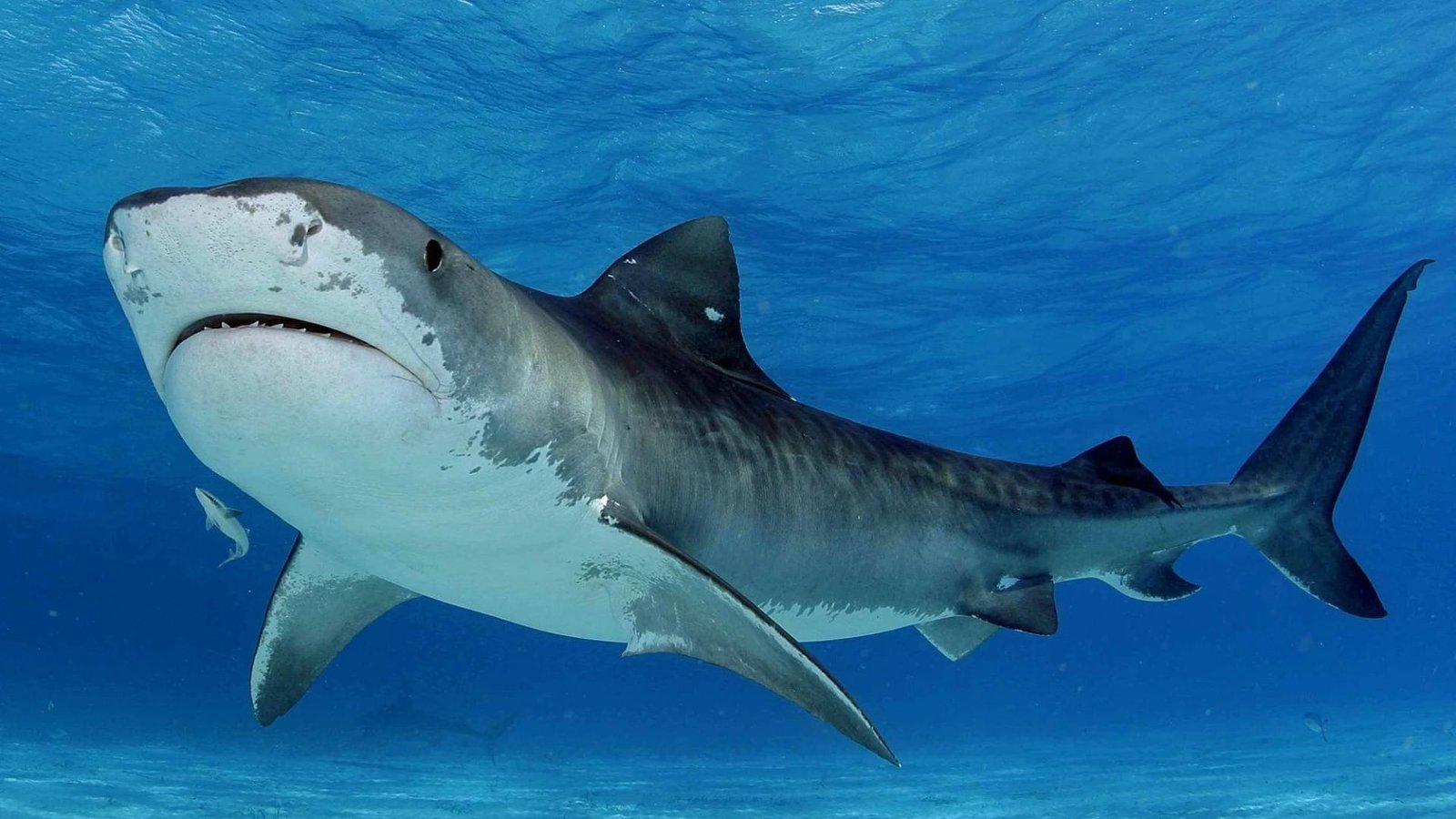
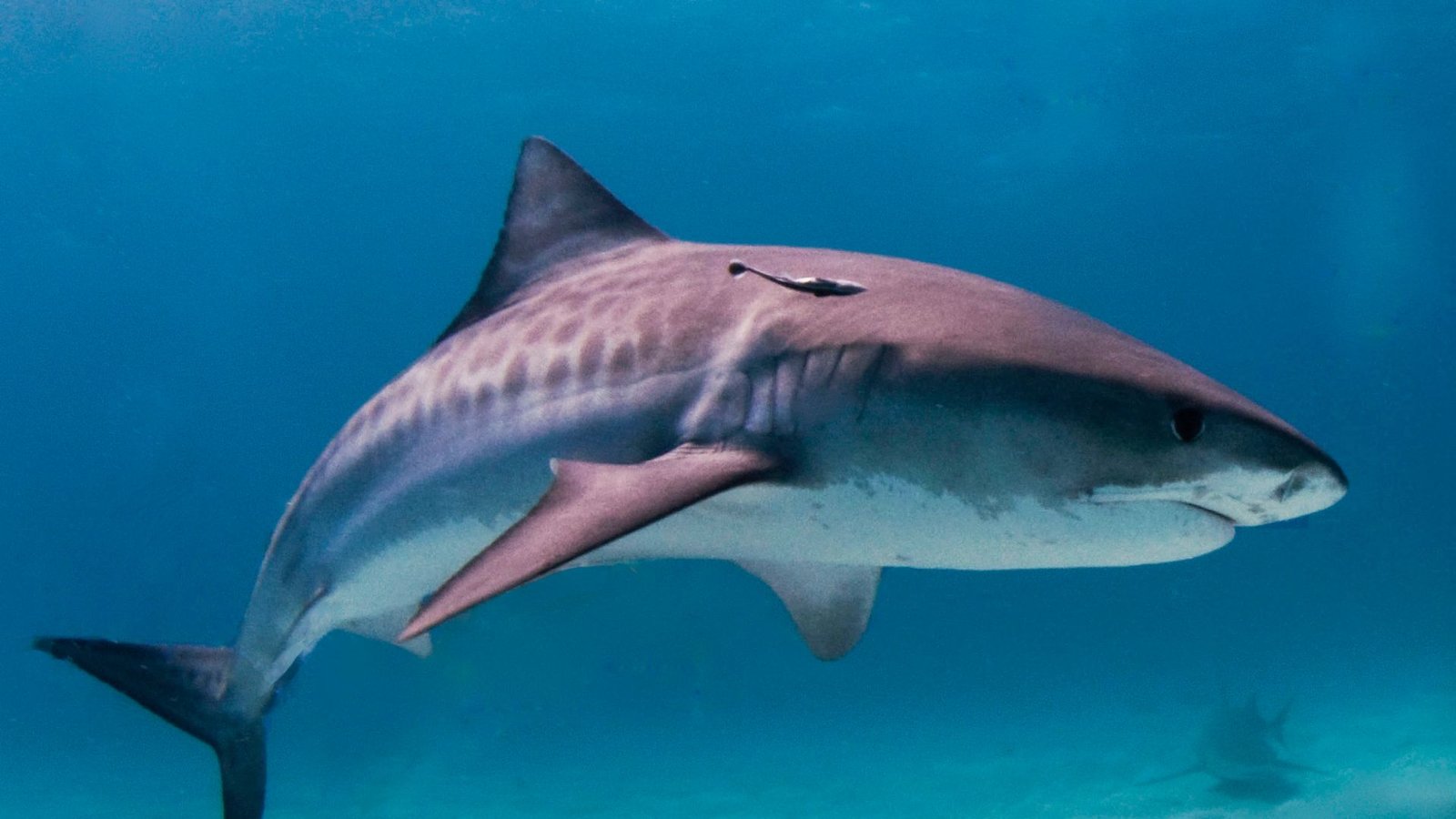
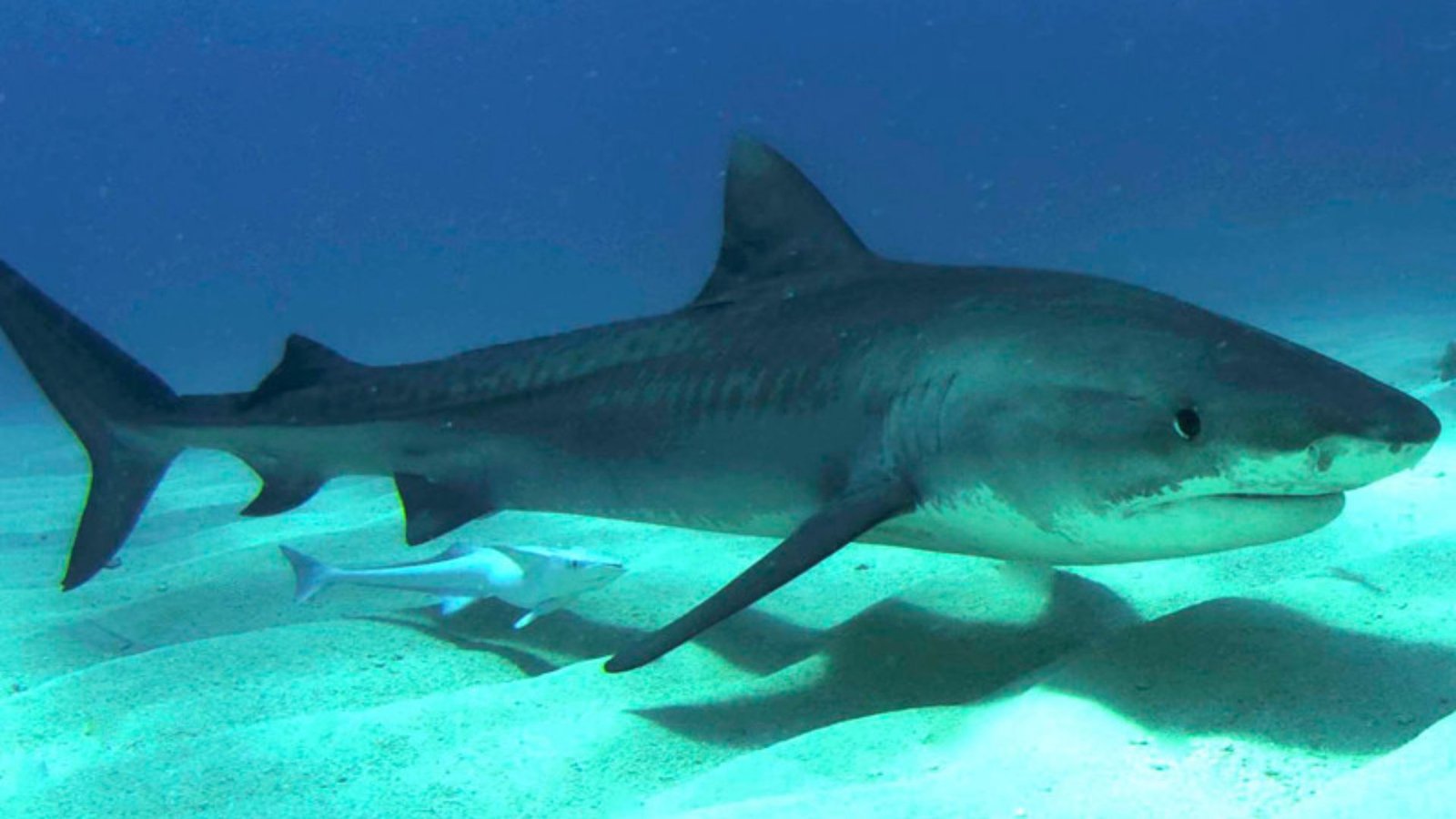
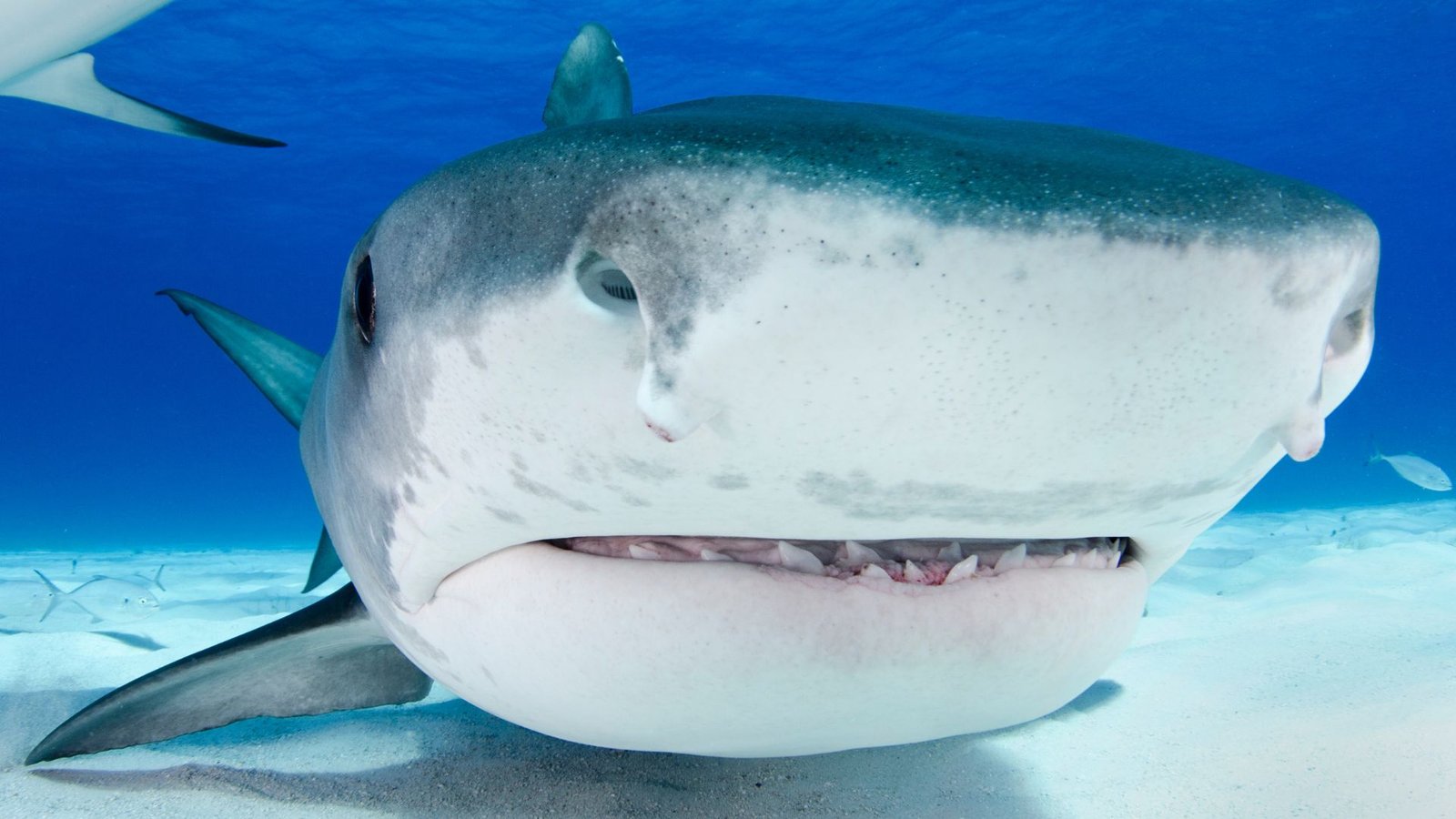
Powerful, blunt‑snouted requiem shark easily recognised by dark vertical bars and blotches on a bluish‑grey to olive dorsum (most vivid in juveniles, fading in large adults). Body robust with pronounced keel on caudal peduncle and a low interdorsal ridge absent. First dorsal fin large, apex rounded; second dorsal and anal relatively small. Eyes large, circular; snout short and broad. Dentition: massive, deeply notched “saw‑tooth” cusps ideal for shearing turtle shell and bone. Adults commonly 3–4.5 m total length (TL) and 400–600 kg; maximum verified 5.5 m, > 1 000 kg. Sexes similar but females grow larger. Newborns 70–90 cm TL with high‑contrast striping.
Has Sexual Diamorphism?
Yes
Sexual dimorphism refers to the physical differences between males and females of the same species that go beyond reproductive organs. For example, size, colour or form.
Females attain larger size; males bear claspers.
LIFE‑HISTORY & VITAL STATISTICS OF THE Tiger Shark(S)
Average Height / Length / Diameter
Males 3.1 m; females 3.4 m (max 5.5 m)
Average Adult Weight / Mass
250 – 600 kg
Typical Lifespan / Longevity
30–50 yr (vertebral radiocarbon)
Typical Lifespan / Longevity for males
Data deficient
Typical Lifespan / Longevity for Females
Data deficient
Age at Sexual Maturity
Males ≈ 7 yr / 280 cm; females ≈ 8 yr / 320 cm
Breading Season
Biennial; mating late dry to early wet season in offshore waters
Gestation
Reproductive Outcome
10 – 80 pups (mean ≈ 35); largest of any shark
Ecology and Behaviour for Tiger Shark(s)
Powerful, blunt‑snouted requiem shark easily recognised by dark vertical bars and blotches on a bluish‑grey to olive dorsum (most vivid in juveniles, fading in large adults). Body robust with pronounced keel on caudal peduncle and a low interdorsal ridge absent. First dorsal fin large, apex rounded; second dorsal and anal relatively small. Eyes large, circular; snout short and broad. Dentition: massive, deeply notched “saw‑tooth” cusps ideal for shearing turtle shell and bone. Adults commonly 3–4.5 m total length (TL) and 400–600 kg; maximum verified 5.5 m, > 1 000 kg. Sexes similar but females grow larger. Newborns 70–90 cm TL with high‑contrast striping.
Habitat
Coastal to oceanic (surface – 1 000 m); patrols continental shelf edges, lagoons, estuary mouths, and oceanic islands. In Costa Rica frequent at Isla del Coco seamounts, Golfo Dulce canyon, and occasionally Nicoya & Papagayo bays. Juveniles prefer shallow bays and turbid river mouths.
Trophic Chain
Apex opportunistic predator and scavenger; diet spans sea turtles, dolphins, rays, bony fish, seabirds, crustaceans, carrion, and anthropogenic refuse.
Interespecies relationships noted for Tiger Shark
Mutualism +/+
Barberfish at seamounts remove parasites; gain food while shark health improves.
Symbiosis + / +
Gut microbiota recycle urea & assist protein digestion.
Commensalism + / 0
Pilot fish shelter under shark, feeding on scraps; shark unaffected.
Inquilinism + / 0
Juvenile dolphinfish school beneath large silky sharks for predator cover.
Phoresy + / 0
Remoras (Echeneis naucrates) ride on flanks, dispersing across ocean basins.
Tanatocresis + / 0
Dead silky carcasses serve as substrate for deep‑sea invertebrate blooms.
Parasitism + / –
Copepods (Kroeyerina) and cestodes (Gymnorhynchus) on gills/intestine.
Predation + / –
Preys on tuna, squid, flyingfish; juveniles preyed upon by blue marlin & larger sharks.
Amensalism 0 / –
Herding bait schools reduces foraging success of seabirds without benefit to shark.
Competition – / –
Overlaps with Galapagos and blue sharks for tuna prey around FADs.
Social behaviour of Tiger Shark
Social Structure & Behaviour
Activity pattern: cathemeral; follows prey‑rich thermocline (50–150 m) by day, surfaces at night.
Group size: solitary or loose schools (5–50) around FADs, seamount plateaus and tuna schools.
Site fidelity: seasonal return to Cocos–Galápagos corridor seamounts documented.
Communication: body‑arching and pectoral drop threat postures toward divers/competitors.
Distribution and Sighthings ofTiger Shark(s) in Costa Rica
General Regions of Costa Rica where to find Tiger Sharks
Mangroves
Pacific Ocean
National Parks and Reserves of Costa Rica where to find Tiger Sharks
Parque Nacional Isla del Coco
Parque Nacional Corcovado
Parque Nacional Juan Castro Blanco
Best Time to seeTiger Shark(s) in Costa Rica
Dry Season
January
February
March
April
June
July
August
September
October
November
December
Media
Videos
Sounds and calls
This entry needs further information with:
Photos of males and females
This sheet is marked as: Revision required
Taxonomy
Taxonomic classification is a hierarchical system used in biology to organize and name living organisms. It arranges species into nested groups based on shared characteristics and evolutionary relationships.
Kingdom Animalia
Phylum Chordata
Class Chondrichthyes
Order Carcharhiniformes
Genus Galeocerdo
Conservation Status
Status IUCN
🌍 The IUCN status refers to the conservation category assigned to a species by the International Union for Conservation of Nature, based on its risk of extinction
Not Evaluated (NE)
Threats
⚠️By‑catch and targeted harvest in long‑line fisheries; high fin value.
⚠️Culling due to perceived human‑safety risk near tourist beaches.
⚠️Plastic and debris ingestion (recorded in Costa‑Rican specimens).
⚠️Decline of key prey (sea turtles, rays) due to over‑exploitation.