



Northern Emerald‑Toucanet

Aulacorhynchus prasinus (Gould, 1833) subspp. prasinus (Caribbean slope) and costaricensis (Pacific slope) occur in Costa Rica

Also known / common namesSpanish – Tucancito esmeralda, Tucancillo verde; Bribri – Bríkwa‑íyiksú; Cabécar – Tsá‑yöx

Northern Emerald‑Toucanet(s) General Description

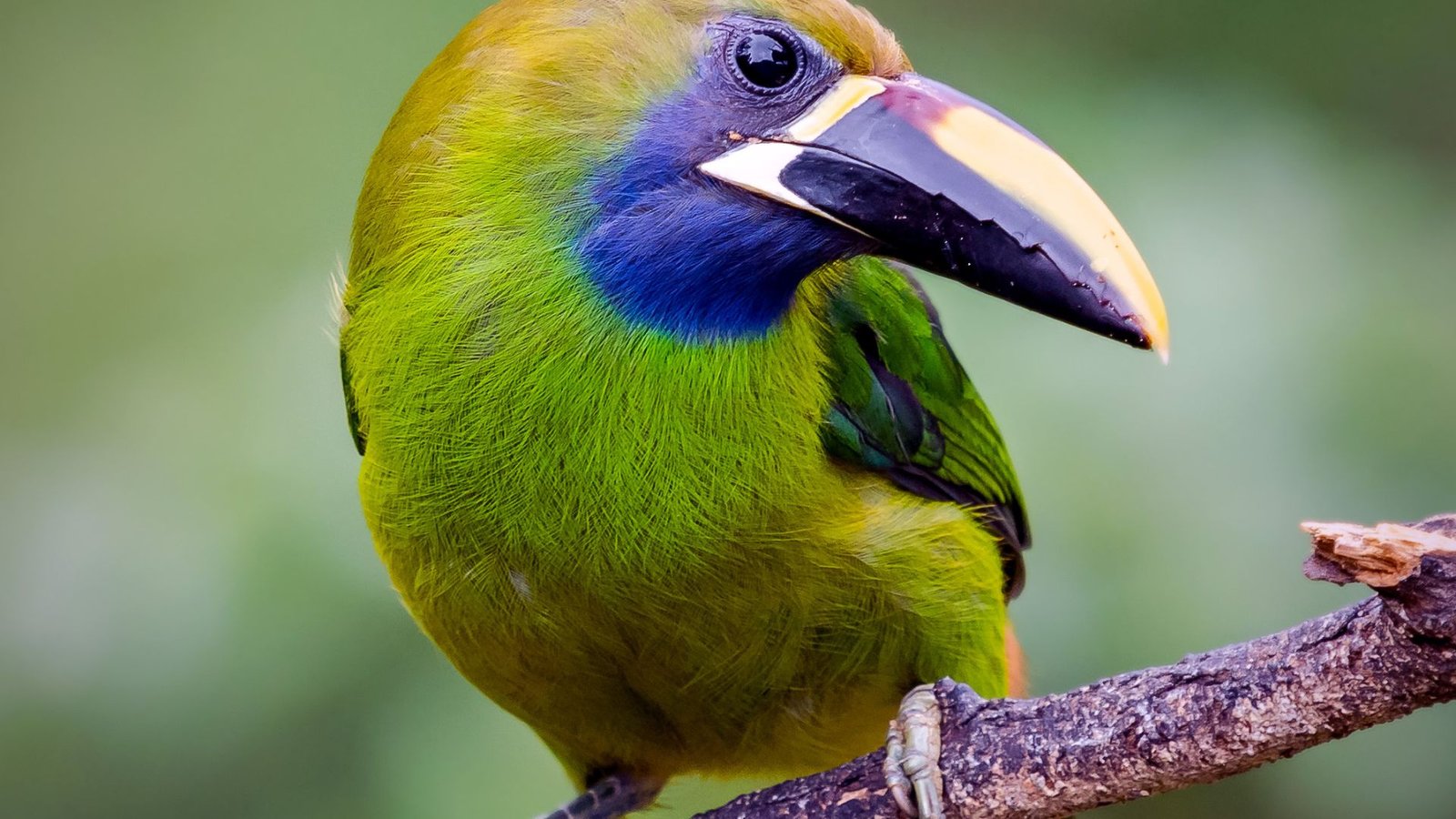
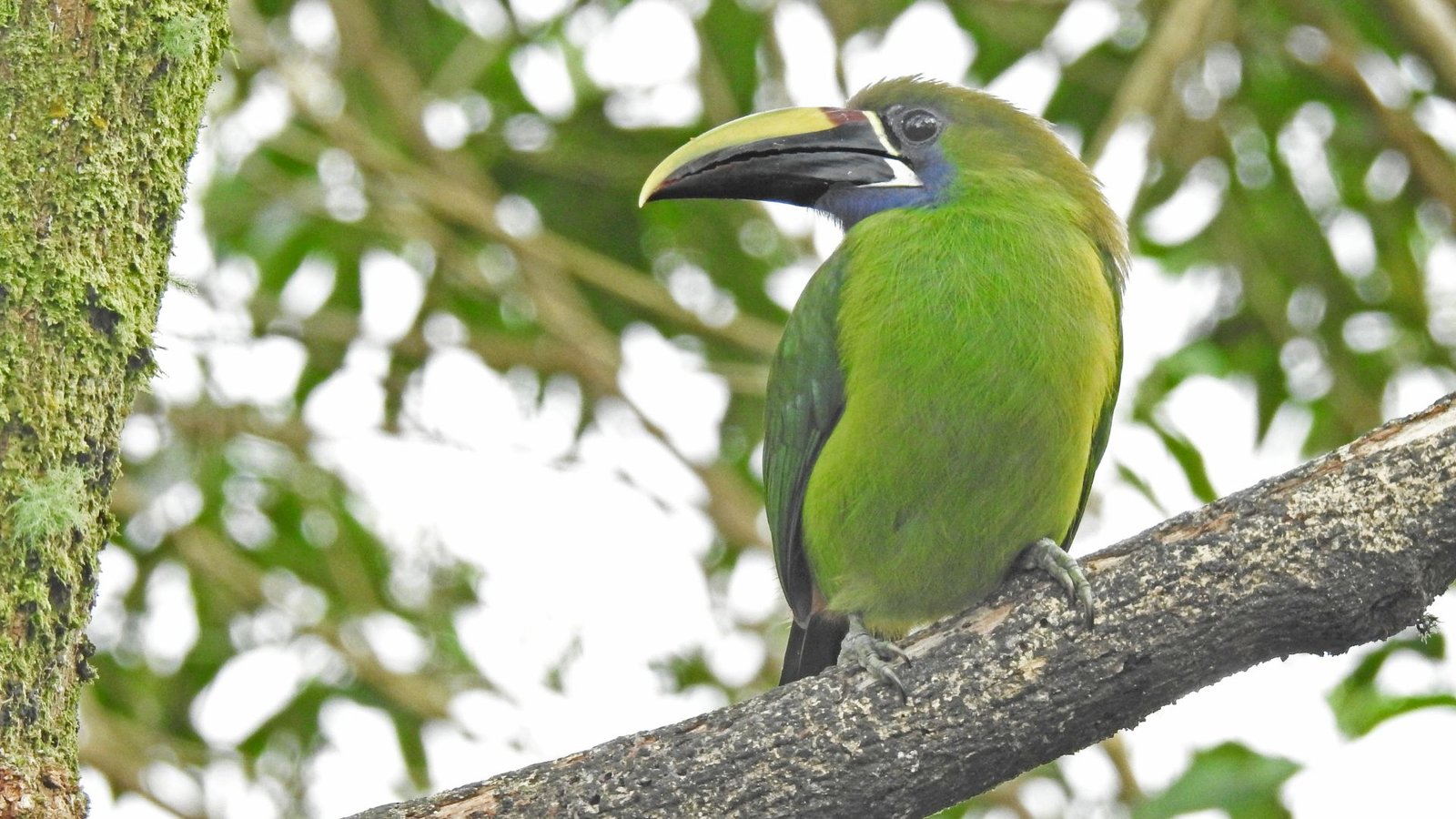
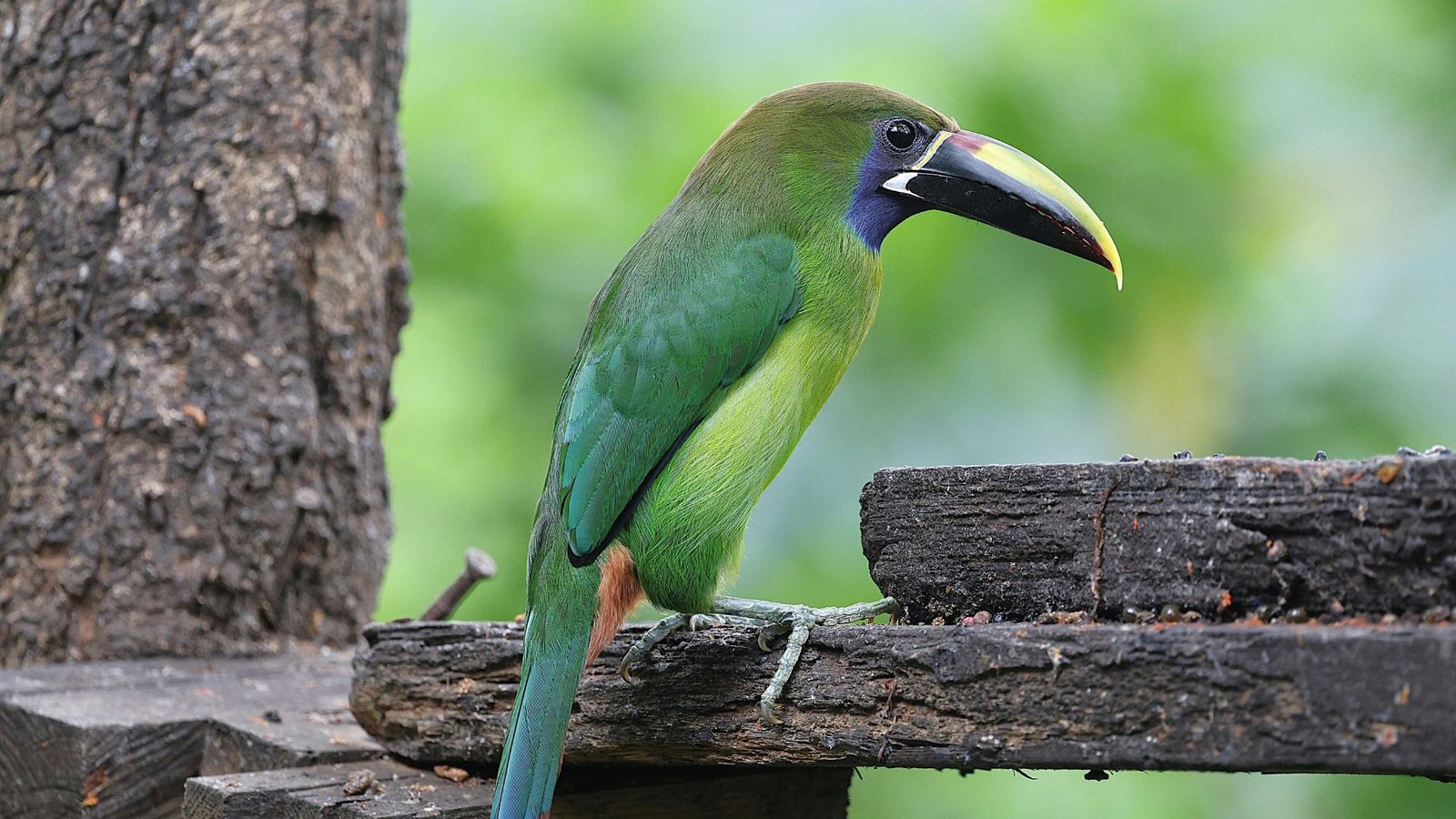
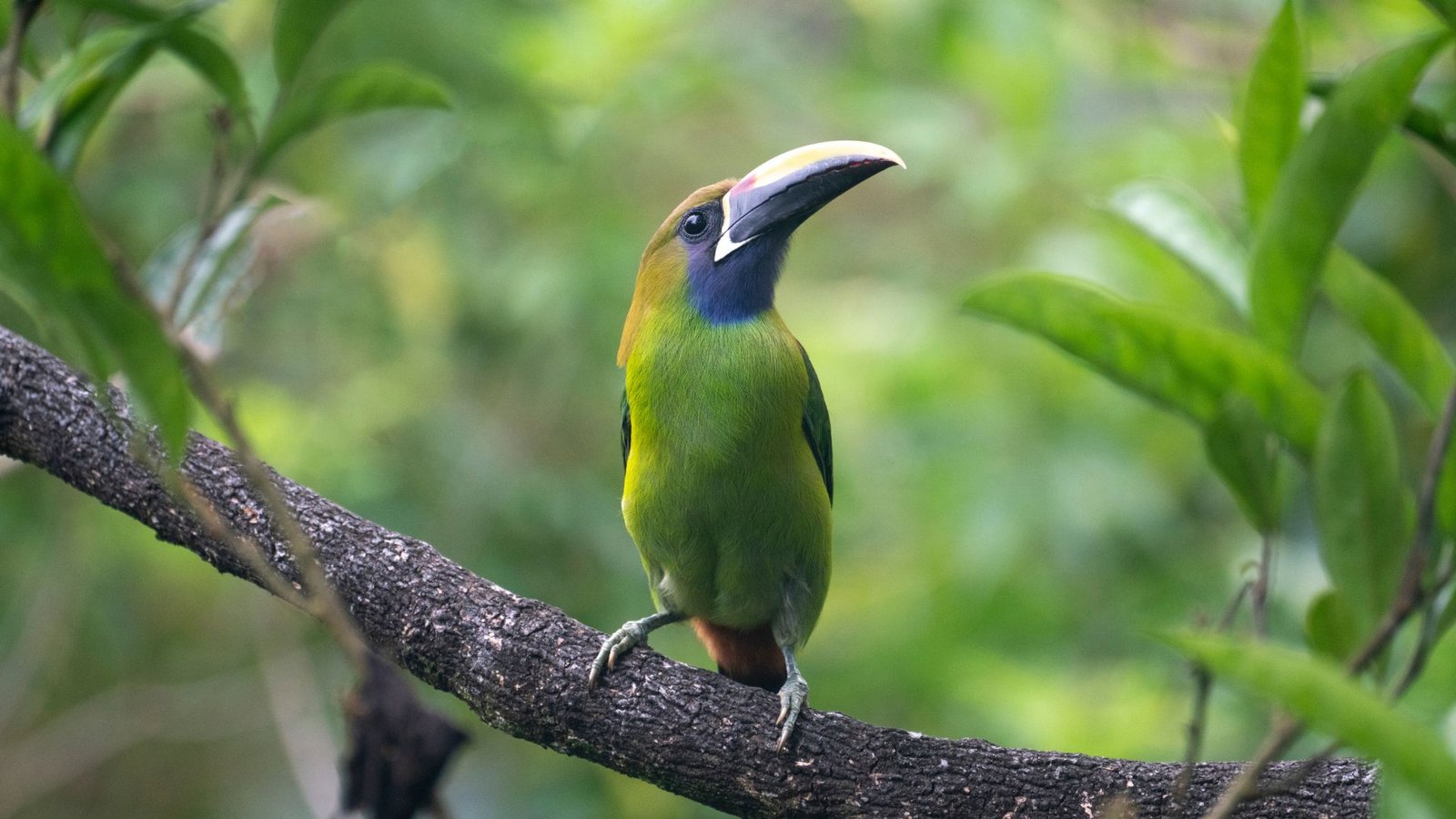
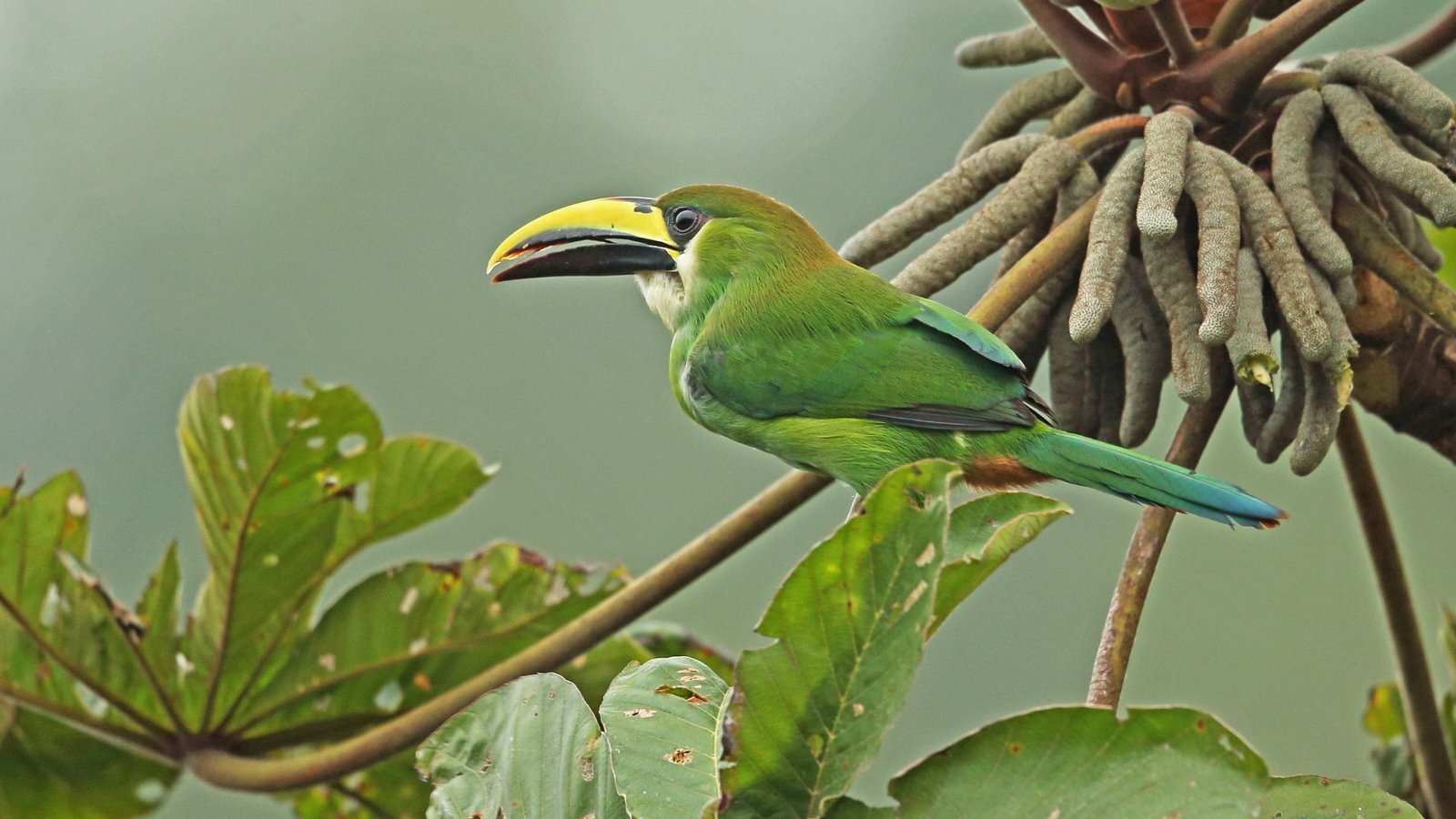
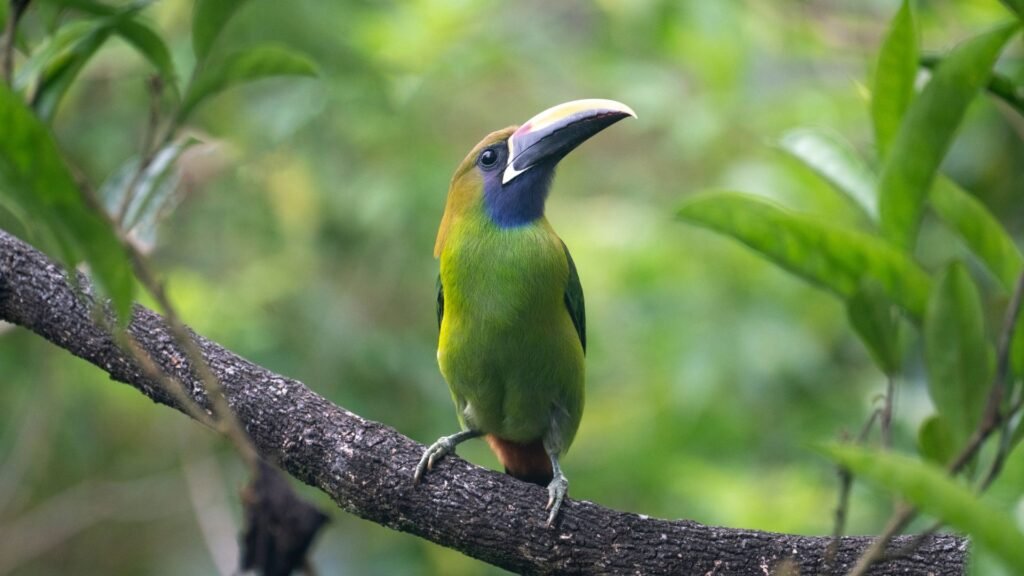
Small, arboreal toucan 30–35 cm long with predominantly emerald‑green plumage. Throat bluish‑white (Caribbean subspecies) or turquoise (Pacific subspecies) bordered below by a narrow black band; undertail coverts rich chestnut‑red. Long graduated tail and wings tinged blue on outer webs. Bill relatively short (4.5–5.5 cm), laterally compressed: culmen and distal two‑thirds black, basal maxilla yellow to ivory forming a broad patch; mandible entirely black. Bare orbital skin dark slate. Sexes alike; juveniles duller with shorter bills and brownish gape. Weight 140–180 g.

Has Sexual Diamorphism?

LIFE‑HISTORY & VITAL STATISTICS OF THE Northern Emerald‑Toucanet(S)

Average Height / Length / Diameter

Total length 30–35 cm; wingspan ≈ 45 cm

Average Adult Weight / Mass

140–180 g

Typical Lifespan / Longevity

12–15 yr wild; up to 20 yr captivity

Typical Lifespan / Longevity for males

Data deficient

Typical Lifespan / Longevity for Females

Data deficient

Age at Sexual Maturity

≈ 2 yr

Breading Season

March – June (late dry to early wet)

Gestation

Reproductive Outcome

2–4 glossy white eggs; one clutch per year

Ecology and Behaviour for Northern Emerald‑Toucanet(s)

Small, arboreal toucan 30–35 cm long with predominantly emerald‑green plumage. Throat bluish‑white (Caribbean subspecies) or turquoise (Pacific subspecies) bordered below by a narrow black band; undertail coverts rich chestnut‑red. Long graduated tail and wings tinged blue on outer webs. Bill relatively short (4.5–5.5 cm), laterally compressed: culmen and distal two‑thirds black, basal maxilla yellow to ivory forming a broad patch; mandible entirely black. Bare orbital skin dark slate. Sexes alike; juveniles duller with shorter bills and brownish gape. Weight 140–180 g.

Habitat

Resident of humid premontane and montane cloud forest, mature secondary forest and shaded agro‑forestry plots between 900 – 2 400 m; favours canopy gaps, fruiting epiphytes and moss‑laden branches.

Trophic Chain

Predominantly frugivorous (≈ 75 % diet) on Ficus, Cecropia, Ilex, Oreomunnea; opportunistically consumes large insects, anoles and bird eggs; disperses small to mid‑sized seeds

Interespecies relationships noted for Northern Emerald‑Toucanet

Mutualism + / +

Disperses Ocotea tonduzii seeds > 200 m; gains fatty mesocarp.

Symbiosis + / +

Arbuscular mycorrhizal fungi in rootlets of canopy epiphytes benefit from toucanet faecal deposits rich in phosphorus.

Commensalism + / 0

Ruddy treerunners (Margarornis rubiginosus) forage on insects flushed by toucanet parties.

Inquilinism + / 0

Pygmy squirrels shelter in abandoned toucanet nest holes.

Phoresy +/0

No documented case.

Tanatocresis + / 0

Stingless bees establish hives in decayed wood of former nest cavities.

Parasitism + / –

Air‑sac mites (Sternostoma tracheacolum) and feather lice (Ramphasticola spp.).

Predation + / –

Preyed upon by bicoloured hawk (Accipiter bicolor); toucanet predates eggs of montane tanagers.

Amensalism 0 / –

Heavy fruit removal can temporarily lower availability for resplendent quetzal during lean months.

Competition – / –

Competes with acorn woodpecker (Melanerpes formicivorus) for scarce tree cavities and with mountain thrush (Turdus plebejus) for small fruits at canopy edges.

Social behaviour of Northern Emerald‑Toucanet

Social Structure & Behaviour

  • Activity pattern: diurnal; foraging peaks 07:00–11:00 and 14:00–17:00.

  • Group size: pairs or small family parties of 3–6; join mixed‑species frugivore flocks at fruiting trees.

  • Breeding system: seasonal monogamy; both sexes excavate/appropriate woodpecker cavities 5–20 m high.

  • Territoriality: pairs defend ≈ 2–4 ha core around nest using rapid duet calls, bill‑clacking and chase flights.

  • Communication: high‑pitched “rrík‑rrík,” grunts and croaks; tail flicks and head bows strengthen pair bond.

  • Special behaviours: regurgitates seeds intact, cleaning bill against mossy branches; helper juveniles occasionally assist in feeding younger siblings.

Distribution and Sighthings ofNorthern Emerald‑Toucanet(s) in Costa Rica

General Regions of Costa Rica where to find Northern Emerald‑Toucanets

Tropical

National Parks and Reserves of Costa Rica where to find Northern Emerald‑Toucanets

Parque Nacional Volcán Arenal
Parque Nacional Braulio Carrillo
Parque Nacional Chirripó
Parque Nacional Volcán Irazú
Parque Internacional La Amistad
Parque Nacional Los Quetzales
Parque Nacional Manuel Antonio
Parque Nacional Tortuguero
Reserva Forestal Río Macho
Reserva Bosque Nuboso Monteverde
Refugio Nacional de Vida Silvestre Curú
Refugio Nacional de Vida Silvestre Peñas Blancas

Best Time to seeNorthern Emerald‑Toucanet(s) in Costa Rica

Dry Season
January
February
March
April
June
July
August
September
October
November
December

Media

Videos

Sounds and calls

Taxonomy

Conservation Status

Status IUCN

Threats

⚠️Clearing of montane forest for coffee, pasture and avocado orchards.
⚠️Selective logging removing large cavity‑bearing trees.
⚠️Road construction creating canopy gaps that increase nest predation by jays and squirrels.
⚠️Climate‑change‑driven upslope shift of cloud banks shrinking optimal humid zone.

Fun Facts

  • Emits a rapid, metallic “rrík‑rrík‑rrík” up to 60 notes min⁻¹ during territorial duets.

  • Communal roosts of 4–8 individuals cram into abandoned woodpecker holes, aligning bills vertically to fit.

  • Bill serrations act like fruit saws, slicing tough pericarps before swallowing.

  • Sometimes “ant‑follows,” capturing flushed insects behind army‑ant columns.

  • Known to cache berries in moss mats, retrieving them hours later.

Origins & Record

Origin Status

Native

Population trend

Decreasing

Added by

Reviewed by

More Species