


anuel Antonio National Park: The Compact Paradise Where Rainforest Meets Postcard Beaches
On the Central Pacific coast of Costa Rica, there is a jewel that challenges the notion that size matters. Manuel Antonio National Park, despite being the country’s smallest, is consistently one of its most visited and internationally acclaimed. It is a microcosm of tropical biodiversity, a place where wildlife-rich trails lead directly onto white-sand beaches and turquoise waters, creating a near-perfect fusion of jungle and sea.
A History of Rescue and Preservation
The existence of Manuel Antonio National Park today is a triumph of popular will. In the 1970s, these idyllic beaches and their surrounding forests were private property, with plans for an exclusive tourism development that would have restricted public access. In response, the local community, along with conservation activists, launched a passionate campaign to protect the area for all Costa Ricans and the world.
Their efforts succeeded, and on November 15, 1972, the area was officially declared a National Park. This origin story is fundamental to understanding the spirit of Manuel Antonio: it is a paradise that was actively saved from exclusivity to become a shared national treasure.



A Mosaic of Ecosystems and Iconic Beaches
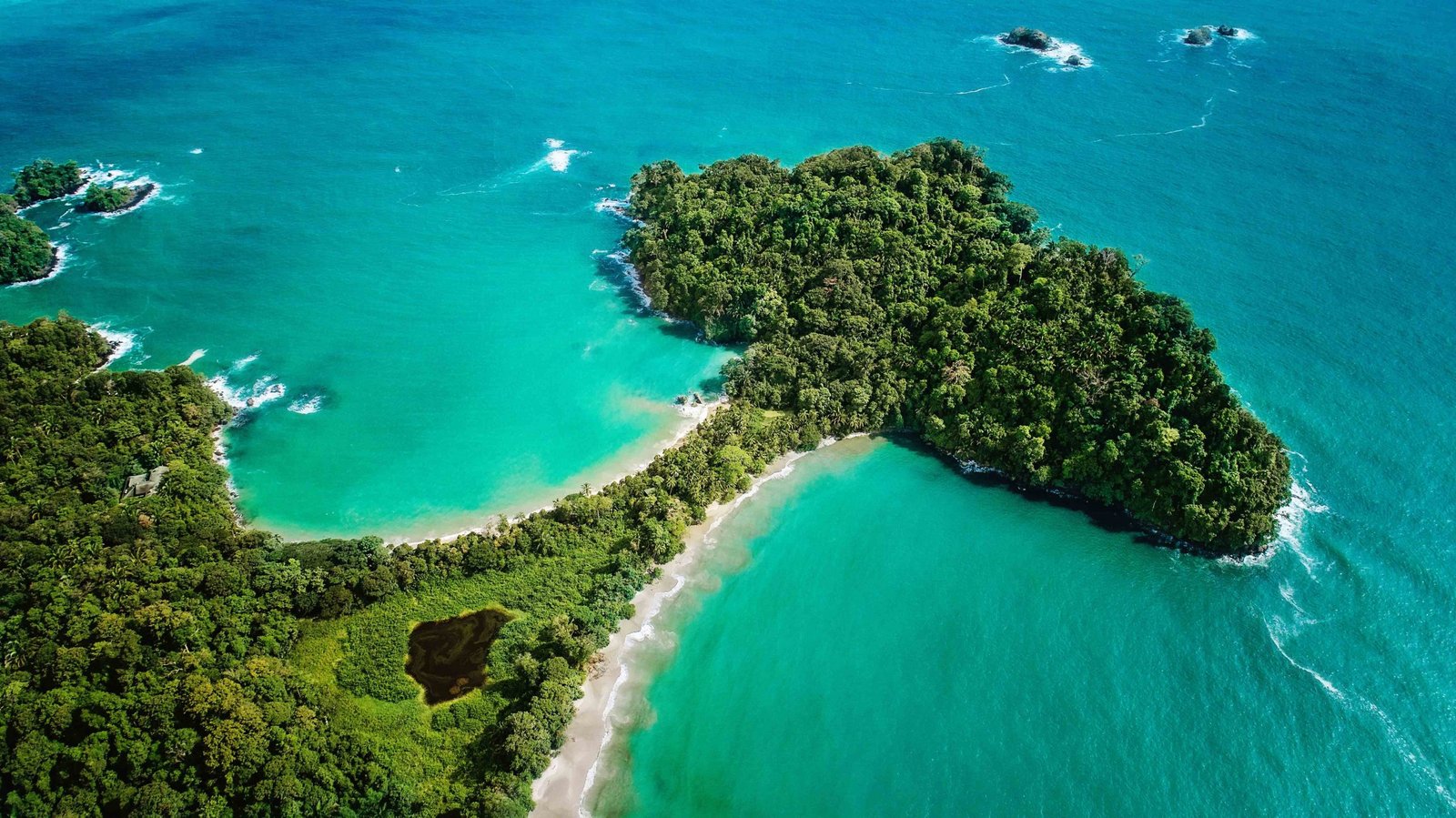
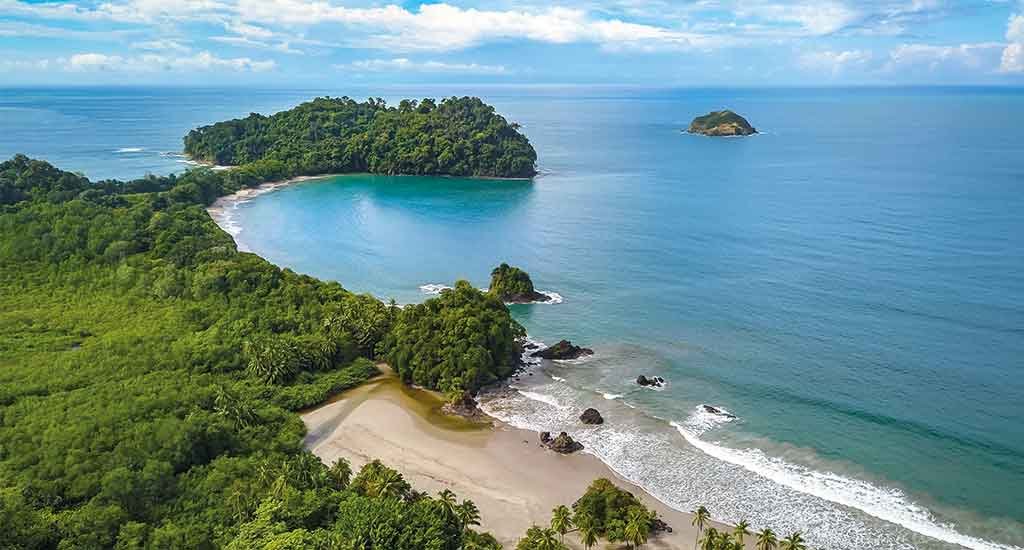
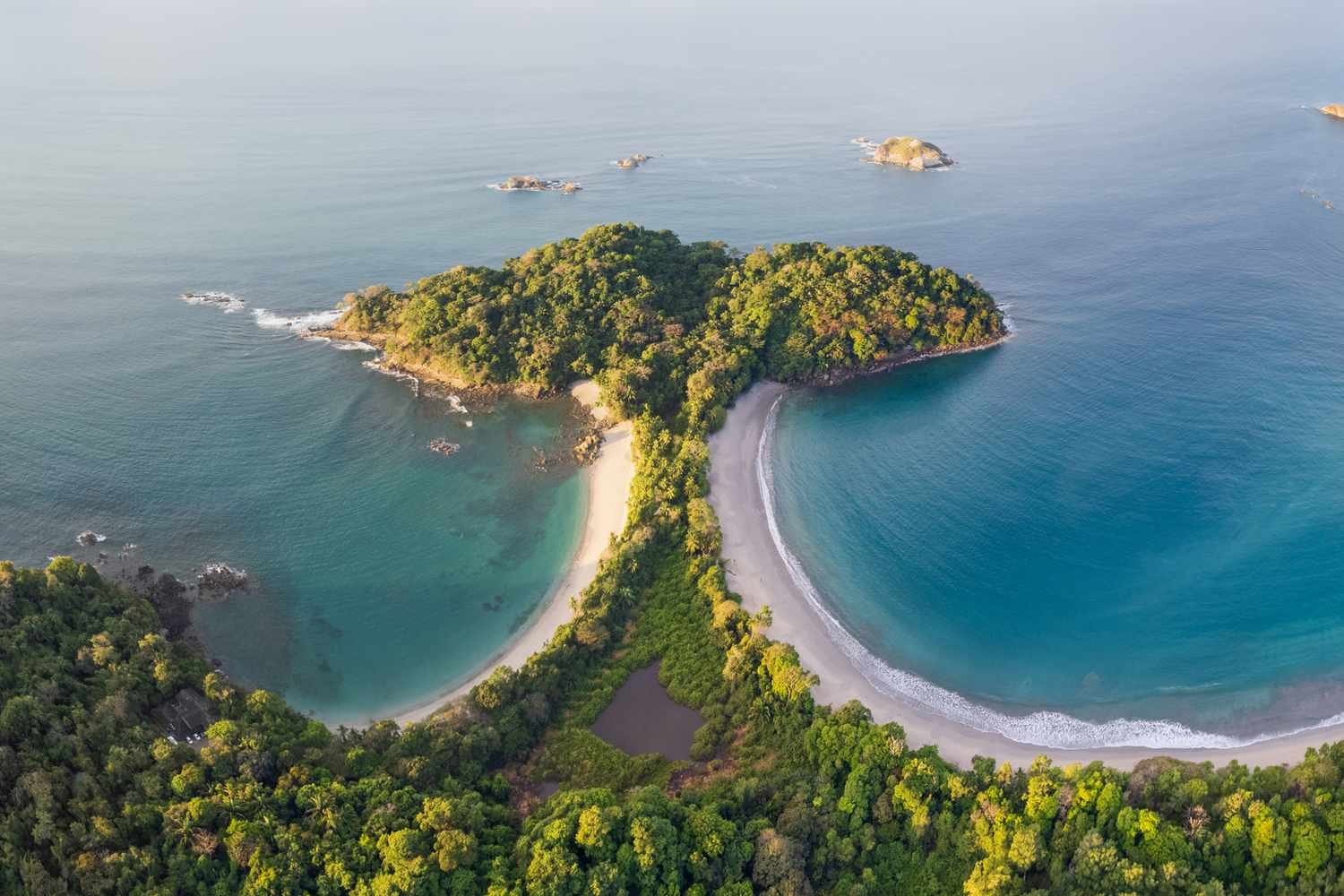
The park protects 1,983 terrestrial hectares (about 4,900 acres) and 55,000 marine hectares. Its main attraction is the stunning scenic beauty that unfolds at every turn. The heart of the park is Cathedral Point (Punta Catedral), a former island that, over millennia of sedimentation, became joined to the mainland by a natural land bridge called a tombolo. This sandy bridge separates two of the country’s most famous beaches:
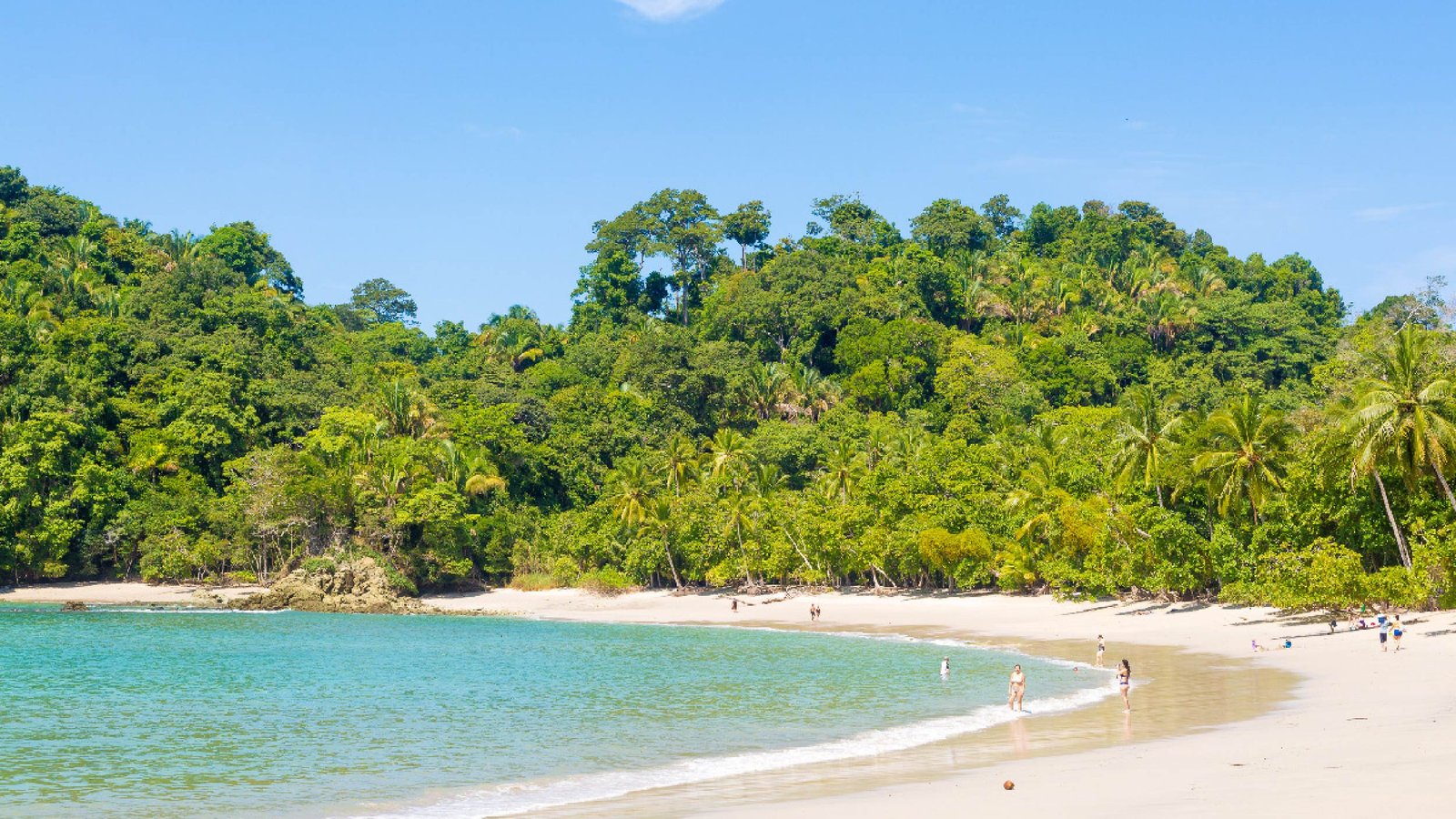
- Playa Manuel Antonio: A near-perfect crescent of soft, white sand sheltered in a deep bay. Its calm, crystal-clear waters are ideal for swimming and snorkeling, offering a window to the nearby coral reefs.
- Playa Espadilla Sur: A longer, more exposed beach than the first, offering a greater sense of expanse and solitude.
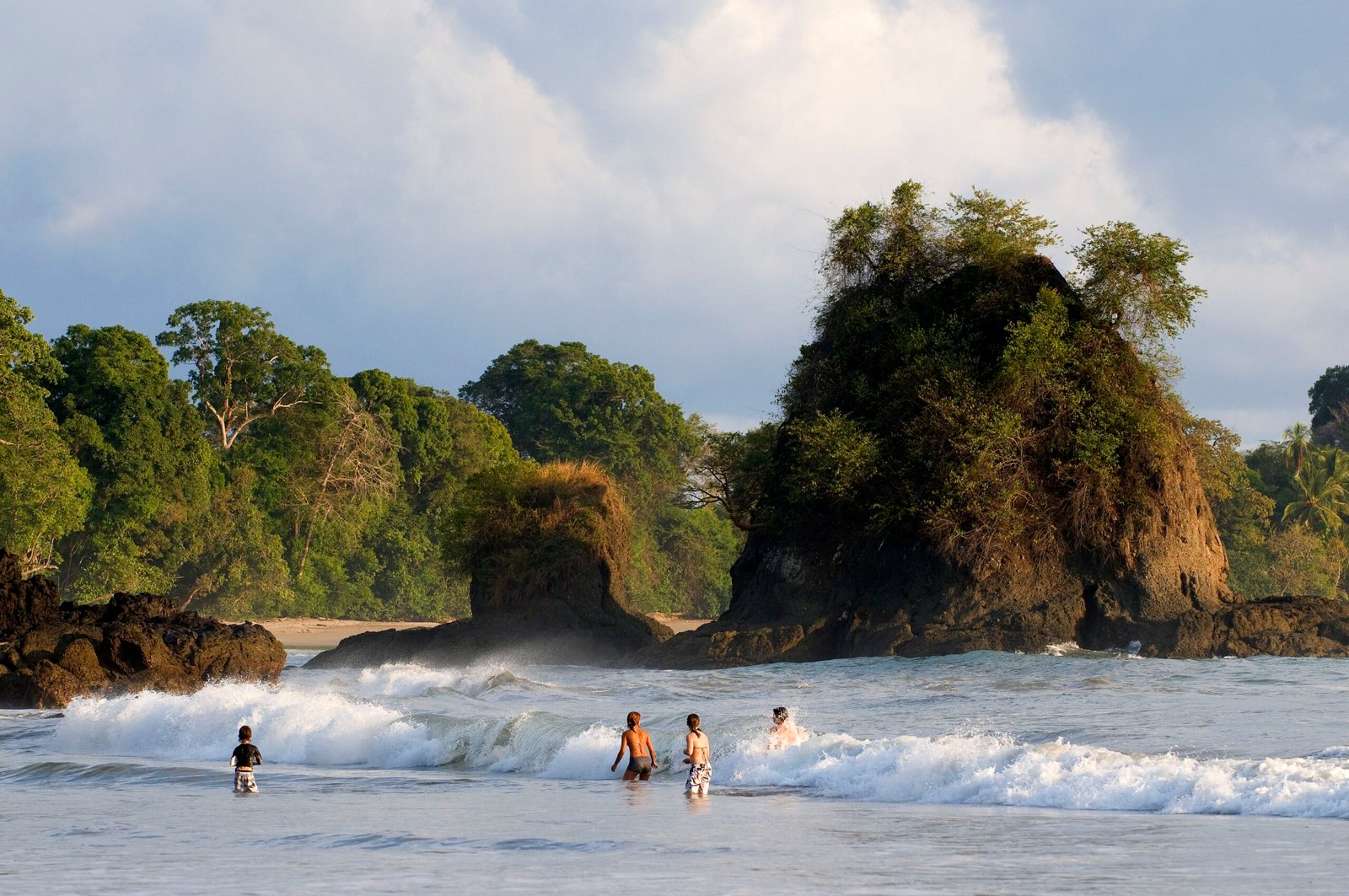
In addition to these, the park is home to other beaches like Gemelas and Puerto Escondido, each with its own unique charm. The park’s well-maintained trails, such as the Cathedral Point loop and the Mirador (Lookout) trail, offer spectacular panoramic views of the Pacific Ocean and the offshore islands.
A Laboratory of Accessible Biodiversity
Despite its small size, Manuel Antonio is extraordinarily rich in wildlife, making it one of the best places in the country to observe animals in their natural habitat with relative ease.
- The Primates: The park is famous for being home to four monkey species. It is common to see troops of White-faced Capuchin monkeys (Cebus imitator) and hear the deep calls of Mantled Howler monkeys (Alouatta palliata). However, the park’s star is the Central American Squirrel Monkey (Saimiri oerstedii), an endemic subspecies of the Central and Southern Pacific region of Costa Rica. This small, charismatic species is endangered, and the park is one of its last and most important strongholds. The fourth species, the spider monkey, is far more elusive.
- Jungle Icons: It is almost a guarantee to find two-toed and three-toed sloths (Choloepus hoffmanni and Bradypus variegatus) moving slowly in the treetops, often near the trails. Green iguanas, coatis (pizotes), and raccoons are also common inhabitants, though visitors are warned not to feed them to maintain their wild behavior.
- Birds and Marine Life: Over 180 species of birds have been identified, including toucanets and pelicans. The protected marine area is home to coral reefs and is visited by dolphins and, occasionally, whales during their migration seasons.
The Challenge of Success: Conservation in a Popular Paradise
Manuel Antonio’s immense popularity presents its greatest conservation challenge. Managing the high volume of visitors to minimize impact on the ecosystem is a constant priority. To protect the park and its wildlife, strict regulations have been implemented:
- Visitor Limits: The number of people who can enter the park daily is controlled to prevent overcrowding.
- Ban on Single-Use Plastics: The entry of plastic bottles, bags, and other single-use items is not permitted to reduce waste.
- No Feeding the Animals: This is a golden rule to protect both the health of the animals and the safety of visitors.
Manuel Antonio National Park is a brilliant example of how spectacular beauty can be concentrated in a small space. It is a lesson in the importance of community action and a constant reminder of the delicate balance between tourism and conservation. To visit is to experience the essence of Costa Rica: a celebration of life at the precise point where the jungle surrenders to the sea.