Keel‑billed Toucan

Ramphastos sulfuratus Swainson, 1827

Also known / common namesSpanish – Tucán, Tucán pico arcoíris; Bribri – Bríkwa; Cabécar – Tsá‑maʼ

Keel‑billed Toucan(s) General Description

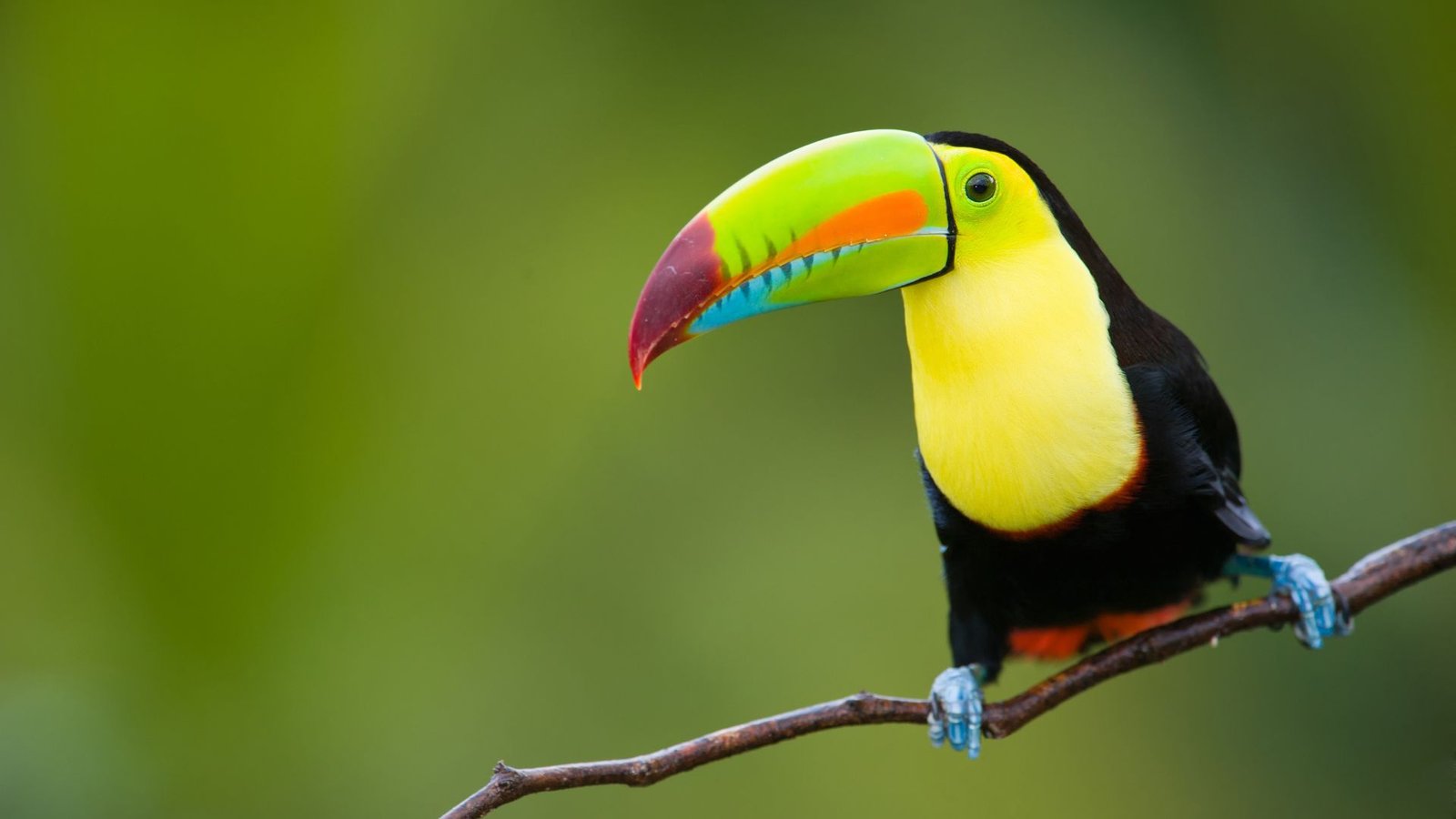
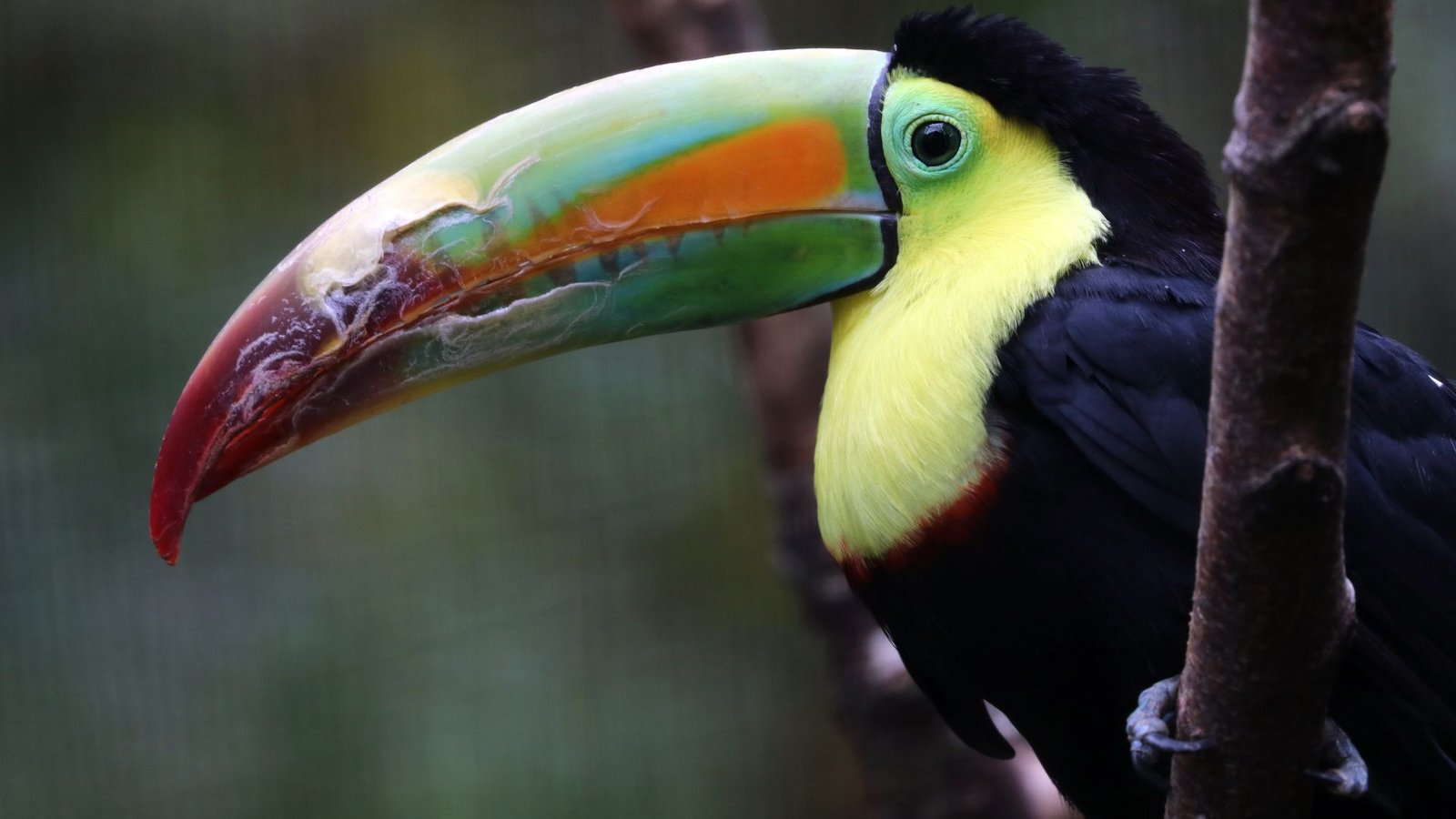
Medium‑sized toucan (total length 42–55 cm, of which ~30 % is bill) with velvety black plumage, lemon‑yellow throat and chest bordered by a fine red line. Uppertail coverts brilliant crimson; rump and uppertail coverts sky‑blue. The oversized bill (12–15 cm) shows a kaleidoscope of lime‑green, orange, cerulean and crimson, yet weighs little because of its pneumatised bony lattice. Legs and feet are powder‑blue; iris dark maroon. Sexes appear identical; juveniles have shorter, duller bills and browner plumage.

Has Sexual Diamorphism?

LIFE‑HISTORY & VITAL STATISTICS OF THE Keel‑billed Toucan(S)

Average Height / Length / Diameter

Average Adult Weight / Mass

Typical Lifespan / Longevity

Typical Lifespan / Longevity for males

Typical Lifespan / Longevity for Females

Age at Sexual Maturity

Breading Season

Gestation

Reproductive Outcome

Ecology and Behaviour for Keel‑billed Toucan(s)

Medium‑sized toucan (total length 42–55 cm, of which ~30 % is bill) with velvety black plumage, lemon‑yellow throat and chest bordered by a fine red line. Uppertail coverts brilliant crimson; rump and uppertail coverts sky‑blue. The oversized bill (12–15 cm) shows a kaleidoscope of lime‑green, orange, cerulean and crimson, yet weighs little because of its pneumatised bony lattice. Legs and feet are powder‑blue; iris dark maroon. Sexes appear identical; juveniles have shorter, duller bills and browner plumage.

Habitat

Canopy and sub‑canopy of lowland evergreen rain forest, seasonally moist gallery forest and tall secondary forest from sea level to ~1 500 m, chiefly on Caribbean and south‑Pacific slopes; frequents fruiting trees in agro‑mosaics with > 30 % canopy cover.

Trophic Chain

Frugivore (> 80 % diet) consuming Virola, Ficus, Cecropia fruits; supplements with insects, lizards and nestling birds; major long‑distance seed disperser.

Interespecies relationships noted for Keel‑billed Toucan

Mutualism + / +

Disperses seeds of Virola sebifera > 300 m; gains lipid‑rich arils.

Symbiosis + / +

Gut microbiota (Lactobacillus, Bacteroides) ferment fruit polysaccharides, aiding digestion.

Commensalism + / 0

Cocoa woodcreepers follow toucans to snatch flushed arthropods; toucan unaffected.

Inquilinism + / 0

Squirrel monkeys use abandoned nest cavities as night shelters.

Phoresy +/0

No documented case.

Tanatocresis + / 0

Stingless bees colonise abandoned nest hollows, gaining secure hive sites.

Parasitism + / –

Feather lice (Philopterus spp.) and air‑sac mites (Sternostoma tracheacolum).

Predation + / –

Preyed upon by ornate hawk‑eagle (Spizaetus ornatus) and margay (Leopardus wiedii); toucan predates nests of songbirds (eggs/chicks).

Amensalism 0 / –

Seed predation on Cecropia reduces seedling density, no effect on toucan.

Competition – / –

Competes with collared aracari (Pteroglossus torquatus) for nest cavities and figs during fruit shortage.

Social behaviour of Keel‑billed Toucan

Social Structure & Behaviour

  • Activity pattern: diurnal; peak foraging 06:00–10:00 & 15:00–17:00.

  • Group size: forage in small parties of 3–12; communal roosts up to 30 in tree cavities or bamboo clumps.

  • Breeding system: seasonally monogamous; both sexes excavate / enlarge old woodpecker holes 10–25 m high.

  • Territoriality: loose; pairs defend ~1 ha around nest with bill clacks and croaking calls.

  • Communication: yelping “rrraak‑rrraak” series, snoring croaks; bill tapping; mutual preening.

  • Special behaviours: juveniles play by passing fruit or sticks bill‑to‑bill; thermal bill flushing visible with infrared cameras.

Distribution and Sighthings ofKeel‑billed Toucan(s) in Costa Rica

General Regions of Costa Rica where to find Keel‑billed Toucans

Tropical
Caribbean Sea
Tropical Rain Forest

National Parks and Reserves of Costa Rica where to find Keel‑billed Toucans

Parque Nacional Volcán Arenal
Parque Nacional Barbilla
Parque Nacional Braulio Carrillo
Parque Nacional Cahuita
Parque Nacional Carara
Parque Nacional Corcovado
Parque Nacional Juan Castro Blanco
Parque Internacional La Amistad
Parque Nacional Manuel Antonio
Parque Nacional Piedras Blancas
Parque Nacional Rincón de la Vieja
Parque Nacional Tapantí – Macizo Cerro de la Muerte
Parque Nacional Tenorio
Parque Nacional Tortuguero
Parque Nacional Volcán Turrialba
Reserva Forestal Golfo Dulce

Best Time to seeKeel‑billed Toucan(s) in Costa Rica

Dry Season
January
February
March
April
June
July
August
September
October
November
December

Media

Videos

Sounds and calls

Taxonomy

Conservation Status

Status IUCN

Threats

⚠️Loss of nesting cavities due to logging of old canopy trees.
⚠️Illegal pet trade capturing nestlings.
⚠️Mortality from power‑line and window collisions in fragmented landscapes.
⚠️Reduced food availability where fruiting trees are replaced by monocultures.

Fun Facts

  • Can toss fruit up, catch and swallow whole items > 20 mm wide.

  • Bill surface area can dissipate up to 60 % of metabolic heat during midday rest.

  • Plays “bill fencing” and tosses sticks during social interactions in communal roosts.

  • Featured on Costa Rican 500‑colones coin (older series).

Origins & Record

Origin Status

Native

Population trend

Stable

Added by

Reviewed by

More Species