Also known / common namesSpanish – Lapa-Lapa roja, Guacamayo escarlata; Bribri – Tsiruk; Cabécar – Yíri
Scarlet Macaw(s) General Description
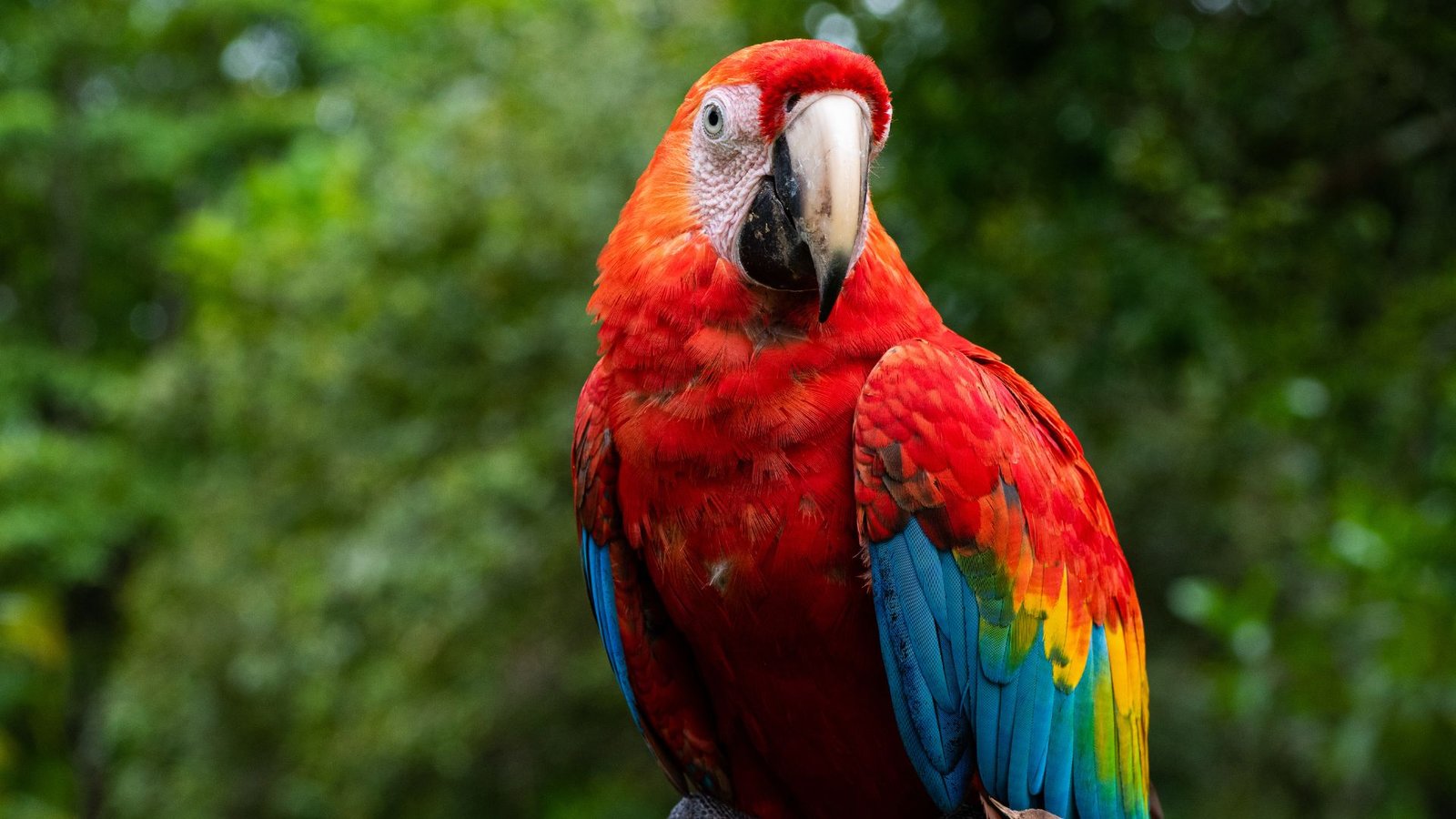
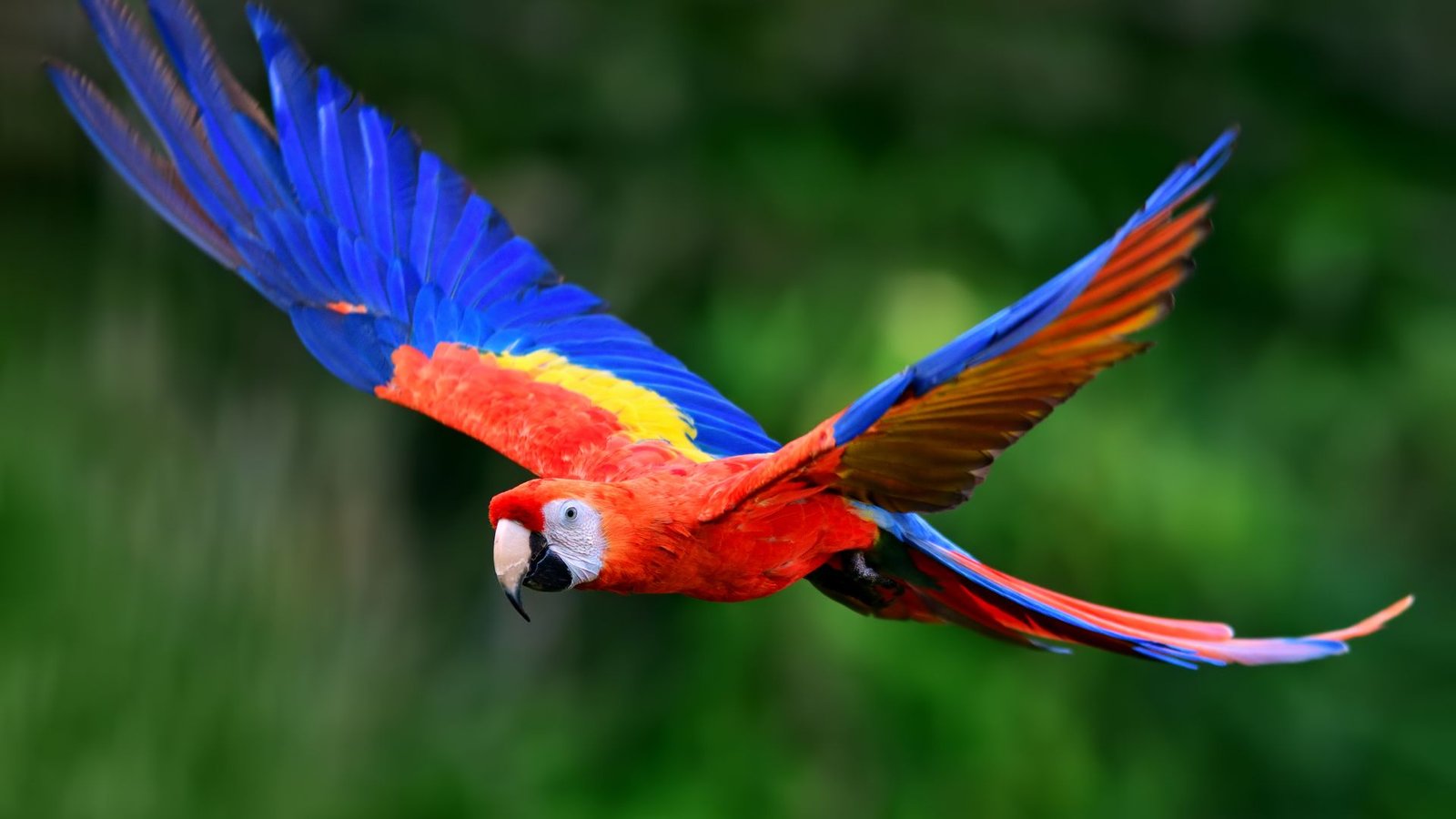
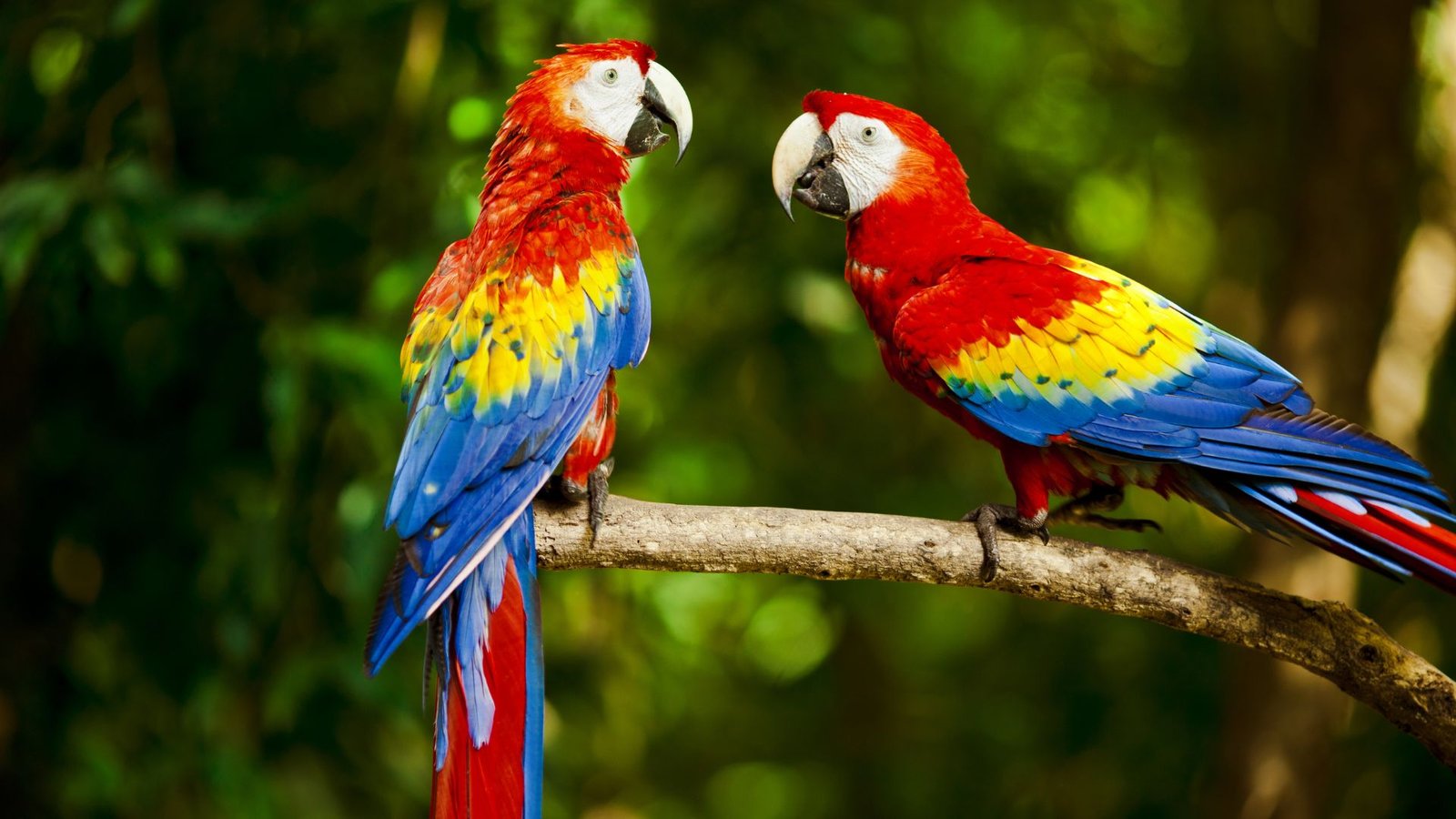
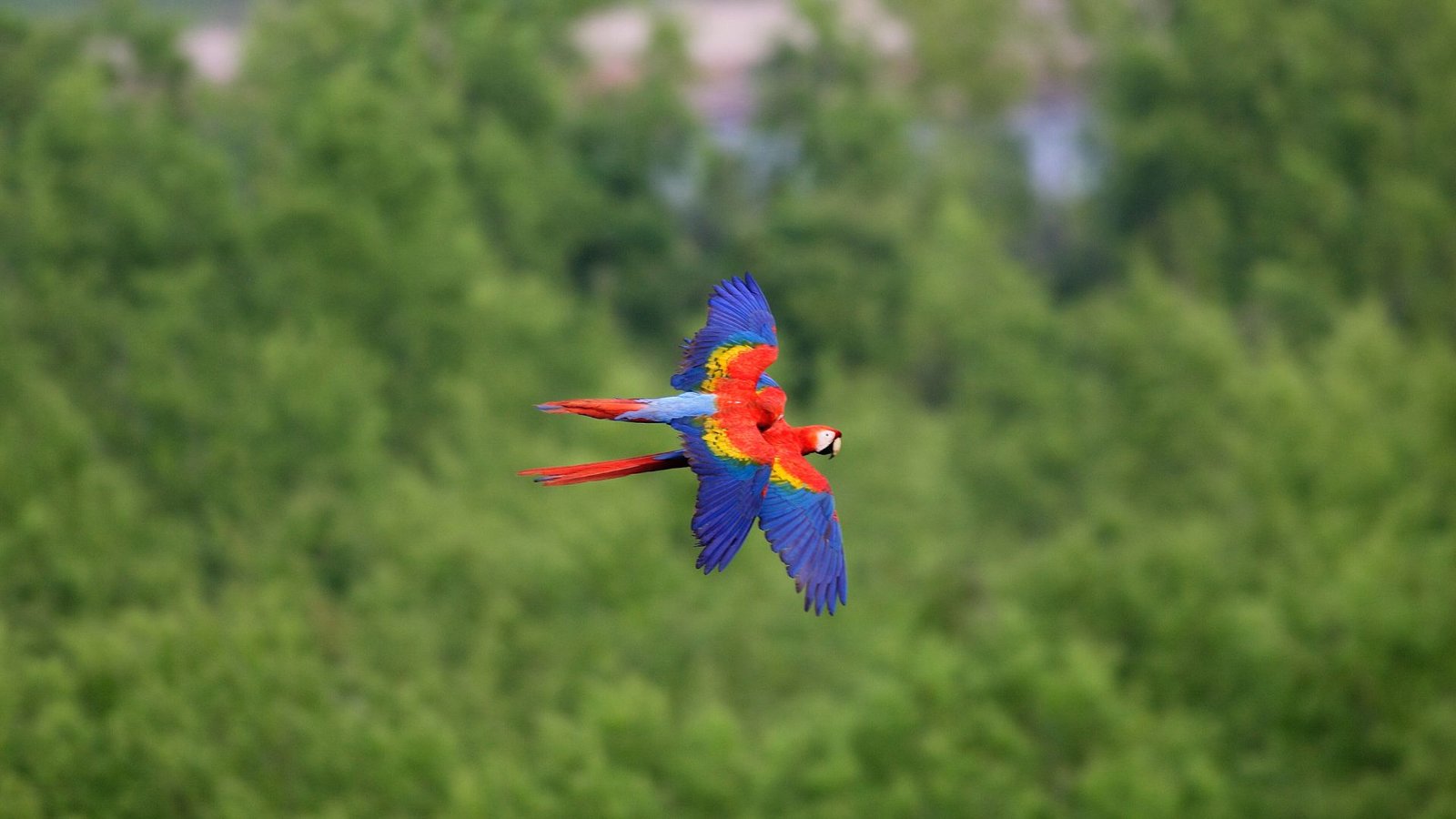
A large, brilliantly coloured parrot 81–96 cm long (half of which is tail) with crimson head, mantle and under‑parts. Upper wings show a yellow band grading to azure‑blue primaries; rump and tail coverts are light blue, the tail maroon above and pale blue below. Facial skin is bare and white with fine black feather lines; heavy bill ivory above and black below. Iris pale yellow in adults, dark brown in juveniles. Weight 900–1 100 g. Sexes are alike; juveniles have shorter tails and duller plumage.
Has Sexual Diamorphism?
No
Sexual dimorphism refers to the physical differences between males and females of the same species that go beyond reproductive organs. For example, size, colour or form.
LIFE‑HISTORY & VITAL STATISTICS OF THE Scarlet Macaw(S)
Average Height / Length / Diameter
Total length 81–96 cm; wingspan 90–110 cm
Average Adult Weight / Mass
0.9–1.1 kg
Typical Lifespan / Longevity
40–50 yr wild; 60+ yr captivity
Typical Lifespan / Longevity for males
Data deficient
Typical Lifespan / Longevity for Females
Data deficient
Age at Sexual Maturity
3–4 yr
Breading Season
January – April (late dry season)
Gestation
Reproductive Outcome
Number of Offspring per Event: 2–4 eggs; one clutch yr⁻¹
Ecology and Behaviour for Scarlet Macaw(s)
A large, brilliantly coloured parrot 81–96 cm long (half of which is tail) with crimson head, mantle and under‑parts. Upper wings show a yellow band grading to azure‑blue primaries; rump and tail coverts are light blue, the tail maroon above and pale blue below. Facial skin is bare and white with fine black feather lines; heavy bill ivory above and black below. Iris pale yellow in adults, dark brown in juveniles. Weight 900–1 100 g. Sexes are alike; juveniles have shorter tails and duller plumage.
Habitat
Prefers lowland and premontane evergreen or semi‑deciduous forest below 700 m, especially along large rivers and in coastal almond ( Dipteryx panamensis ) stands; also exploits mangroves, plantation edges and reforested corridors
Predominantly active during sun
Trophic Chain
Large‑bodied frugivore; consumes > 50 fruit species—particularly Dipteryx, Anacardium and Ficus—and disperses intact seeds over kilometers.
Interespecies relationships noted for Scarlet Macaw
No data was found
Social behaviour of Scarlet Macaw
Activity pattern: diurnal; peak foraging early morning and late afternoon.
Group size: strong pair bond; forage in pairs within communal flocks of 10–50; nightly communal roosts in emergent trees.
Mating system: long‑term monogamy; both partners defend nesting cavity and feeding territory radius ≈ 500 m.
Territoriality: pairs vocalise and chase intruders near nest; outside breeding season, flocks share feeding sites with minimal aggression.
Communication: raucous squawks, piercing “raa‑ak,” and softer contact croaks; also wing‑flap displays and bill clattering during courtship.
Special behaviours: clay‑lick visits; cooperative sentinel behaviour—one bird scans while partner feeds; juveniles stay with parents up to 2 yr, learning fruiting trees.
Distribution and Sighthings ofScarlet Macaw(s) in Costa Rica
General Regions of Costa Rica where to find Scarlet Macaws
Tropical
Seasonal dry forest (Guanacaste)
Caribbean Sea
Tropical Rain Forest
National Parks and Reserves of Costa Rica where to find Scarlet Macaws
Parque Nacional Carara
Parque Nacional Corcovado
Parque Nacional Manuel Antonio
Parque Nacional Piedras Blancas
Reserva Forestal Golfo Dulce
Best Time to seeScarlet Macaw(s) in Costa Rica
Dry Season
January
February
March
April
June
July
August
September
October
November
December
Media
Videos
Sounds and calls
This entry needs further information with:
Revisions
This sheet is marked as: Revision required
Taxonomy
Taxonomic classification is a hierarchical system used in biology to organize and name living organisms. It arranges species into nested groups based on shared characteristics and evolutionary relationships.
Kingdom Animalia
Phylum Chordata
Class Aves
Order Psittaciformes
Genus Ara
Conservation Status
Status IUCN
🌍 The IUCN status refers to the conservation category assigned to a species by the International Union for Conservation of Nature, based on its risk of extinction
Least Concern
Threats
⚠️Loss of nesting cavities and Dipteryx food trees due to logging.
⚠️Illegal capture for pet trade; chicks poached from nests.
⚠️Mortality from power‑line collisions in fragmented landscapes.
⚠️Hunting as crop pest in small orchards.
⚠️Climate‑driven mismatch of flowering/fruiting phenology reducing food peaks.
Fun Facts
Strong jaw can generate ~300 N bite force to crack tropical almonds.
Scarlet macaws historically traded as status symbols by pre‑Columbian cultures; feathers used in ceremonial garments.
Exhibit geophagy—ingest riverbank clay to neutralise dietary toxins.
Pairs maintain life‑long bonds, engaging in mutual preening and synchronous flights.