Also known / common namesSpanish – Mono araña, Mono colorado, Mono mano‑negra; Bribri – Ŋwéchi; Cabécar – Ríŋk
Mono araña | Spider Monkey(s) General Description
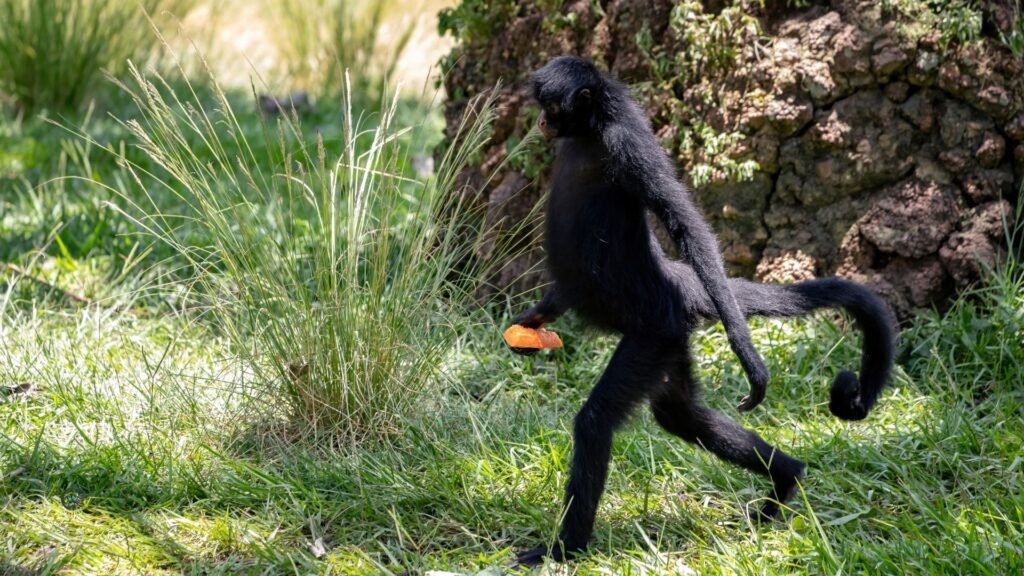
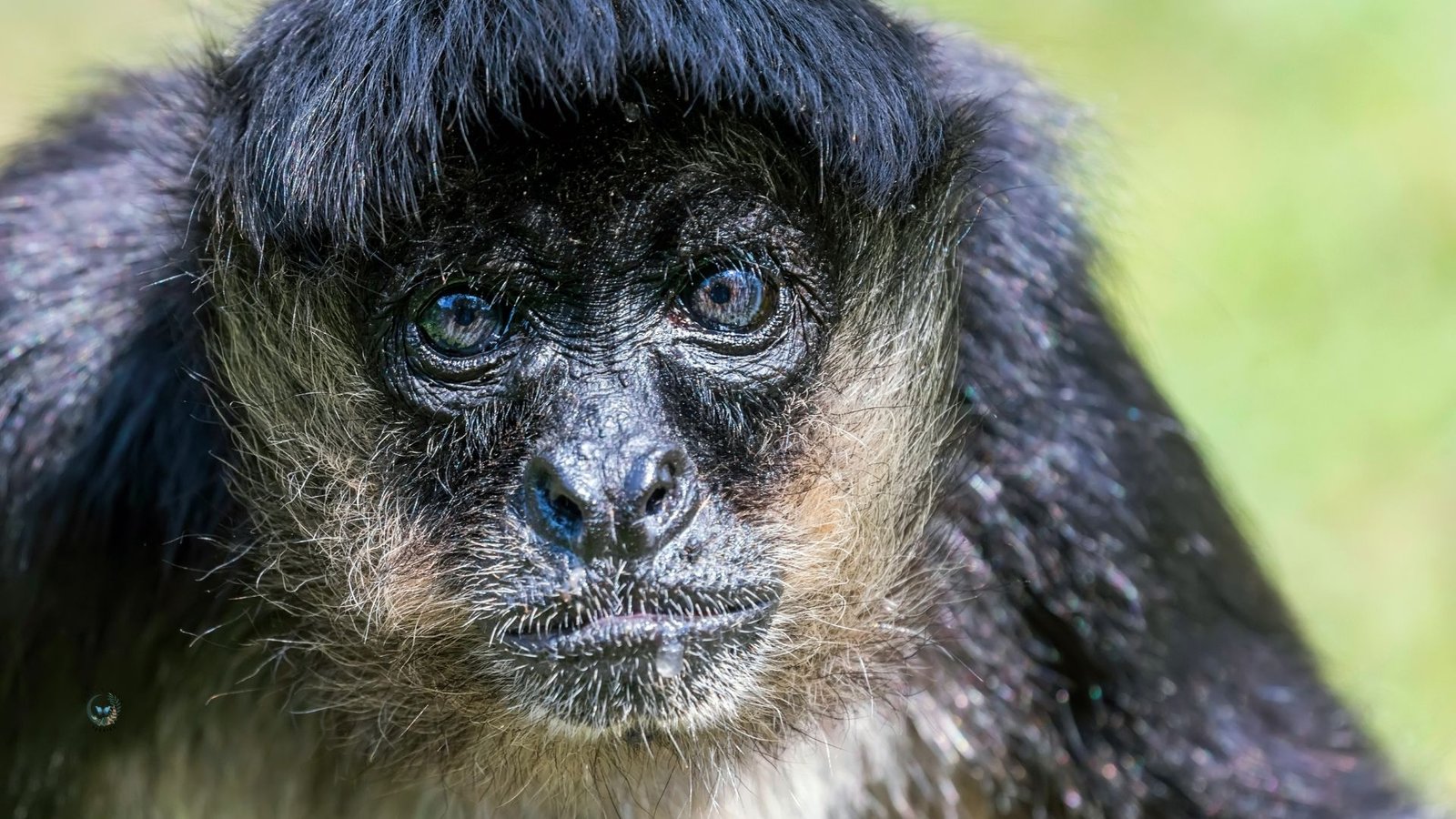
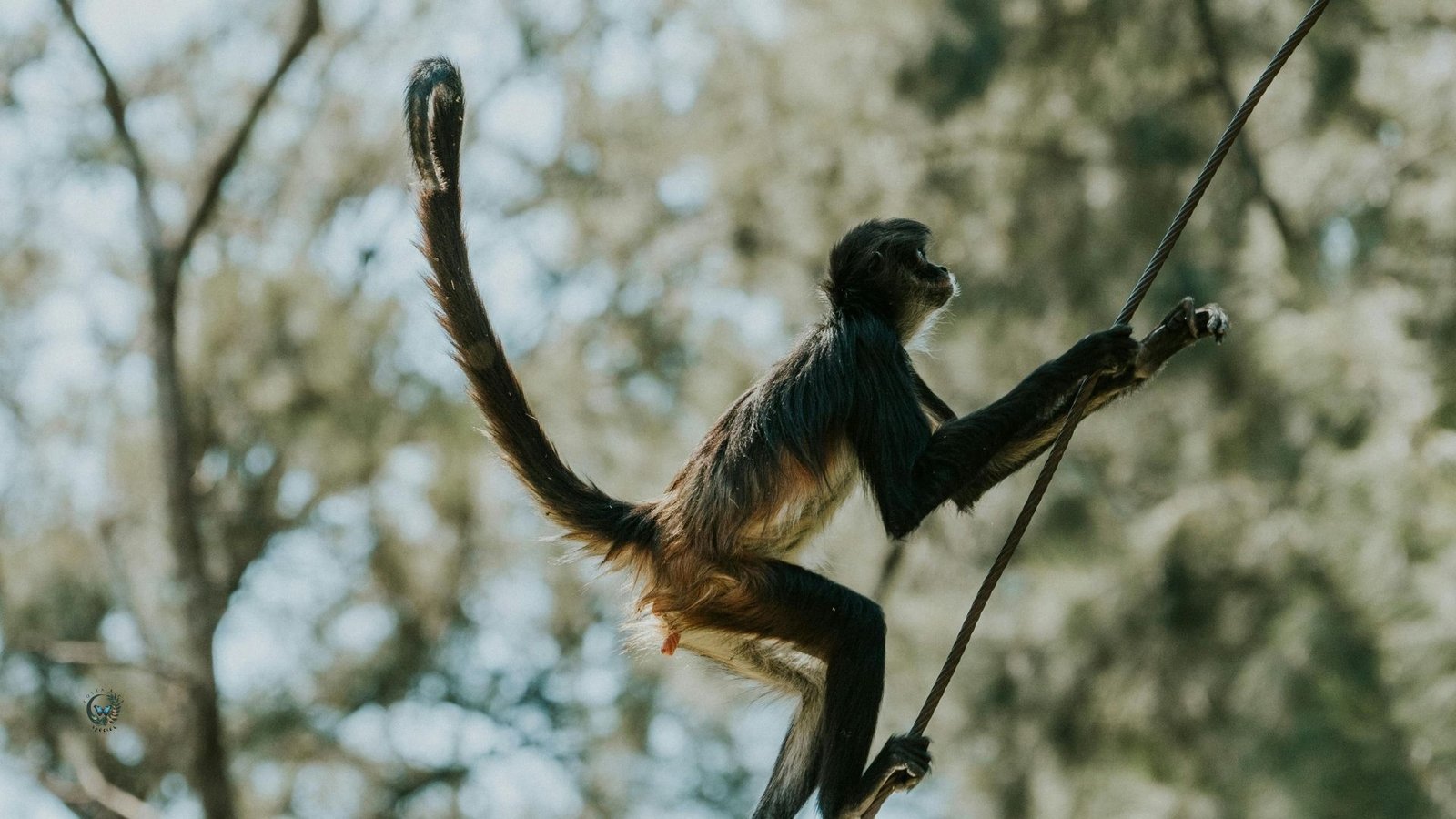
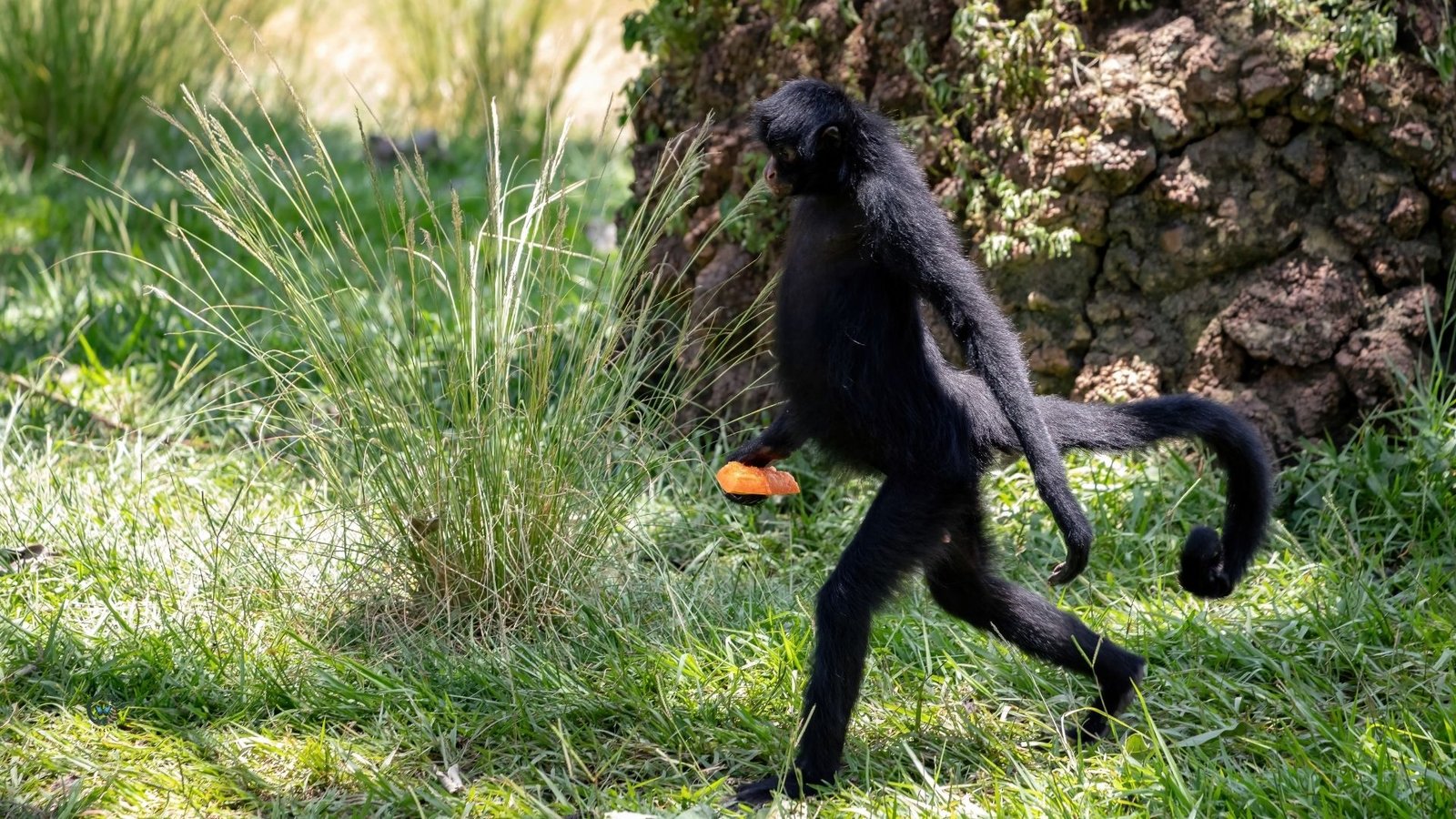
Large, long‑limbed New‑World monkey with a small, dark‑skinned face bordered by a pale mask and lacking an opposable thumb. Pelage ranges buff, chestnut, rufous or black depending on subspecies; hands, feet and lower limbs often darker. Head–body length 30–63 cm; prehensile tail 63–85 cm with a hairless, fingerprint‑like tactile pad used as a fifth limb; mass 6–9 kg, males marginally heavier. Arms are ≈ 25 % longer than legs, enabling brachiation; hook‑like hands grasp branches.
Has Sexual Diamorphism?
Yes
Sexual dimorphism refers to the physical differences between males and females of the same species that go beyond reproductive organs. For example, size, colour or form.
Minimal — males slightly heavier; genital morphology conspicuous but body coloration similar
LIFE‑HISTORY & VITAL STATISTICS OF THE Mono araña | Spider Monkey(S)
Average Height / Length / Diameter
Body 30–63 cm; tail 63–85 cm
Average Adult Weight / Mass
6–9 kg
Typical Lifespan / Longevity
≈ 27 yr wild; up to 47 yr captivity
Typical Lifespan / Longevity for males
Data deficient
Typical Lifespan / Longevity for Females
Data deficient
Age at Sexual Maturity
Females 4–5 yr; males 5–6 yr
Breading Season
Aseasonal; conceptions recorded year‑round
Gestation
Reproductive Outcome
Number of Offspring per Event: 1; inter‑birth interval 26–45 mo
Ecology and Behaviour for Mono araña | Spider Monkey(s)
Large, long‑limbed New‑World monkey with a small, dark‑skinned face bordered by a pale mask and lacking an opposable thumb. Pelage ranges buff, chestnut, rufous or black depending on subspecies; hands, feet and lower limbs often darker. Head–body length 30–63 cm; prehensile tail 63–85 cm with a hairless, fingerprint‑like tactile pad used as a fifth limb; mass 6–9 kg, males marginally heavier. Arms are ≈ 25 % longer than legs, enabling brachiation; hook‑like hands grasp branches.
Habitat
Prefers primary and mature secondary evergreen or semi‑deciduous forest from sea level to ~1 500 m; occupies canopy and emergent strata, occasionally descending to ground at mineral licks.
Predominantly active during Day
Trophic Chain
Frugivore‑folivore (≈ 70–80 % ripe fruit, 15 % young leaves, plus flowers, bark & insects); key long‑distance seed disperser.
Interespecies relationships noted for Mono araña | Spider Monkey
Mutualism + / +
Consumes figs (Ficus spp.) and defecates viable seeds kilometres away, enhancing forest regeneration while gaining high‑energy fruit.
Symbiosis + / +
Gut microbiota (e.g., Prevotella, Bacteroides) ferment complex plant polysaccharides, yielding short‑chain fatty acids usable by the monkey.
Commensalism + / 0
Insect‑eating birds such as the double‑toothed kite (Harpagus bidentatus) follow foraging parties to snatch arthropods flushed by branch movement.
Inquilinism + / 0
Epiphytic bromeliads germinate in decaying fruit pulp deposited at monkey latrine sites in tree crotches; monkeys are unaffected.
Phoresy + / 0
No documented case.
Tanatocresis + / 0
No documented case.
Parasitism + / –
Botfly larvae (Cuterebra sp.) and ticks (Amblyomma spp.) infest skin, feeding on tissue or blood.
Predation + / –
Preyed upon by jaguar (Panthera onca) and harpy eagle (Harpia harpyja), especially juveniles.
Amensalism 0 / –
Breaking branches while feeding can topple epiphytes and orchids without harming the monkey.
Competition – / –
Competes with mantled howler monkey (Alouatta palliata) and white‑faced capuchin (Cebus imitator) for ripe fruit during seasonal shortages.
Fuentes
Preguntar a ChatGPT
Social behaviour of Mono araña | Spider Monkey
A. Social Structure & Behaviour
Activity pattern: strictly diurnal and almost entirely arboreal; spends > 90 % of its day in the upper canopy and covers 1.5 – 3 km in daily foraging loops.
Grouping: lives in large fission–fusion communities of 20 – 40 individuals that split into fluid foraging parties of 2 – 8 to track patchy fruit.
Mating system: promiscuous (polygynandrous); resident males are philopatric and form coalitions, while adolescent females disperse to neighbouring troops.
Territoriality: males cooperatively defend a core area (20–40 ha) with vocal whoops, branch shaking and scent marking; female parties overlap broadly.
Communication: repertoire includes high‑pitched whinnies, guttural barks, purring contact calls, tactile grooming, pilo‑erection displays and urine washing.
Special behaviours: uses prehensile tail as a fifth limb for rapid brachiation; occasionally engages in “bridging” by breaking small branches to cross canopy gaps; forms dawn and dusk sleeping clusters in emergent crowns.
Distribution and Sighthings ofMono araña | Spider Monkey(s) in Costa Rica
General Regions of Costa Rica where to find Mono araña | Spider Monkeys
Tropical
Tropical rainforest (Caribbean and North Pacific slopes)
National Parks and Reserves of Costa Rica where to find Mono araña | Spider Monkeys
Parque Nacional Volcán Arenal
Parque Nacional Barbilla
Parque Nacional Braulio Carrillo
Parque Nacional Carara
Parque Nacional Corcovado
Parque Nacional Juan Castro Blanco
Parque Internacional La Amistad
Parque Nacional Manuel Antonio
Parque Nacional Piedras Blancas
Parque Nacional Tapantí – Macizo Cerro de la Muerte
Parque Nacional Tenorio
Parque Nacional Tortuguero
Reserva Forestal Golfo Dulce
Reserva Biológica Hitoy-Cerere
Refugio Nacional de Vida Silvestre Barra del Colorado
Refugio Nacional de Vida Silvestre Gandoca-Manzanillo
Refugio Nacional de Fauna Silvestre Golfito
Best Time to seeMono araña | Spider Monkey(s) in Costa Rica
Dry Season
January
February
March
April
June
July
August
September
October
November
December
Media
Videos
Sounds and calls
This entry needs further information with:
Male and female photos
This sheet is marked as: Incomplete
Taxonomy
Taxonomic classification is a hierarchical system used in biology to organize and name living organisms. It arranges species into nested groups based on shared characteristics and evolutionary relationships.
Kingdom Animalia
Phylum Chordata
Class Mammalia
Order Primates
Genus Ateles
Conservation Status
Status IUCN
🌍 The IUCN status refers to the conservation category assigned to a species by the International Union for Conservation of Nature, based on its risk of extinction
Endangered
Threats
⚠️Extensive loss and fragmentation of lowland forest for agriculture & infrastructure.
⚠️Hunting for bush‑meat and illegal pet trade.
⚠️High sensitivity to canopy breaks—road construction and power‑line gaps impede movement.
⚠️Disease spill‑over (yellow fever, respiratory pathogens) from domestic animals.