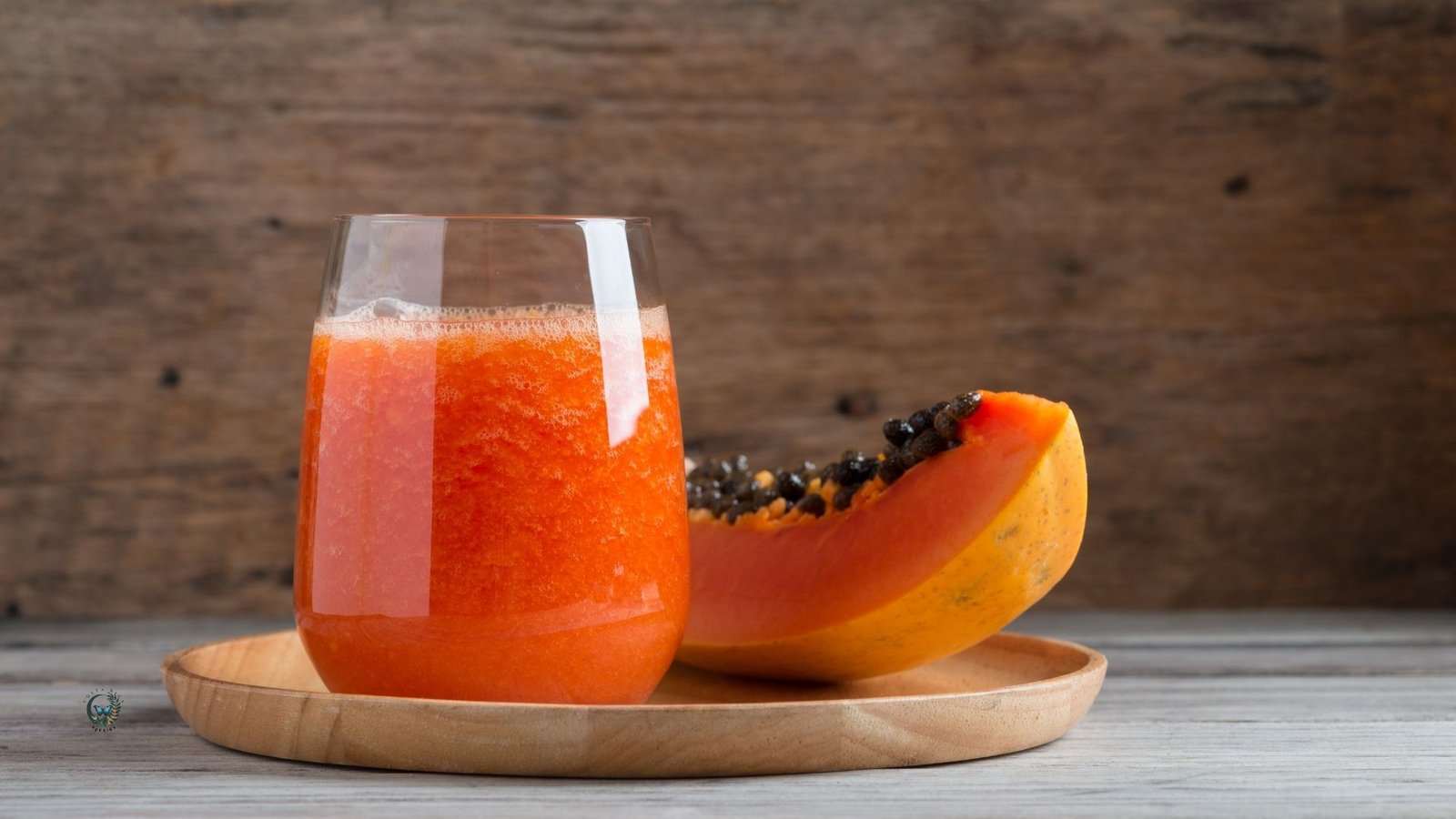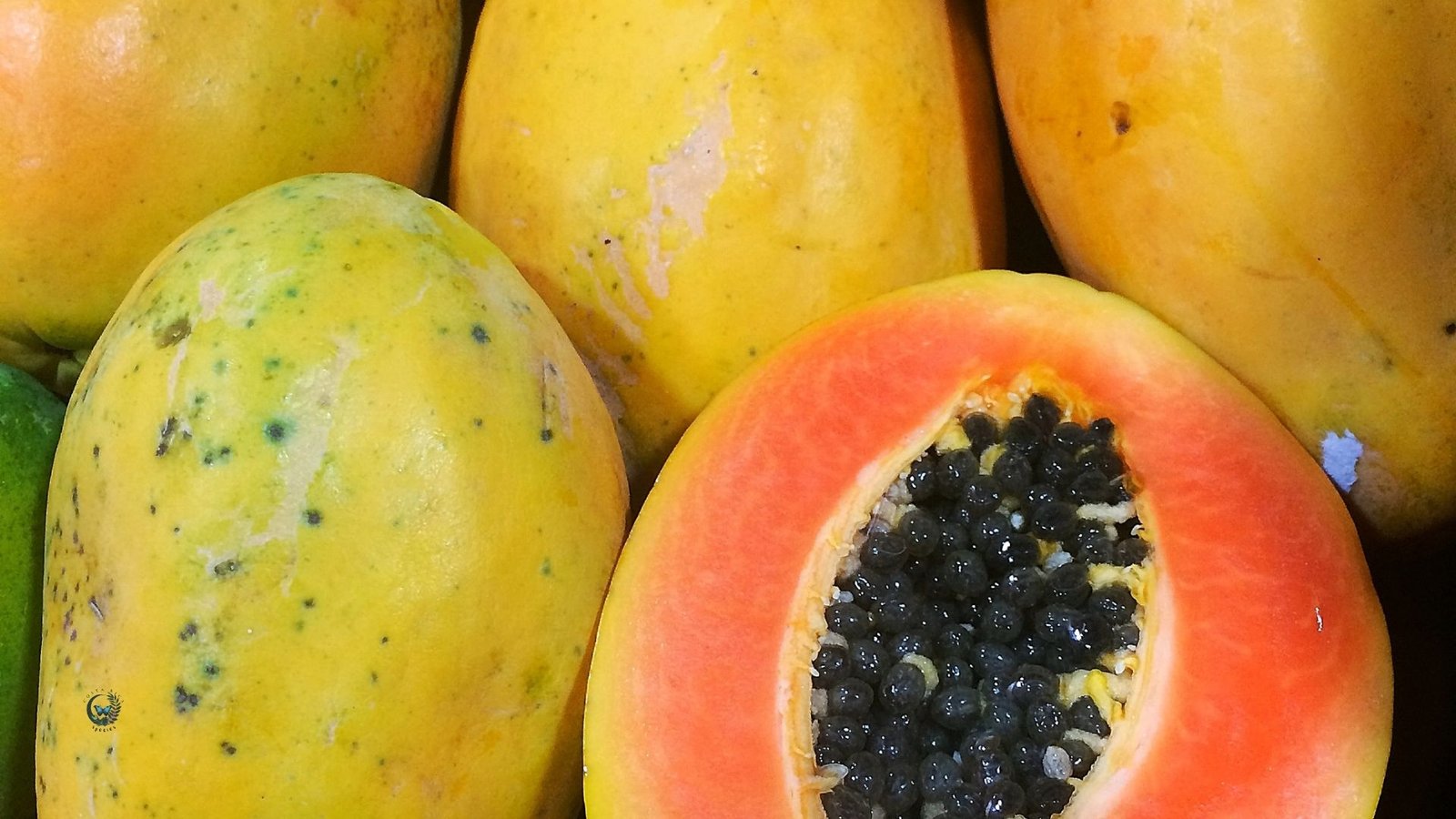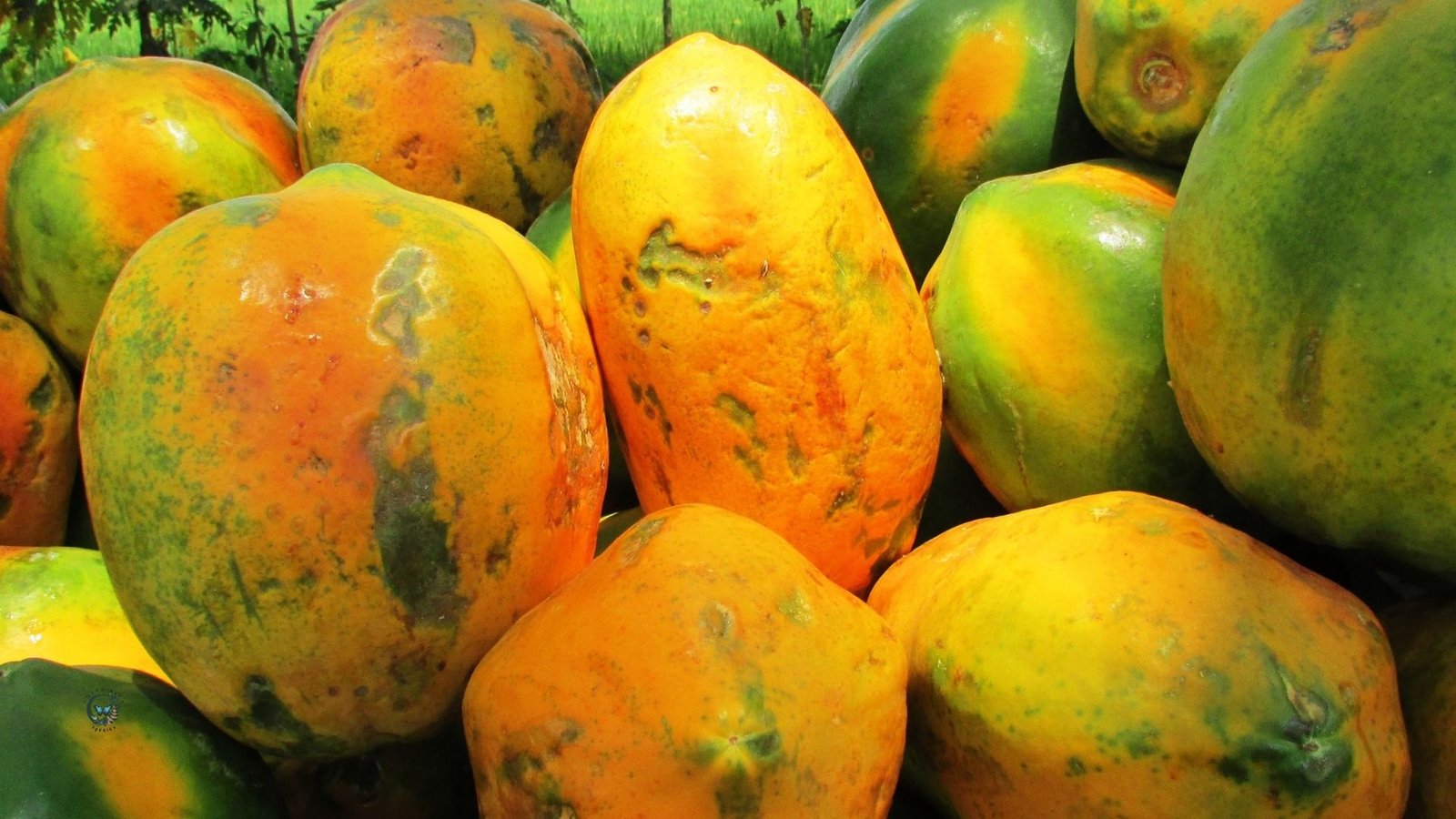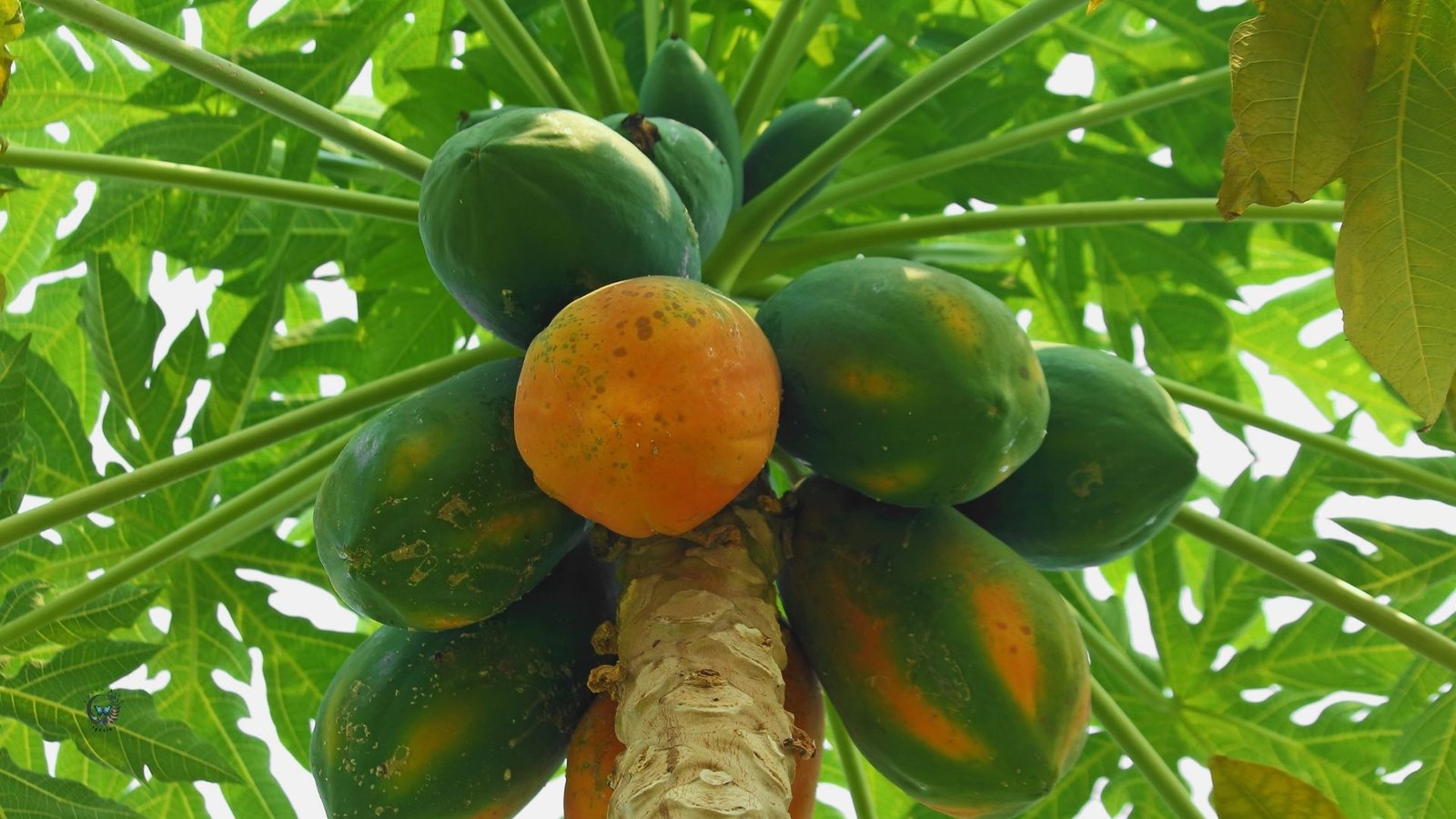



Fast‑growing, soft‑wooded evergreen reaching 3–8 m with a single, hollow, greenish trunk bearing prominent leaf‑scar rings. The palm‑like crown carries 15–30 spirally arranged, deeply palmate leaves (50–70 cm Ø) on 40‑cm petioles exuding milky latex when cut. Plants are usually dioecious or polygamous: male inflorescences are pendant panicles, while female and hermaphrodite flowers are solitary or few‑flowered, cream‑white, 3–5 cm long, with a sweet fragrance. The fruit is a large, cylindrical to pear‑shaped berry 15–50 cm long and 0.3–1.5 kg, turning yellow‑orange at maturity; mesocarp is buttery and rich in carotenoids, encasing hundreds of black, peppery seeds in a mucilaginous aril. [1][2]
Sexual dimorphism refers to the physical differences between males and females of the same species that go beyond reproductive organs. For example, size, colour or form.
Individuals are male, female or hermaphrodite; only females & hermaphrodites set fruit.
3–8 m tall; stem up to 20 cm Ø
Data deficient (variable by cultivar)
20–25 yr (commercially productive 3–5 yr)
Not applicable (plant)
Seedlings 6–12 mo in tropics
Flowering nearly year‑round; peak November – February (dry season)
Fruit maturation 4–6 mo post‑pollination
Fast‑growing, soft‑wooded evergreen reaching 3–8 m with a single, hollow, greenish trunk bearing prominent leaf‑scar rings. The palm‑like crown carries 15–30 spirally arranged, deeply palmate leaves (50–70 cm Ø) on 40‑cm petioles exuding milky latex when cut. Plants are usually dioecious or polygamous: male inflorescences are pendant panicles, while female and hermaphrodite flowers are solitary or few‑flowered, cream‑white, 3–5 cm long, with a sweet fragrance. The fruit is a large, cylindrical to pear‑shaped berry 15–50 cm long and 0.3–1.5 kg, turning yellow‑orange at maturity; mesocarp is buttery and rich in carotenoids, encasing hundreds of black, peppery seeds in a mucilaginous aril. [1][2]
Primary producer; nectar feeds bees, while ripe fruits consumed by birds (quetzals, motmots), bats and mammals disperse seeds
Taxonomic classification is a hierarchical system used in biology to organize and name living organisms. It arranges species into nested groups based on shared characteristics and evolutionary relationships.
🌍 The IUCN status refers to the conservation category assigned to a species by the International Union for Conservation of Nature, based on its risk of extinction
Latex enzyme papain is widely used to tenderise meat and clarify beer.
Hawai‘i released the first commercial virus‑resistant GMO papaya (‘Rainbow’) in 1998.
Fruits are technically berries and ripen climacterically, emitting ethylene bursts.
Nahuatl word pāpayo gave rise to Spanish “papaya”; seeds have anthelmintic properties.
A single fruit can provide > 200 % of adult RDA for vitamin C.