


Silky Anteater

Cyclopes dorsalis (Gray, 1865)†

Also known / common namesSpanish – Serafín, Oso hormiguero sedoso, Oso colmenero; Bribri – Ke̱trö; Cabécar – Wö̀k

Silky Anteater(s) General Description

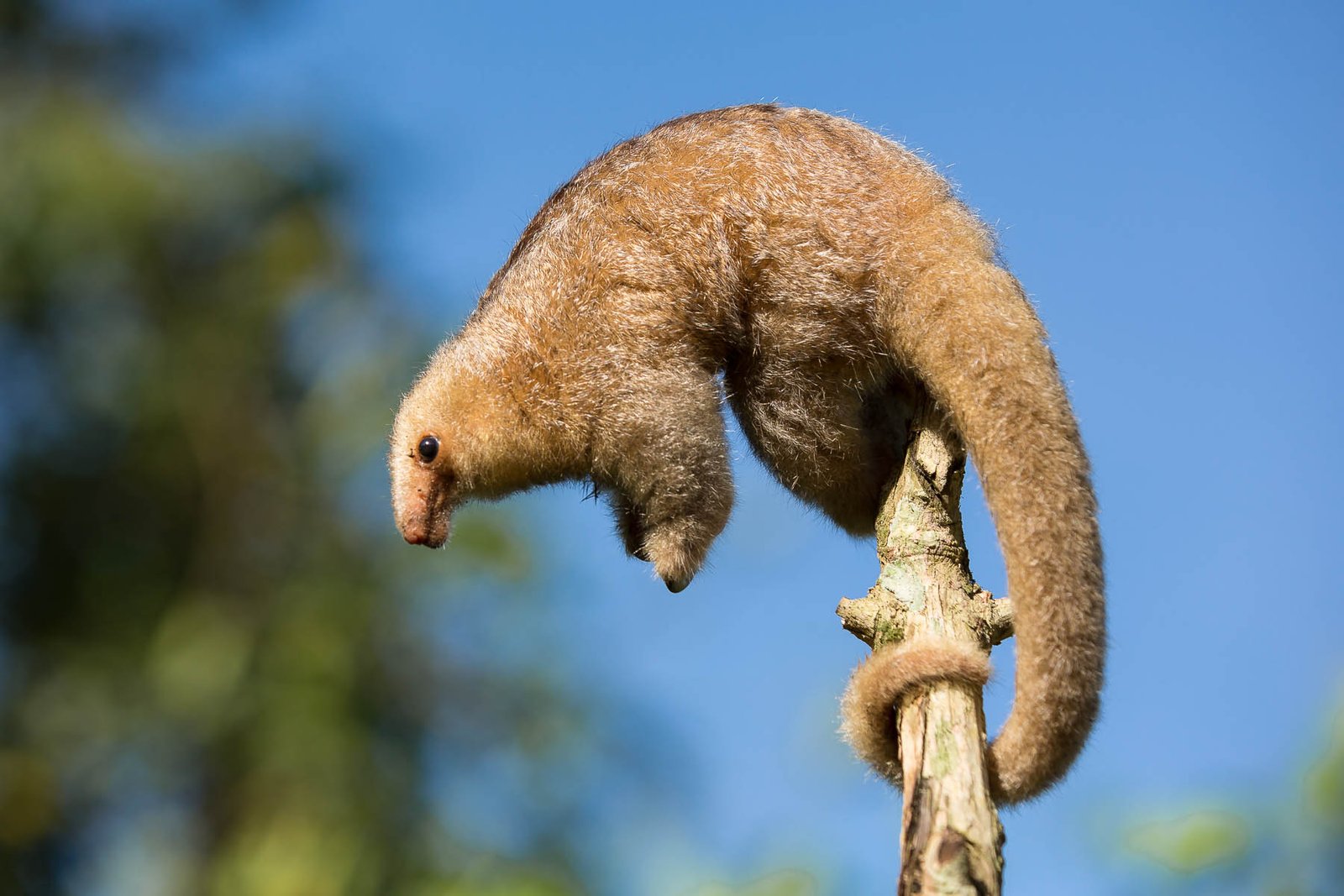
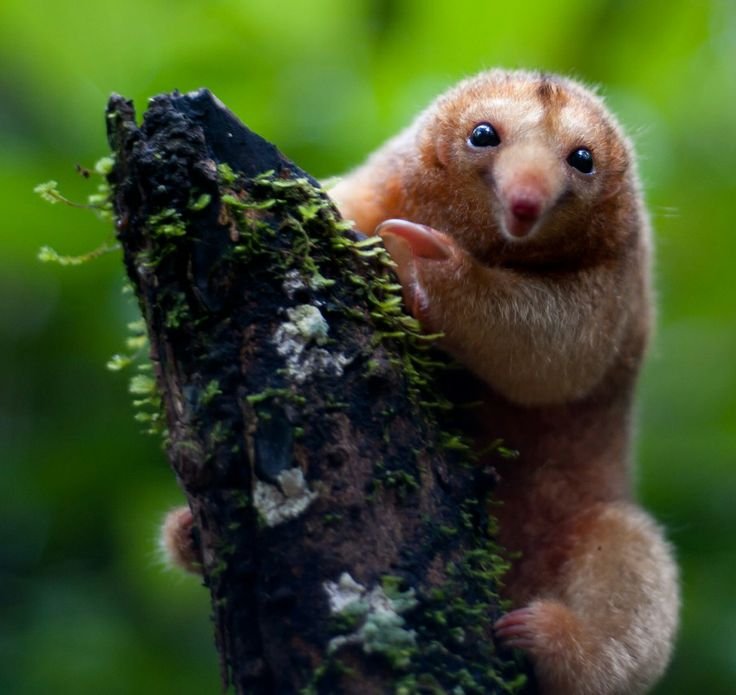
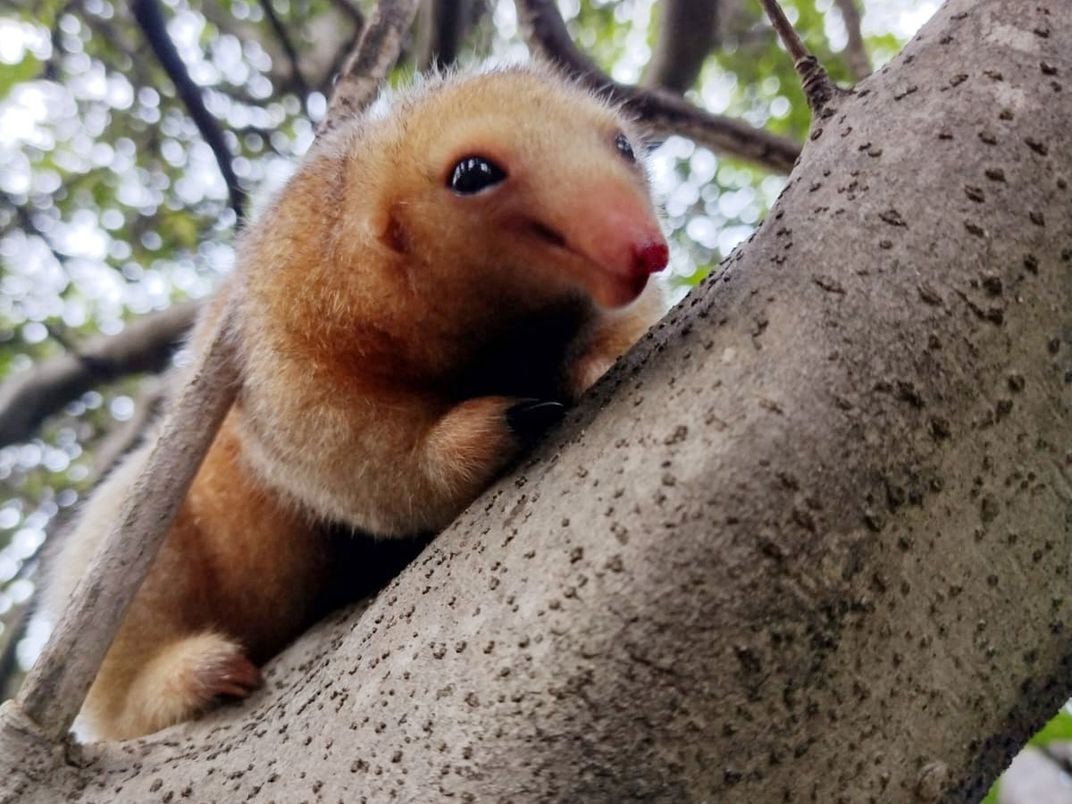
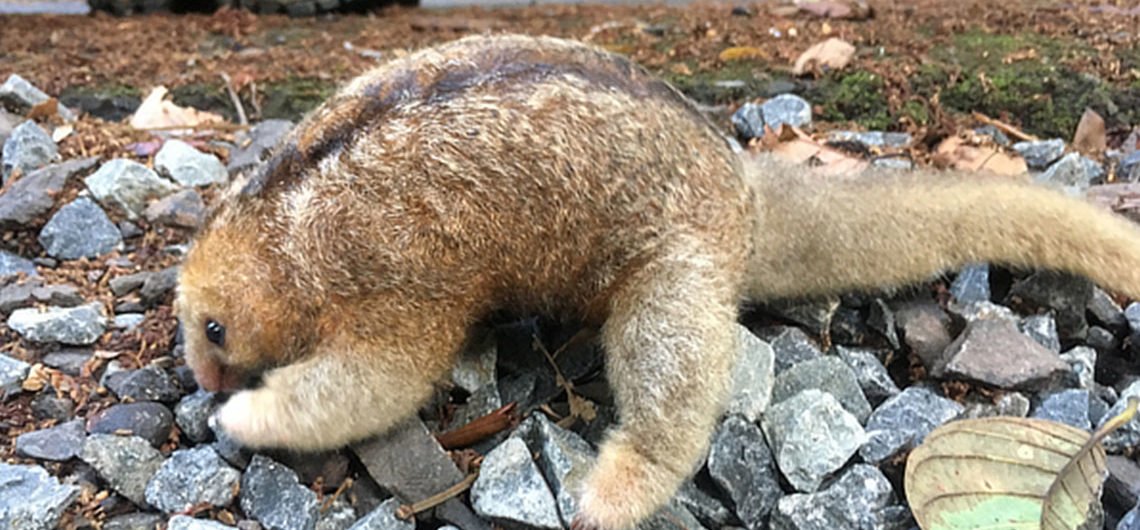
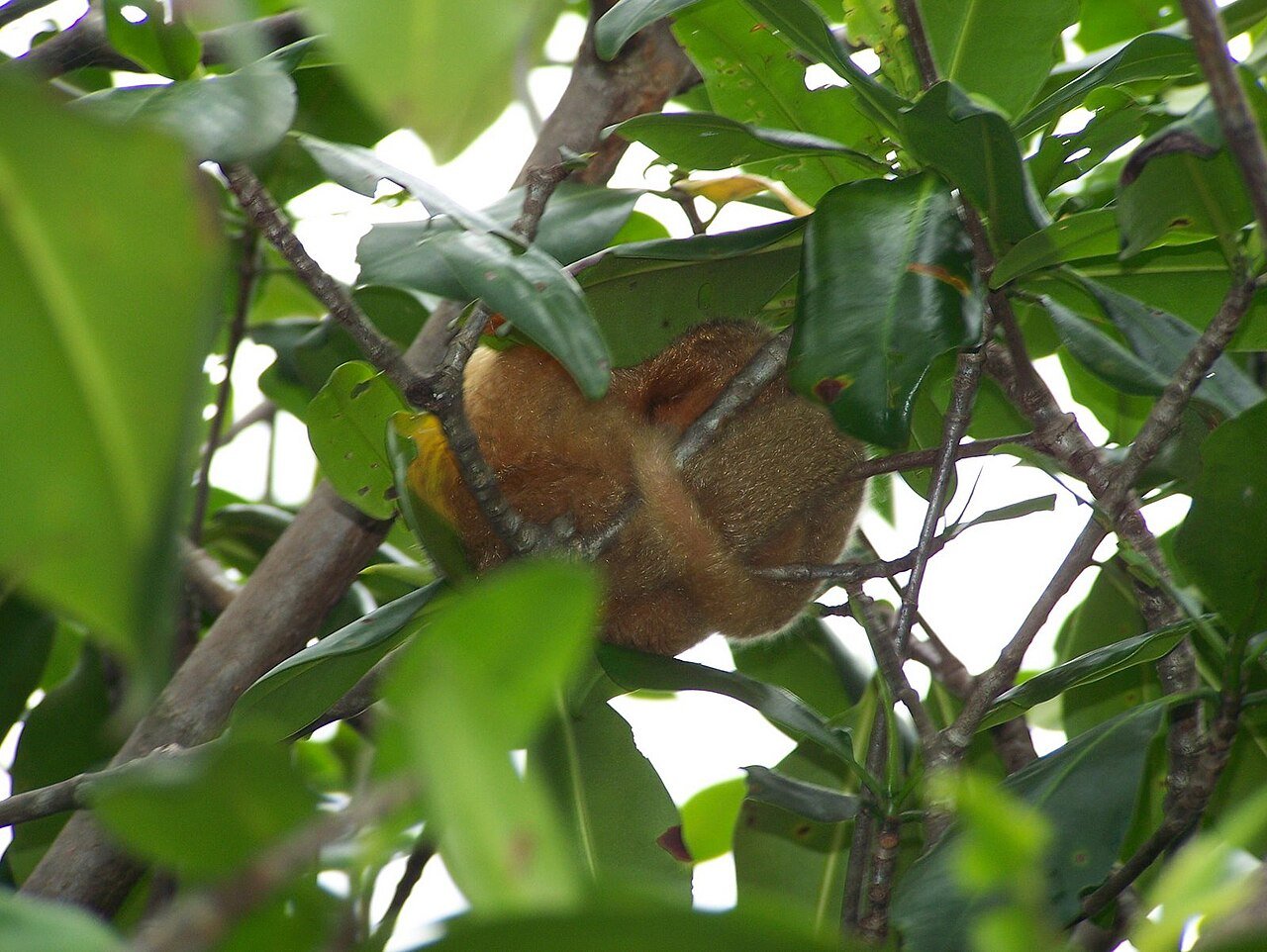
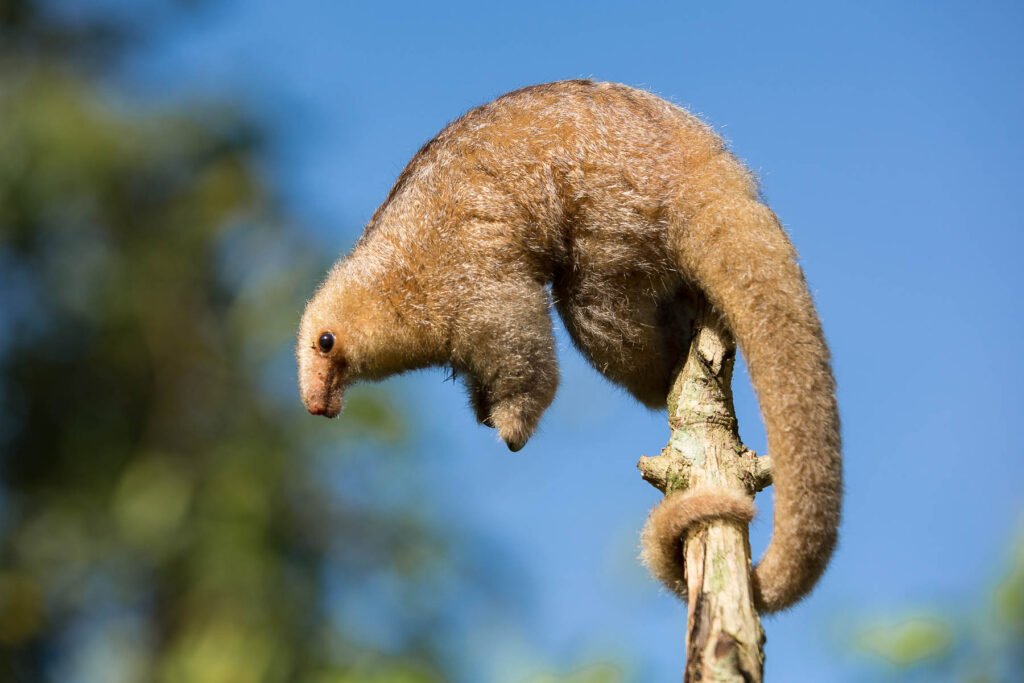
The silky anteater is the smallest living xenarthran, bearing a dense, wool‑silky coat ranging from pale silver‑grey to golden buff that camouflages among Cecropia seed tufts. Head–body length 17–27 cm with a 17–24 cm fully prehensile tail; mass 200–450 g. The head is short with a tapered, toothless muzzle and a 15‑cm extensile tongue. Forefeet have two greatly enlarged, recurved claws used to tear open ant nests; hind feet have four diminutive claws. Eyes are large and forward‑set, reflecting its strictly arboreal, nocturnal habits. Limbs rotate nearly 180° at the ankle, facilitating upside‑down locomotion along vines and thin branches. Neonates are born pink and nearly naked, gaining adult pelage within four weeks.

Has Sexual Diamorphism?

LIFE‑HISTORY & VITAL STATISTICS OF THE Silky Anteater(S)

Average Height / Length / Diameter

 Head–body 17–27 cm; tail 17–24 cm

Average Adult Weight / Mass

0.2–0.45 kg

Typical Lifespan / Longevity

≈ 9–12 yr wild; up to 16 yr captivity

Typical Lifespan / Longevity for males

Data deficient

Typical Lifespan / Longevity for Females

Data deficient

Age at Sexual Maturity

≈ 12–15 mo

Breading Season

Aseasonal in Costa Rica; births cluster May–July (early wet season)

Gestation

Reproductive Outcome

Number of Offspring per Event: 1; litters ≈ once every 12–16 mo

Ecology and Behaviour for Silky Anteater(s)

The silky anteater is the smallest living xenarthran, bearing a dense, wool‑silky coat ranging from pale silver‑grey to golden buff that camouflages among Cecropia seed tufts. Head–body length 17–27 cm with a 17–24 cm fully prehensile tail; mass 200–450 g. The head is short with a tapered, toothless muzzle and a 15‑cm extensile tongue. Forefeet have two greatly enlarged, recurved claws used to tear open ant nests; hind feet have four diminutive claws. Eyes are large and forward‑set, reflecting its strictly arboreal, nocturnal habits. Limbs rotate nearly 180° at the ankle, facilitating upside‑down locomotion along vines and thin branches. Neonates are born pink and nearly naked, gaining adult pelage within four weeks.

Habitat

Predominantly active during Night

Trophic Chain

Specialized myrmecophage consuming 5 000–8 000 arboreal Camponotus and Azteca ants per night; minor intake of termites and stingless‑bee honey.

Interespecies relationships noted for Silky Anteater

No data was found

Social behaviour of Silky Anteater

Distribution and Sighthings ofSilky Anteater(s) in Costa Rica

General Regions of Costa Rica where to find Silky Anteaters

Tropical
Tropical rainforest (Caribbean and North Pacific slopes)

National Parks and Reserves of Costa Rica where to find Silky Anteaters

Parque Nacional Barbilla
Parque Nacional Braulio Carrillo
Parque Nacional Cahuita
Parque Nacional Carara
Parque Nacional Corcovado
Parque Nacional Manuel Antonio
Parque Nacional Piedras Blancas
Parque Nacional Tapantí – Macizo Cerro de la Muerte
Parque Nacional Tortuguero
Reserva Forestal Golfo Dulce
Reserva Biológica Hitoy-Cerere
Reserva Biológica Isla Guayabo
Reserva Bosque Nuboso Santa Elena
Refugio Nacional de Vida Silvestre Gandoca-Manzanillo
Refugio Nacional de Fauna Silvestre Golfito

Best Time to seeSilky Anteater(s) in Costa Rica

Dry Season
January
February
March
April
June
July
August
September
October
November
December

Media

Videos

Sounds and calls

Taxonomy

Conservation Status

Status IUCN

Threats

⚠️Clearing of lowland forest and mangroves for agriculture and tourism developments.
⚠️Canopy fragmentation that isolates populations and increases ground‑predation risk.
⚠️Mortality from domestic cats and kinkajous in peri‑urban mosaics.
⚠️Illegal capture as novelty pets; individuals rarely survive captivity.
⚠️Climate‑related increase in extreme storms that topple nest trees.

Fun Facts

  • Possesses only two functional fingers per forefoot—the fewest of any mammal.

  • Each night travels < 200 m, spending 80 % of activity time stationary while foraging ant trails.

  • Fur contains air pockets, making individuals exceptionally buoyant when branches fall into water.

  • Emits a faint musky odor thought to deter arboreal predators such as arboreal boas.

  • Shares mutualistic “ant gardening” with Azteca ants: ants hollow Cecropia internodes that anteaters later exploit as day nests.

Origins & Record

Origin Status

Native

Population trend

Added by

Reviewed by

External Resources

More Species

Nurse Shark

Shallow coral and rocky reefs, sand flats, seagrass beds and mangrove channels from intertidal pools to ≈ 70 m; in Costa Rica abundant around Isla del Caño, Golfo Dulce, Bahía Culebra, and Caribbean patch reefs of Cahuita.

Read More »

Silky Shark

Slender, oceanic requiem shark with a notably silky‑smooth skin created by densely packed dermal denticles. First dorsal fin moderately tall, origin behind pectoral free tips; second dorsal possesses a long free rear tip. Pectorals long, narrow, falcate. Snout long and rounded; eyes large with nictitating membranes. Colour uniform dark bronzy‑grey above, white below; no distinct fin markings except faint dusky tips in juveniles. Adults average 2.2–2.6 m TL (maximum 3.5 m) and 150‑170 kg. Teeth: upper narrow, serrated; lower slender, semi‑erect. Sexual dimorphism minimal—females slightly larger, males with claspers.

Read More »